

iPhone 15 Pro Vs Xiaomi 13T Pro

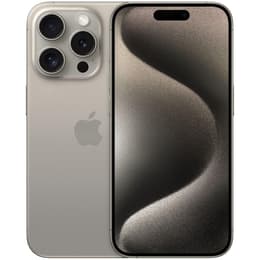
iPhone 15 Pro
iPhone 15 Pro
Starting at

Refurbished price:510.00

Versus €1,165.38 new

See options
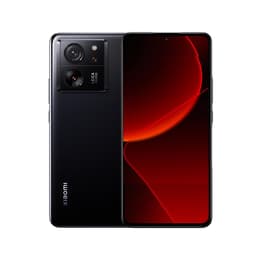
Xiaomi 13T Pro
Xiaomi 13T Pro
Starting at

Refurbished price:253.00

Versus €900.00 new

See options

Ratings

The iPhone 15 Pro and the Xiaomi 13T Pro are both advanced smartphones released in late 2023, offering distinct experiences within the premium segment. While the iPhone 15 Pro, launched on September 22, 2023, operates on Apple's iOS ecosystem, the Xiaomi 13T Pro, released on September 26, 2023, runs on Android with Xiaomi's HyperOS overlay. Key differentiators include their core operating systems, build materials, and camera system philosophies, catering to different user preferences.

Scores

Durability

When considering the long-term usability and physical resilience of these devices, both offer robust features, though their approaches differ.

  • Build Materials and Water Resistance: The iPhone 15 Pro features a lightweight yet strong titanium frame, complemented by a Ceramic Shield front cover and a textured matte glass back. It carries an IP68 rating for dust and water resistance. The Xiaomi 13T Pro utilizes Corning Gorilla Glass 5 for its front display, with options for a glass or a vegan leather back panel, and a plastic frame. It also boasts an IP68 rating, indicating protection against dust and water immersion.
  • Software Longevity: Apple typically provides extensive software support, with the iPhone 15 Pro expected to receive major iOS updates for at least five years, extending to at least 2028. Xiaomi has committed to four major Android OS upgrades and five years of security patches for the 13T Pro, aligning it with longer-term software support.
  • Practical Lifespan: While the iPhone 15 Pro's titanium construction is designed for durability, some user reports have noted potential fragility of the back glass in certain drop scenarios, though a case generally mitigates this. The Xiaomi 13T Pro's Gorilla Glass 5 offers good resistance to scratches and minor impacts, contributing to its everyday resilience. Both devices are built to withstand daily use, with their respective software commitments supporting a practical lifespan of several years.

Year of Release

2023

2023

OS

iOS

Android

Foldable

No

No

Performance

Both smartphones are equipped with powerful internal components designed to deliver a fluid user experience, though they achieve this through different hardware and software optimizations.

  • Processing Power: The iPhone 15 Pro is powered by a current-generation processor, which enables it to handle demanding applications, complex multitasking, and graphics-intensive games with notable responsiveness. This processor is designed for efficiency and high performance across the iOS ecosystem. The Xiaomi 13T Pro features a high-performance MediaTek processor, which also provides a smooth experience for intensive gaming and heavy application usage, often performing comparably to other top-tier chipsets.
  • Memory and Storage: The iPhone 15 Pro comes with 8GB of RAM, which facilitates efficient multitasking and app management within iOS. It offers storage configurations ranging from 128GB up to 1TB. The Xiaomi 13T Pro is available with 12GB or 16GB of RAM, providing ample capacity for running numerous applications simultaneously without slowdowns. Its storage options also span from 256GB to 1TB.
  • Battery Performance: The iPhone 15 Pro's battery is designed to provide a full day of typical use, with its efficient processor contributing to its endurance. The Xiaomi 13T Pro is equipped with a larger battery capacity, which generally allows for more than a day of use for many users. It also supports rapid wired charging, allowing for quick power replenishment.

Memory (GB)

8 GB

16 GB

Screen quality

The visual experience on both devices is a highlight, with each offering a high-quality display tailored to different preferences in size and refresh rate capabilities.

  • Display Technology and Clarity: The iPhone 15 Pro features a 6.1-inch Super Retina XDR OLED display, delivering deep blacks, vibrant colors, and sharp detail with a resolution of 2556x1179 pixels at 460 pixels per inch. The Xiaomi 13T Pro sports a larger 6.67-inch AMOLED display with a resolution of 2712x1220 pixels at 446 pixels per inch, also providing rich colors and excellent contrast.
  • Brightness and Refresh Rate: The iPhone 15 Pro's display offers a typical brightness of 1000 nits and can reach a peak outdoor brightness of 2000 nits, ensuring good visibility in various lighting conditions. It supports an adaptive refresh rate up to 120Hz, known as ProMotion, for smooth scrolling and responsive interactions. The Xiaomi 13T Pro's display has a typical brightness of 1200 nits and can achieve an even higher peak brightness of 2600 nits, making it exceptionally bright outdoors. It features a higher 144Hz refresh rate, which can provide an even smoother visual experience in compatible content.
  • Additional Display Features: The iPhone 15 Pro includes Apple's Dynamic Island and an Always-On display feature. Both displays support HDR content, with the Xiaomi 13T Pro specifically mentioning HDR10+ and Dolby Vision support for enhanced media consumption.

Resolution

1179 x 2556

1220 x 2712

Audiovisual

Both devices offer advanced camera systems, but they approach photography with distinct philosophies and feature sets.

  • Rear Camera Systems: The iPhone 15 Pro features a versatile triple-camera setup, including a 48-megapixel main sensor, a 12-megapixel ultrawide camera, and a 12-megapixel telephoto lens with 3x optical zoom. It defaults to capturing 24-megapixel photos from the main camera, offering increased detail. The Xiaomi 13T Pro boasts a Leica-tuned triple camera system, comprising a 50-megapixel main camera with optical image stabilization, a 50-megapixel telephoto camera with 2x optical zoom, and a 12-megapixel ultrawide lens.
  • Photography Performance: The iPhone 15 Pro excels in various lighting conditions, with improved low-light performance and a next-generation portrait mode that automatically captures depth information. It offers advanced computational photography and the ability to shoot in ProRes video format directly to an external drive. The Xiaomi 13T Pro, with its Leica partnership, provides distinct 'Leica Authentic' and 'Leica Vibrant' photo styles, offering users different color profiles. Its main camera captures good detail in daylight, and while its low-light performance is decent, the secondary lenses may show a slight drop in quality in challenging conditions.
  • Video and Front Camera: The iPhone 15 Pro can record video up to 4K at 60 frames per second, with features like Action mode for stable footage. Its 12-megapixel front camera includes autofocus for clear selfies. The Xiaomi 13T Pro supports video recording up to 8K at 24 frames per second and 4K HDR. Its 20-megapixel selfie camera is adequate for video calls and social media, though some users note that fine details can be softer compared to the rear cameras.

Miscellaneous

Beyond their core functionalities, both smartphones integrate a range of features that enhance daily usability and connectivity.

  • Connectivity and Ports: The iPhone 15 Pro features a USB-C port, supporting USB 3 speeds for faster data transfer, and includes 5G, Wi-Fi 6E, and Bluetooth 5.3 connectivity. The Xiaomi 13T Pro also uses a USB-C port, though it operates at USB 2.0 speeds, and supports advanced connectivity standards like 5G, Wi-Fi 7, and Bluetooth 5.4.
  • Biometrics and Unique Features: The iPhone 15 Pro relies on Face ID for secure facial recognition and introduces a customizable Action Button, which can be programmed for various functions. The Xiaomi 13T Pro incorporates an in-display fingerprint sensor for biometric security and includes an IR blaster, allowing it to function as a universal remote control.
  • Design and Handling: The iPhone 15 Pro's titanium construction contributes to its lighter weight of 187 grams and offers a premium feel with contoured edges. The Xiaomi 13T Pro, weighing between 200g and 206g depending on the back material, has a slightly larger form factor due to its bigger display. It does not support wireless charging, a feature present in the iPhone 15 Pro.

Weight

171 g

206 g

Screen size (in)

6.1

6.67

Network

5G

5G

SIM card

eSIM

Physical SIM + eSIM

Carrier compatibility

Unlocked

Unlocked

Connector

USB-C (USB 3)

USB-C

The iPhone 15 Pro and Xiaomi 13T Pro each present compelling packages for different user needs, reflecting their respective ecosystems and design philosophies. User feedback for the iPhone 15 Pro often highlights its powerful performance, advanced camera capabilities, the premium feel of its titanium design, and the convenience of its new USB-C port and Action Button. Some common criticisms include its battery life, which, while generally sufficient for a day, may not be as extended as some larger devices, and occasional concerns about the durability of its back glass in extreme impact scenarios.

Conversely, the Xiaomi 13T Pro receives praise for its vibrant and bright display, robust performance for demanding tasks and gaming, its Leica-tuned camera system offering distinct photographic styles, and its rapid wired charging capabilities. Points of concern sometimes raised by users include the performance of its selfie camera, the absence of wireless charging, and the use of a plastic frame in some variants.

Users prioritizing a compact device with a highly integrated software and hardware experience, advanced video features, and a strong ecosystem may find the iPhone 15 Pro well-suited to their needs. Those who value a larger, exceptionally bright display, faster refresh rates, extensive RAM for multitasking, and a versatile camera system with unique photographic modes might lean towards the Xiaomi 13T Pro. Both devices offer a quality-assured refurbished option, providing an eco-friendly alternative for consumers seeking high-performance smartphones.


See all articles

Our recent comparisons