
iPhone 14 Vs iPhone 17 Pro

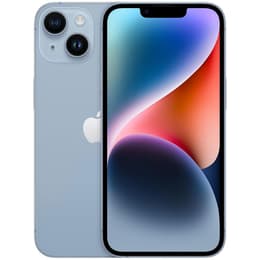
iPhone 14
iPhone 14
Starting at

Refurbished price:270.00

Versus €759.00 new

See options
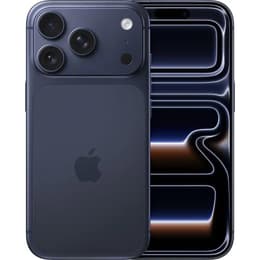
iPhone 17 Pro
iPhone 17 Pro
Starting at

Refurbished price:1,109.00

Versus €1,339.00 new

See options

Ratings

The iPhone 14, released in September 2022, and the iPhone 17 Pro, launched in September 2025, represent different generations within Apple's smartphone lineup. While both operate on Apple's iOS platform, the iPhone 17 Pro introduces significant advancements in processing power, camera technology, and display capabilities, reflecting three years of technological evolution. This comparison aims to highlight the practical differences between these two devices to assist consumers in making an informed decision.

Scores

Durability

The expected lifespan and software support differ between these two models due to their respective release dates.

  • Release Timeline: The iPhone 14 was released in September 2022, while the iPhone 17 Pro launched in September 2025. This three-year gap means the iPhone 17 Pro benefits from a more recent design and newer components.
  • Software Longevity: The iPhone 14 launched with iOS 16 and is designed to retain 80% of its original battery capacity at 500 complete charge cycles. The iPhone 17 Pro, launching with iOS 26, is expected to receive software updates for a longer duration, offering extended support and access to future features.
  • Physical Durability: Both devices feature a Ceramic Shield front cover and are rated for IP68 water and dust resistance. However, drop tests for the iPhone 14 indicated susceptibility to damage on hard impacts, though the back panel was noted to be easier to repair than previous models. The iPhone 17 Pro features a unibody aluminum chassis and durable Ceramic Shield front and back, with water resistance to a depth of 6 meters for up to 30 minutes.

Performance

Performance capabilities see a notable generational leap between the iPhone 14 and the iPhone 17 Pro.

  • Processing Power: The iPhone 14 is equipped with a capable processor that handles everyday applications and multitasking smoothly. The iPhone 17 Pro features a significantly more advanced processor, designed for demanding applications, intensive gaming, and complex AI tasks, offering enhanced responsiveness and efficiency.
  • Multitasking and Responsiveness: The iPhone 14 includes 6GB of RAM, providing a solid foundation for typical smartphone usage. The iPhone 17 Pro comes with 12GB of RAM, which allows for more seamless multitasking, faster app switching, and improved performance with memory-intensive applications.
  • Thermal Management: The iPhone 17 Pro incorporates a vapor chamber cooling system, which helps maintain consistent performance during extended periods of heavy use by dissipating heat more effectively. This is a feature not present in the iPhone 14.

Memory (GB)

6 GB

12 GB

Screen quality

The display experience offers distinct differences, particularly in terms of smoothness and brightness.

  • Display Technology and Refresh Rate: The iPhone 14 features a 6.1-inch Super Retina XDR OLED display with a standard 60Hz refresh rate, providing clear visuals for general use. The iPhone 17 Pro, with its 6.3-inch display, includes ProMotion technology, offering adaptive refresh rates up to 120Hz for smoother scrolling and more fluid animations.
  • Brightness and Clarity: Both devices offer vibrant OLED displays. The iPhone 14 provides a typical brightness of 800 nits and a peak HDR brightness of 1200 nits. The iPhone 17 Pro significantly increases outdoor brightness to a peak of 3,000 nits, with peak HDR brightness at 1,600 nits, enhancing visibility in bright conditions.
  • Advanced Display Features: The iPhone 17 Pro is rumored to feature an anti-reflective and more scratch-resistant display technology, which could improve durability and viewing comfort in various lighting environments. Both models feature a Dynamic Island, though the iPhone 17 Pro's is expected to be redesigned.

Audiovisual

The camera systems show a clear progression in capabilities and sensor technology.

  • Rear Camera System: The iPhone 14 features a dual 12MP camera system, including a main wide lens and an ultra-wide lens, with improvements like the Photonic Engine for better low-light performance. The iPhone 17 Pro boasts a triple 48MP camera system, encompassing main, ultra-wide, and telephoto lenses, offering higher resolution and greater versatility.
  • Zoom and Low-Light Performance: The iPhone 17 Pro's telephoto lens offers up to 8x optical zoom, a significant enhancement over the iPhone 14's digital zoom capabilities. The larger sensors and advanced image processing in the iPhone 17 Pro contribute to improved low-light photography across all lenses.
  • Video and Front Camera: Both devices offer 4K video recording, with the iPhone 14 featuring Action Mode for stabilization and Cinematic Mode. The iPhone 17 Pro further enhances video with support for ProRes RAW and Log 2 video recording, and introduces dual video recording (front and rear simultaneously). The front-facing camera on the iPhone 17 Pro is upgraded to 24MP, compared to the iPhone 14's 12MP TrueDepth camera.

Miscellaneous

Beyond core features, several practical elements differentiate these two iPhone models.

  • Connectivity Standards: The iPhone 14 supports 5G, Wi-Fi 6, and Bluetooth 5.3. The iPhone 17 Pro upgrades to Wi-Fi 7 and Bluetooth 6, offering faster wireless speeds and improved multi-device connectivity.
  • Charging and Ports: The iPhone 14 uses a Lightning port for charging and data transfer. The iPhone 17 Pro transitions to a USB-C port, supporting faster charging and data transfer speeds, and offers enhanced MagSafe and Qi2 wireless charging capabilities up to 25W.
  • Biometrics and Sensors: Both devices utilize Face ID for secure authentication. The iPhone 17 Pro includes a second-generation Ultra Wideband chip for improved spatial awareness and precision finding, alongside an Apple N1 networking chip for enhanced efficiency.

Screen size (in)

6.1

6.3

Network

5G

5G

SIM card

Physical SIM + eSIM

Physical SIM + eSIM

Carrier compatibility

Unlocked

Unlocked

The iPhone 14 and iPhone 17 Pro cater to different user needs, largely defined by their generational gap and feature sets. The iPhone 14 remains a capable device for everyday tasks, offering a reliable user experience, a good camera system for general photography, and solid battery life for typical usage. Users often praise its consistent performance and the familiarity of the iOS ecosystem.

However, some iPhone 14 users have noted concerns regarding battery degradation over time, with reports of battery health depleting faster than expected for some models.

The iPhone 17 Pro, as a more recent and advanced model, is designed for users who prioritize cutting-edge technology. It receives praise for its significantly upgraded camera system, offering higher resolution sensors and advanced video capabilities, making it well-suited for photography and videography enthusiasts. Its powerful processor and increased RAM provide a smoother experience for demanding applications and multitasking. The brighter, higher refresh rate display also enhances the visual experience for media consumption and gaming.

Users prioritizing the latest camera innovations, superior processing power for intensive tasks, and a more fluid display experience will find the iPhone 17 Pro better suited to their needs. Conversely, those seeking a dependable smartphone for daily communication, social media, and casual photography, without requiring the absolute latest advancements, may find the iPhone 14 to be a practical choice. For consumers looking for an eco-friendly alternative, both models are available as quality-assured refurbished options, extending their lifecycle and reducing electronic waste.


See all articles

Our recent comparisons