

iPhone 14 Pro Vs OnePlus 11

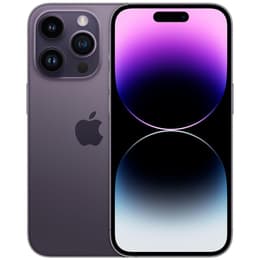
iPhone 14 Pro
iPhone 14 Pro
Starting at

Refurbished price:424.00

Versus €1,339.00 new

See options
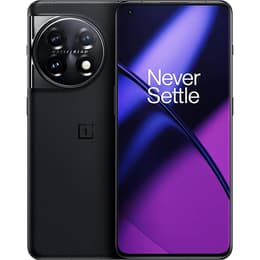
OnePlus 11
OnePlus 11
Starting at

Refurbished price:325.00

Versus €949.00 new

See options

Ratings

The iPhone 14 Pro, released in September 2022, and the OnePlus 11, launched globally in February 2023, represent distinct approaches to flagship smartphone design and functionality. While both devices offer high-end performance and advanced camera systems, they differ significantly in their operating systems and user experiences. The iPhone 14 Pro runs on Apple's iOS, known for its integrated ecosystem, whereas the OnePlus 11 operates on Android, offering greater customisation.

Scores

Durability

When considering the long-term usability of these devices, several factors contribute to their expected lifespan, including software support and physical resilience.

  • Software Longevity: The iPhone 14 Pro, running iOS, typically receives major operating system updates for approximately five to six years from its release. Given its September 2022 launch, users can anticipate continued software support for several more years. The OnePlus 11, an Android device from early 2023, is promised four generations of Android upgrades and five years of security updates, offering a comparable, though slightly different, timeline for software relevance.
  • Build Durability: The iPhone 14 Pro features a surgical-grade stainless steel frame and a Ceramic Shield front, designed for enhanced drop protection. The OnePlus 11 incorporates a glass front with Gorilla Glass Victus and a glass back with Gorilla Glass 5, supported by an aluminum frame. Both devices offer robust construction, though the specific materials used provide different characteristics in terms of scratch and shatter resistance.
  • Repairability: While specific repairability scores can vary, both manufacturers design their devices with certain repair considerations. The availability of parts and service networks can influence the practical lifespan of either phone.

Year of Release

2022

2023

OS

iOS

Android

Foldable

No

No

Performance

Both the iPhone 14 Pro and the OnePlus 11 deliver powerful performance, capable of handling demanding applications and multitasking with ease, though they achieve this through different hardware configurations.

  • Processing Power: The iPhone 14 Pro is equipped with a current-generation processor designed for efficient handling of complex tasks, from intensive gaming to video editing. The OnePlus 11 features a high-performance Android processor, ensuring smooth operation across a wide range of applications and providing a responsive user experience.
  • Multitasking and Storage: The iPhone 14 Pro typically comes with 6GB of RAM, which is optimised by iOS for efficient multitasking. Storage options for the iPhone 14 Pro range up to 1TB. The OnePlus 11 offers more varied RAM configurations, including 8GB, 12GB, and 16GB, which can benefit users who frequently switch between many applications. Its storage options go up to 512GB, with faster UFS 4.0 storage available in higher capacities.
  • Battery Behavior: The iPhone 14 Pro offers up to 23 hours of video playback and 75 hours of audio playback, indicating strong endurance for typical daily use. The OnePlus 11 features a larger 5000 mAh battery, which generally translates to extended usage times for many users. The OnePlus 11 also supports significantly faster wired charging at 100W, allowing for quicker power-ups.

Memory (GB)

6 GB

16 GB

Screen quality

The visual experience on both devices is a highlight, with each offering vibrant and detailed displays tailored for immersive viewing.

  • Display Technology and Resolution: The iPhone 14 Pro features a 6.1-inch Super Retina XDR OLED display with a resolution of 2556x1179 pixels, resulting in sharp visuals. The OnePlus 11 boasts a larger 6.7-inch Super Fluid AMOLED display with a higher 3216x1440 pixel resolution, providing a very clear and expansive viewing area.
  • Brightness and Smoothness: Both phones offer adaptive refresh rates up to 120Hz, ensuring smooth scrolling and fluid animations. The iPhone 14 Pro can reach a peak outdoor brightness of 2000 nits, making it highly visible in direct sunlight. The OnePlus 11 reaches a peak brightness of 1300 nits, which is also ample for most outdoor conditions.
  • Special Features: The iPhone 14 Pro introduces the Dynamic Island, an interactive area around the front camera, and an Always-On display. The OnePlus 11's display supports Dolby Vision and HDR10+, enhancing color and contrast for compatible content.

Resolution

1179 x 2556

1440 x 3216

Audiovisual

Both smartphones offer advanced camera systems designed to capture high-quality photos and videos, each with its own strengths and unique features.

  • Rear Camera Systems: The iPhone 14 Pro features a versatile triple-camera setup, including a 48MP main sensor with second-generation sensor-shift optical image stabilization, a 12MP ultra-wide lens, and a 12MP telephoto lens capable of 3x optical zoom. It also includes a LiDAR scanner for improved depth sensing. The OnePlus 11 also has a triple-camera system, co-developed with Hasselblad, featuring a 50MP main sensor with OIS, a 48MP ultra-wide lens, and a 32MP telephoto lens offering 2x optical zoom.
  • Photography Performance: The iPhone 14 Pro benefits from Apple's Photonic Engine, which enhances image quality in mid-to-low light conditions across all cameras. Users report excellent detail and color reproduction. The OnePlus 11's Hasselblad partnership aims to deliver natural color calibration and a distinct photographic style. Both devices excel in everyday photography, with differences often coming down to personal preference for image processing.
  • Video Capabilities: The iPhone 14 Pro supports 4K video recording up to 60 frames per second, with advanced features like Cinematic mode and Action mode for stabilized footage, and ProRes for professional-grade video. The OnePlus 11 can record up to 8K video at 24 frames per second and 4K at 60 frames per second, providing high-resolution video capture.

Miscellaneous

Beyond core performance and display, several other features contribute to the overall user experience and practical utility of these smartphones.

  • Connectivity and Ports: Both devices support 5G cellular connectivity and modern Wi-Fi standards (Wi-Fi 6 for iPhone 14 Pro, Wi-Fi 6/6E for OnePlus 11), along with Bluetooth 5.3 for wireless accessories. The iPhone 14 Pro uses a Lightning port for charging and data transfer, while the OnePlus 11 features a USB-C port. The iPhone 14 Pro also includes Emergency SOS via satellite for communication in remote areas.
  • Biometrics and Sensors: The iPhone 14 Pro relies on Face ID for secure facial recognition. The OnePlus 11 incorporates an in-display optical fingerprint sensor for biometric authentication. Both phones include a standard array of sensors like accelerometers, gyroscopes, and ambient light sensors.
  • Design and Handling: The iPhone 14 Pro measures 147.5 x 71.5 x 7.85 mm and weighs 206 grams, offering a compact feel for a flagship device. The OnePlus 11 is slightly larger at 163.1 x 74.1 x 8.53 mm and weighs 205 grams, providing a more expansive screen experience while maintaining a similar weight.

Weight

206 g

205 g

Screen size (in)

6.1

6.7

Network

5G

5G

SIM card

Physical SIM + eSIM

Physical SIM

Carrier compatibility

Unlocked

Unlocked

The iPhone 14 Pro and OnePlus 11 each offer a compelling package for different user preferences. Users often praise the iPhone 14 Pro for its exceptional camera capabilities, particularly its low-light performance and advanced video features, as well as the seamless integration within the Apple ecosystem. The Dynamic Island and Always-On display are also frequently highlighted as innovative and useful additions. Some users, however, might find its smaller screen size less ideal for media consumption compared to larger devices.

The OnePlus 11 receives commendation for its vibrant and expansive display, powerful performance, and remarkably fast wired charging speeds. Its customisable Android experience and competitive hardware are also strong points. Common criticisms sometimes point to the absence of wireless charging and a lack of an official IP rating for water and dust resistance, which some users consider essential for a flagship device.

Users prioritizing a compact form factor, a highly refined camera system with advanced video features, and deep ecosystem integration may find the iPhone 14 Pro well-suited to their needs. Conversely, those who value a larger, high-resolution display, faster charging, greater Android customisation, and potentially more RAM for heavy multitasking might lean towards the OnePlus 11. Both devices represent excellent choices, and considering a quality-assured refurbished option for either model can be a sustainable way to acquire these advanced smartphones.

See all articles

Our recent comparisons