

Galaxy Z Fold5 Vs iPhone 13 Pro Max

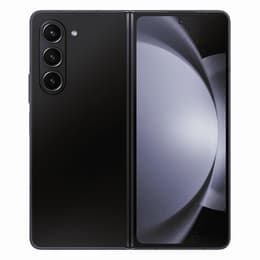
Galaxy Z Fold5
Galaxy Z Fold5
Starting at

Refurbished price:591.00

Versus €1,899.99 new

See options
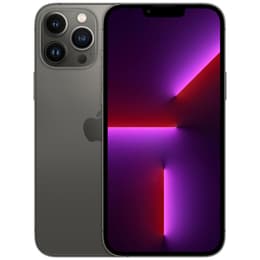
iPhone 13 Pro Max
iPhone 13 Pro Max
Starting at

Refurbished price:369.00

Versus €1,249.00 new

See options

Ratings

The Samsung Galaxy Z Fold5 (released August 2023) and the Apple iPhone 13 Pro Max (released September 2021) represent distinct approaches to high-end smartphone design. While the iPhone 13 Pro Max offers a traditional, large-screen experience running iOS, the Galaxy Z Fold5 introduces a unique foldable form factor with a large internal display, powered by the Android operating system. These fundamental differences in design and software define their primary use cases and target users.

Scores

Durability

When considering the long-term usability of these devices, their release timelines and software support are key factors.

  • Software Longevity: The Galaxy Z Fold5, being a newer device, is expected to receive Android operating system updates for approximately 4-5 years and security updates for 5 years from its release. The iPhone 13 Pro Max, released two years prior, typically receives iOS updates for 5-6 years from its launch, meaning its software support window will likely close sooner than the Fold5's.
  • Physical Durability: The iPhone 13 Pro Max features a Ceramic Shield front cover and a stainless steel frame, contributing to its robust build and IP68 water and dust resistance. The Galaxy Z Fold5, while also featuring an Armor Aluminum frame and Gorilla Glass Victus 2 on its cover screen, has a unique foldable design with an Ultra Thin Glass main screen. It boasts IPX8 water resistance but lacks an official dust resistance rating. User reports suggest the Fold5's hinge and overall build quality have improved significantly over previous foldable generations, with some users noting the inner screen protector has held up well.
  • Expected Practical Lifespan: Both devices are built to last, but the Fold5's newer release date gives it an edge in terms of future software compatibility. The iPhone 13 Pro Max's traditional design may offer a perception of greater physical resilience for some users, while the Fold5's improved hinge design aims to address earlier concerns about foldable durability.

Year of Release

2023

2021

Compatible with latest Update

Yes

Yes

OS

Android

iOS

Foldable

Yes

No

Performance

Both the Galaxy Z Fold5 and the iPhone 13 Pro Max deliver high-level performance, though their underlying architectures and multitasking approaches differ.

  • Everyday Responsiveness: The Galaxy Z Fold5 handles demanding applications and multitasking smoothly, particularly benefiting from its large internal display for running multiple apps simultaneously. The iPhone 13 Pro Max also offers a fluid user experience, with quick app loading and seamless transitions, maintaining strong performance even with intensive tasks.
  • Multitasking Capabilities: The Galaxy Z Fold5 excels in multitasking due to its expansive foldable screen, allowing users to comfortably view and interact with several applications at once, akin to a small tablet. The iPhone 13 Pro Max, with its traditional smartphone form factor, offers standard split-screen multitasking, which is effective but less expansive than the Fold5's approach.
  • Battery Behavior: The iPhone 13 Pro Max is recognized for its exceptional battery longevity, often providing up to two days of use for many users, even with heavy usage. The Galaxy Z Fold5, despite having a similar battery capacity, offers a full day of moderate to heavy use, with optimizations in its processor contributing to improved efficiency compared to its predecessors.

Memory (GB)

12 GB

6 GB

Screen quality

The display experience is a primary differentiator between these two devices, owing to their distinct form factors.

  • Display Technology and Clarity: The Galaxy Z Fold5 features a 7.6-inch Dynamic AMOLED 2X main display and a 6.2-inch Dynamic AMOLED 2X cover display, both offering vibrant colors and deep blacks. The iPhone 13 Pro Max boasts a 6.7-inch Super Retina XDR OLED display, known for its excellent color accuracy and contrast.
  • Brightness and Outdoor Visibility: Both devices offer high peak brightness levels, ensuring good visibility even in bright outdoor conditions. The iPhone 13 Pro Max's display can reach up to 1200 nits peak brightness for HDR content, while the Fold5's cover screen can reach 1750 nits (peak).
  • Refresh Rate and Smoothness: Both phones feature adaptive refresh rates up to 120Hz. The iPhone 13 Pro Max's ProMotion display dynamically adjusts from 10Hz to 120Hz, providing smooth scrolling and responsiveness while conserving battery. The Galaxy Z Fold5's displays also offer a 120Hz adaptive refresh rate for a fluid visual experience.

Resolution

1812 x 2176

1284 x 2778

Screen type

Foldable Dynamic AMOLED 2X

Super Retina XDR OLED

Audiovisual

Both smartphones offer capable camera systems, designed to capture high-quality photos and videos in various conditions.

  • Rear Camera System: The Galaxy Z Fold5 features a triple camera setup with a 50MP main sensor, a 12MP ultrawide, and a 10MP telephoto lens with 3x optical zoom. The iPhone 13 Pro Max also has a triple 12MP camera system, comprising wide, ultrawide, and telephoto lenses, with 3x optical zoom.
  • Photography Performance: The iPhone 13 Pro Max is known for its consistent image quality, excellent low-light performance, and features like Cinematic Mode for video and Photographic Styles. The Galaxy Z Fold5 delivers good color reproduction and detail in well-lit conditions, with its 50MP main sensor often pixel-binning to produce detailed 12MP images. Its low-light performance is generally good, though some users note it can be grainier than desired.
  • Video Recording and Additional Features: The iPhone 13 Pro Max offers 4K video recording at up to 60fps and ProRes video recording for professional workflows. The Galaxy Z Fold5 can record up to 8K video at 24fps and 4K at 60fps, with improved video stabilization and audio recording quality compared to its predecessor. The Fold5 also offers multiple selfie cameras, including a 10MP cover screen camera and a 4MP under-display camera on the main screen, which is primarily suited for video calls.

Main camera

50 megapixels

12 megapixels

Front camera

4 megapixels

12 megapixels

Miscellaneous

Beyond core features, several practical elements contribute to the overall user experience of these devices.

  • Connectivity and Ports: Both devices support 5G connectivity for fast mobile data. The Galaxy Z Fold5 includes Wi-Fi 6E and Bluetooth 5.3, along with a USB-C port for charging and data transfer. The iPhone 13 Pro Max supports Wi-Fi 6 and Bluetooth 5.0, utilizing Apple's proprietary Lightning port.
  • Biometric Security: The iPhone 13 Pro Max relies on Face ID for secure facial recognition. The Galaxy Z Fold5 features a side-mounted fingerprint sensor for biometric authentication, alongside facial recognition.
  • Physical Characteristics: The Galaxy Z Fold5 weighs 253 grams and has dimensions that change significantly when folded (154.9 x 67.1 x 13.4 mm) versus unfolded (154.9 x 130.1 x 6.1 mm), offering a compact form factor when closed and an expansive tablet-like experience when open. The iPhone 13 Pro Max weighs 240 grams and measures 160.8 x 78.1 x 7.65 mm, providing a substantial, traditional smartphone feel.
  • Stylus Support: The Galaxy Z Fold5 supports the S Pen (Fold Edition), offering enhanced productivity for note-taking and drawing on its large internal display. The iPhone 13 Pro Max does not support a stylus.

Weight

253 g

238 g

Screen size (in)

7.6

6.7

Network

5G

5G

SIM card

Dual Physical SIM + eSIM

Physical SIM + eSIM

Carrier compatibility

Unlocked

Unlocked

The Samsung Galaxy Z Fold5 and the iPhone 13 Pro Max cater to different user preferences, each excelling in distinct areas. Users frequently praise the Galaxy Z Fold5 for its innovative foldable design, which offers a versatile tablet-like experience for multitasking and media consumption. Many appreciate the improved hinge and overall build quality compared to earlier foldable models, noting its enhanced durability. Its battery life is also often cited as a significant improvement, allowing for a full day of use. However, some users occasionally express concerns about the camera's performance not always matching the very best traditional flagships, and the inner screen's reflective nature.

The iPhone 13 Pro Max is consistently lauded for its exceptional battery life, often lasting up to two days on a single charge, making it a reliable companion for heavy users. Its camera system receives high praise for delivering consistent, high-quality photos and videos, particularly in challenging lighting conditions. The smooth performance and fluid iOS experience are also frequently highlighted. Some common criticisms, however, include its substantial weight and the continued use of the Lightning port rather than a more universal USB-C.

Users prioritizing an expansive, adaptable screen for productivity, media, and a unique form factor may find the Galaxy Z Fold5 well-suited to their needs. Those who value industry-leading battery life, a highly refined and consistent camera experience, and the established iOS ecosystem will likely lean towards the iPhone 13 Pro Max. Both devices offer robust performance and premium features, and choosing between them often comes down to whether a foldable design or a traditional, long-lasting slab phone aligns better with individual daily usage patterns. Exploring quality-assured refurbished options for either model can provide an eco-friendly alternative for acquiring these advanced smartphones.


See all articles

Our recent comparisons