

iPhone 14 Pro Vs iPhone 15 Plus

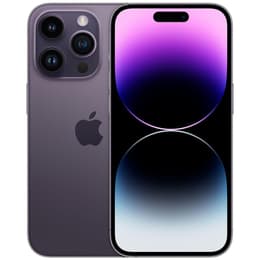
iPhone 14 Pro
iPhone 14 Pro
Starting at

Refurbished price:424.00

Versus €1,339.00 new

See options
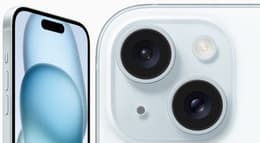
iPhone 15 Plus
iPhone 15 Plus
Starting at

Refurbished price:421.00

Versus €979.00 new

See options

Ratings

The iPhone 14 Pro, released in September 2022, and the iPhone 15 Plus, launched in September 2023, are both advanced smartphones from Apple. While the iPhone 14 Pro was a flagship model in its release year, the iPhone 15 Plus represents a larger-screen option from the subsequent generation's standard lineup. Both devices operate on Apple's iOS, offering a consistent software experience, but they diverge in display technology, camera capabilities, and physical connectivity.

Scores

Durability

When considering the practical lifespan of these devices, several factors come into play, including their release timelines, software support, and physical construction.

  • Release Timeline: The iPhone 14 Pro was released in September 2022, while the iPhone 15 Plus followed a year later in September 2023. This means the iPhone 15 Plus will likely receive software updates for approximately one year longer than the iPhone 14 Pro, extending its functional lifespan in terms of new features and security patches.
  • Software Longevity: Both models are expected to receive several years of iOS updates, ensuring continued access to the latest features and security enhancements. The newer release of the iPhone 15 Plus provides a slight advantage in terms of overall software support duration.
  • Durability and Repairability: Both devices feature Ceramic Shield on the front for enhanced drop protection and are rated IP68 for dust and water resistance. The iPhone 14 Pro utilizes a stainless steel frame, while the iPhone 15 Plus features an aluminum frame. User experiences suggest that the iPhone 15 and 15 Plus models demonstrated strong structural integrity in bend tests. Repairability for the back glass on the iPhone 15 Plus is noted to be more straightforward and less costly compared to the iPhone 14 Pro.

Year of Release

2022

2023

Compatible with latest Update

Yes

Yes

OS

iOS

iOS

Foldable

No

No

Performance

Both the iPhone 14 Pro and iPhone 15 Plus are equipped with the same advanced processor, delivering robust performance for a wide range of tasks.

  • Processor Capabilities: Both models feature the A16 Bionic chip, which provides efficient handling of demanding applications, complex games, and intensive multitasking. This ensures a smooth and responsive user experience across the operating system and various applications.
  • System Responsiveness: Users can expect quick app launches, fluid transitions, and efficient background process management on both devices. The shared processor means that general speed and responsiveness for everyday use are comparable.
  • Battery Behavior: The iPhone 15 Plus generally offers extended battery life compared to the iPhone 14 Pro, primarily due to its larger physical size allowing for a larger battery capacity and a 60Hz display. Users of the iPhone 14 Pro often report solid battery performance, typically lasting a full day for most users, though heavy usage might require an evening charge. The iPhone 15 Plus is often praised for its ability to last longer on a single charge, making it suitable for users who prioritize extended usage without frequent recharging.
  • Storage and RAM: Both devices come with 6GB of RAM, which supports efficient multitasking and app management. Storage options are available up to 512GB for the iPhone 15 Plus and up to 1TB for the iPhone 14 Pro, catering to different user needs for media and application storage.

Memory (GB)

6 GB

6 GB

Screen quality

The display experience on the iPhone 14 Pro and iPhone 15 Plus shares many similarities, yet also presents key distinctions that cater to different user preferences.

  • Display Technology and Clarity: Both phones feature Super Retina XDR OLED displays, offering deep blacks, vibrant colors, and excellent contrast. They share a pixel density of approximately 460 pixels per inch (ppi), resulting in sharp and clear visuals for text and images.
  • Brightness Levels: Both models achieve a peak outdoor brightness of up to 2000 nits, ensuring good visibility even in bright sunlight. Typical maximum brightness is 1000 nits, with HDR content reaching up to 1600 nits.
  • Refresh Rate and Smoothness: A significant difference lies in the refresh rate. The iPhone 14 Pro features ProMotion technology, offering an adaptive refresh rate up to 120Hz, which provides smoother scrolling and more fluid animations. It also includes an Always-On display feature, which can drop to 1Hz to save battery. The iPhone 15 Plus, while having a high-quality OLED panel, maintains a standard 60Hz refresh rate and does not include an Always-On display.
  • Screen Size and Dynamic Island: The iPhone 15 Plus offers a larger 6.7-inch display, providing more screen real estate for media consumption and multitasking. The iPhone 14 Pro has a 6.1-inch display. Both models incorporate the Dynamic Island, a pill-shaped cutout that dynamically displays alerts and background activities.

Resolution

1179 x 2556

1290 x 2796

Screen type

LTPO Super Retina XDR OLED

Super Retina XDR OLED

Audiovisual

The camera systems on the iPhone 14 Pro and iPhone 15 Plus offer distinct capabilities, catering to different photography and videography needs.

  • Main Camera System: Both devices feature a 48MP main camera with sensor-shift optical image stabilization, capable of capturing detailed photos. The iPhone 14 Pro includes a dedicated 12MP 3x telephoto lens, offering true optical zoom for distant subjects. The iPhone 15 Plus achieves 2x telephoto-like shots by cropping from its 48MP main sensor, providing optical-quality zoom without a dedicated lens. Both also include a 12MP ultra-wide camera.
  • Photography Features: The iPhone 14 Pro benefits from a LiDAR scanner, which enhances autofocus in low light and enables Night mode portraits. It also supports Apple ProRAW for advanced photo editing. The iPhone 15 Plus introduces next-generation portraits with improved depth control and the ability to automatically capture depth information for later portrait conversion. Both models offer Night mode and Smart HDR for improved image quality in various lighting conditions.
  • Video Recording Quality: Both phones support 4K video recording at up to 60 frames per second, with features like Cinematic mode and Action mode for stabilized video. The iPhone 14 Pro additionally supports ProRes video recording, which is beneficial for professional video workflows.
  • Front Camera and Audio: Both devices feature a 12MP TrueDepth front camera with autofocus, suitable for selfies and video calls. For audio, both offer stereo speaker output and good microphone quality for calls and video recording.

Main camera

48 megapixels

48 megapixels

Front camera

12 megapixels

12 megapixels

Miscellaneous

Beyond core performance and display, several practical elements differentiate the iPhone 14 Pro and iPhone 15 Plus, impacting daily usability and connectivity.

  • Connectivity Options: Both devices support 5G cellular connectivity, along with current Wi-Fi and Bluetooth standards, ensuring fast wireless communication. They also include Emergency SOS via Satellite and Crash Detection features for enhanced safety.
  • Port Type: A notable difference is the charging and data port. The iPhone 14 Pro utilizes Apple's proprietary Lightning port. The iPhone 15 Plus, however, has transitioned to a USB-C port, offering broader compatibility with accessories and potentially faster data transfer speeds, especially for larger files.
  • Sensors and Biometrics: Both phones rely on Face ID for secure authentication. They include a standard suite of sensors such as an accelerometer, gyroscope, proximity sensor, ambient light sensor, barometer, and digital compass. The iPhone 14 Pro also features a LiDAR scanner, which aids in augmented reality applications and low-light photography.
  • Build Materials and Handling: The iPhone 14 Pro features a stainless steel frame, contributing to a more substantial feel and potentially higher scratch resistance on the sides. The iPhone 15 Plus uses an aluminum frame, which makes it lighter. The iPhone 14 Pro is a 6.1-inch device, while the iPhone 15 Plus is larger at 6.7 inches, impacting one-handed use and pocketability.

Weight

206 g

171 g

Screen size (in)

6.1

6.7

Network

5G

5G

SIM card

Physical SIM + eSIM

eSIM

Carrier compatibility

Unlocked

Unlocked

Connector

Lightning

USB-C (USB 2)

User feedback for the iPhone 14 Pro often highlights its advanced display with ProMotion and Always-On capabilities as significant advantages, along with its versatile camera system, particularly the dedicated telephoto lens and ProRes video. Some users, however, have noted its weight due to the stainless steel frame and the smaller screen size compared to larger models. The iPhone 15 Plus is frequently praised for its excellent battery life and the larger display, which enhances media consumption and general usability. The transition to USB-C is also a welcome change for many, offering increased convenience. Criticisms for the iPhone 15 Plus sometimes revolve around its 60Hz display, which some users find less fluid than higher refresh rate screens, and the absence of a dedicated telephoto camera.

For users who prioritize a compact form factor with a highly responsive and adaptive display, including the Always-On feature, and a comprehensive camera system with optical zoom and advanced video capabilities, the iPhone 14 Pro may be a more suitable choice. Its ProMotion display offers a smoother visual experience, which can be particularly noticeable during scrolling and gaming. Conversely, users who value a larger screen for immersive viewing, extended battery life, and the convenience of a USB-C port will likely find the iPhone 15 Plus better suited to their needs. It offers a robust performance package in a larger, more enduring form factor. Both devices represent quality-assured options, and considering a refurbished model can be an eco-friendly alternative for either choice.


See all articles

Our recent comparisons