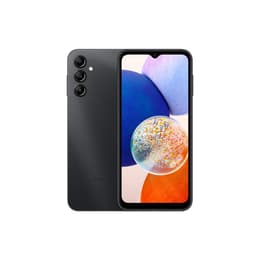
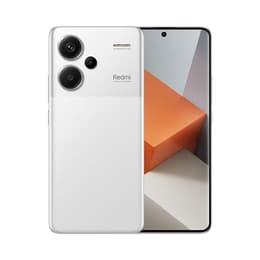


Galaxy A14 Vs Xiaomi Redmi Note 13 Pro+

Galaxy A14
Galaxy A14
Starting at

Refurbished price:97.00

Versus €269.00 new

See options
Xiaomi Redmi Note 13 Pro+
Starting at

Refurbished price:198.00

Versus €449.00 new

See options

Ratings

The Samsung Galaxy A14 (released in early 2023) and the Xiaomi Redmi Note 13 Pro+ (released in late 2023/early 2024) are both Android smartphones that cater to different user priorities. While the Galaxy A14 focuses on essential functionality and extended software support, the Redmi Note 13 Pro+ offers a more premium experience with advanced display technology, faster charging, and a high-resolution camera system. Both devices run on the Android operating system, with the Galaxy A14 featuring Samsung's One UI Core and the Redmi Note 13 Pro+ utilizing Xiaomi's MIUI or HyperOS.

Scores

Durability

When considering the long-term usability of these devices, their release timelines and software support policies are key factors.

  • Release Timeline: The Samsung Galaxy A14 was released in early 2023, while the Xiaomi Redmi Note 13 Pro+ followed in late 2023 or early 2024. This difference means the Redmi Note 13 Pro+ will generally receive software updates for a slightly longer period.
  • Software Support: The Galaxy A14 is expected to receive two major Android version updates and four years of security updates from its release. The Redmi Note 13 Pro+ is anticipated to receive three major OS updates and four years of security updates, potentially offering an additional year of major Android versions.
  • Durability Features: The Redmi Note 13 Pro+ features Corning Gorilla Glass Victus for display protection and an IP68 rating for dust and water resistance, indicating a higher level of physical durability. The Galaxy A14 uses a plastic build and does not specify advanced display protection or an IP rating in all variants, suggesting a more basic level of protection.

Year of Release

2023

2023

Compatible with latest Update

No

Yes

OS

Android

Android

Foldable

No

No

Performance

The performance of a smartphone impacts daily responsiveness, app handling, and multitasking capabilities.

  • Processor Capabilities: The Redmi Note 13 Pro+ is equipped with a more capable processor, which translates to a smoother experience for demanding applications, faster app loading, and more fluid multitasking. Users report it feels fast and smooth for everyday tasks and has good RAM management. The Galaxy A14 handles most routine tasks adequately, but some users note it can struggle with graphically intensive games or heavy multitasking, with occasional lag reported.
  • Storage and RAM: The Redmi Note 13 Pro+ typically offers higher base storage and RAM configurations, starting from 8GB RAM and 256GB storage, with options up to 16GB RAM and 512GB storage. The Galaxy A14 comes with configurations ranging from 4GB to 8GB of RAM and 64GB to 128GB of internal storage, with the benefit of expandable storage via a microSD card slot. The Redmi Note 13 Pro+ does not offer expandable storage.
  • Battery Behavior: Both devices feature a 5000mAh battery capacity. The Galaxy A14 generally provides good battery life, often lasting a full day with moderate usage. The Redmi Note 13 Pro+ also offers solid battery endurance, typically providing about 1.5 days of use on a single charge for average users. A significant differentiator is the charging speed; the Redmi Note 13 Pro+ supports 120W fast charging, allowing it to reach a full charge in under 30 minutes, whereas the Galaxy A14 supports 15W charging, which takes considerably longer.

Memory (GB)

4 GB

12 GB

Screen quality

The display is a primary interface for smartphone interaction, and differences in technology and specifications can significantly affect the viewing experience.

  • Display Technology and Resolution: The Redmi Note 13 Pro+ features a 6.67-inch AMOLED display with a resolution of 2712x1220 pixels, resulting in sharp and vibrant visuals with deep blacks and excellent contrast. The Galaxy A14 has a 6.6-inch PLS LCD display with a 1080x2408 pixel resolution. While the A14's display offers clear visuals, the AMOLED panel on the Redmi Note 13 Pro+ generally provides superior color reproduction and viewing angles.
  • Brightness and Refresh Rate: The Redmi Note 13 Pro+ boasts a high peak brightness of 1800 nits, making it highly visible even in bright outdoor conditions, and an adaptive 120Hz refresh rate for smooth scrolling and animations. The Galaxy A14 offers a 90Hz refresh rate, which provides a smoother experience than standard 60Hz displays, but its brightness levels are lower, which can impact outdoor visibility.
  • Screen Protection: The Redmi Note 13 Pro+ is protected by Corning Gorilla Glass Victus, offering enhanced resistance against scratches and drops. The Galaxy A14 does not consistently specify advanced display protection across all variants.

Resolution

1080 x 2408

1220 x 2712

Screen type

PLS LCD

AMOLED

Audiovisual

Both smartphones offer multi-camera setups, but their capabilities and performance vary, particularly in challenging lighting conditions.

  • Rear Camera System: The Redmi Note 13 Pro+ features a 200-megapixel main sensor with optical image stabilization (OIS), an 8-megapixel ultrawide lens, and a 2-megapixel macro lens. This main sensor is capable of capturing highly detailed and high-quality photos, performing well in various lighting scenarios, including decent low-light performance. The Galaxy A14 includes a 50-megapixel main camera, a 2-megapixel macro camera, and a 2-megapixel depth sensor. Its main camera performs well in good daylight conditions, producing clear and color-accurate images, but its low-light performance is considered average. Some Galaxy A14 models lack an ultrawide camera.
  • Front Camera and Video Recording: The Redmi Note 13 Pro+ has a 16-megapixel front camera, while the Galaxy A14 features a 13-megapixel front camera. Both offer good selfie quality in favorable lighting. For video, the Redmi Note 13 Pro+ can record up to 4K at 30 frames per second (fps) with good stabilization on its main camera, while the ultrawide and front cameras are limited to 1080p. The Galaxy A14 records video at 1080p at 30fps across its cameras, with digital stabilization.
  • Special Features: The Redmi Note 13 Pro+ main camera benefits from OIS for more stable photos and videos. User reviews suggest the ultrawide and macro lenses on the Redmi Note 13 Pro+ are less impressive than the main sensor.

Main camera

50 megapixels

200 megapixels

Front camera

13 megapixels

16 megapixels

Miscellaneous

Beyond core performance and display, several other features contribute to the overall user experience and device utility.

  • Connectivity and Ports: Both devices support 5G connectivity. The Redmi Note 13 Pro+ supports Wi-Fi 6 and Bluetooth 5.3, offering newer wireless standards. The Galaxy A14 supports Wi-Fi 5 and Bluetooth 5.1. Both include USB-C ports and NFC. The Galaxy A14 retains a 3.5mm headphone jack, which is absent on the Redmi Note 13 Pro+.
  • Biometric Security: The Redmi Note 13 Pro+ features an in-screen fingerprint sensor. The Galaxy A14 utilizes a side-mounted fingerprint sensor integrated into the power button.
  • Build Materials and Handling: The Redmi Note 13 Pro+ has a more premium build with a curved display and an IP68 rating for dust and water resistance. It weighs 204.5 grams and measures 161.4 x 74.2 x 8.9 mm. The Galaxy A14 has a plastic polycarbonate back and frame, weighing around 201-202 grams and measuring 167.7 x 78 x 9.1 mm.

Weight

201 g

204 g

Screen size (in)

6.6

6.67

Network

4G

5G

SIM card

Dual Physical SIM

Dual Physical SIM

Carrier compatibility

Unlocked

Unlocked

User feedback for the Samsung Galaxy A14 often highlights its excellent battery life and reliable performance for everyday tasks as strong points. However, common criticisms include its average camera performance in low light, the absence of an ultrawide lens in some variants, and occasional performance slowdowns with demanding applications. The Redmi Note 13 Pro+ receives praise for its vibrant AMOLED display, exceptionally fast 120W charging, and the high-resolution main camera. Some users have noted that its ultrawide and macro cameras are not as strong as the main sensor, and there have been isolated reports of battery drain after software updates or general lag with heavy use.

Users who prioritize a long-lasting battery, expandable storage, and a traditional headphone jack for essential smartphone functions may find the Samsung Galaxy A14 well-suited to their needs. Conversely, individuals seeking a more premium visual experience with a high-refresh-rate AMOLED display, rapid charging capabilities, a more powerful processor for smoother performance, and a high-resolution main camera will likely lean towards the Xiaomi Redmi Note 13 Pro+. Both devices offer a gateway to the Android ecosystem, and for those considering a sustainable choice, quality-assured refurbished options for both models are available, providing an eco-friendly alternative.


See all articles

Our recent comparisons