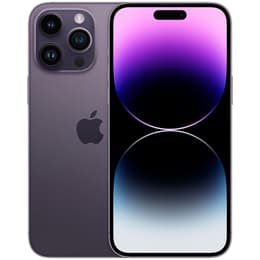
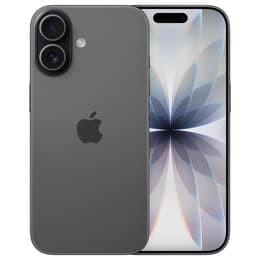


iPhone 14 Pro Max Vs iPhone 17

iPhone 14 Pro Max
iPhone 14 Pro Max
Starting at

Refurbished price:446.00

Versus €1,489.00 new

See options
iPhone 17
iPhone 17
Starting at

Refurbished price:685.00

Versus €979.00 new

See options

Ratings

The iPhone 14 Pro Max, released in September 2022, and the iPhone 17, launched in September 2025, represent different generations of Apple's smartphone technology. While both devices operate on Apple's iOS platform, the iPhone 17 introduces advancements in processing power, camera capabilities, and display technology, alongside a shift in connectivity standards. These differences cater to varying user priorities, from those seeking established performance to those desiring the latest innovations.

Scores

Durability

When considering the practical lifespan of these devices, their respective release dates play a significant role in software support and overall longevity.

  • Software Support: The iPhone 14 Pro Max, released in 2022, can be expected to receive major iOS updates for approximately 5-6 years from its launch, likely extending until around 2027-2028. The iPhone 17, being a 2025 release, benefits from a longer support window, with anticipated updates extending into 2030-2031, offering a more future-proof experience for users prioritizing long-term software features.
  • Physical Durability: Both models feature robust construction with IP68 ratings for water and dust resistance, allowing submersion up to 6 meters for 30 minutes. The iPhone 14 Pro Max utilizes Ceramic Shield for its front cover and a stainless steel frame. The iPhone 17 enhances this with Ceramic Shield 2, which is reported to offer improved scratch resistance.
  • Repairability: While specific repairability scores for the iPhone 14 Pro Max are not readily available, iPhones generally offer moderate repairability. The iPhone 17 series has received a provisional iFixit repairability score of 7 out of 10, partly due to innovations like a screwed-in battery tray, which can simplify battery replacements.

Year of Release

2022

2025

Compatible with latest Update

Yes

Yes

OS

iOS

iOS

Foldable

No

No

Performance

The performance of a smartphone is largely dictated by its internal processing unit and how efficiently it manages tasks and power.

  • Processing Power: The iPhone 14 Pro Max is equipped with a powerful processor from its generation, capable of handling demanding applications, complex multitasking, and graphic-intensive games smoothly. The iPhone 17, featuring a newer generation processor, delivers a noticeable leap in performance, resulting in faster app loading times, more fluid multitasking, and enhanced capabilities for advanced computing tasks and next-generation gaming.
  • Battery Behavior: The iPhone 14 Pro Max is known for its extended battery life, often lasting a full day or more for many users, with web browsing tests showing around 13 hours of usage. The iPhone 17, while having a slightly smaller battery capacity than the 14 Pro Max, benefits from a more power-efficient processor and software optimizations, leading to strong all-day battery performance, with video playback rated up to 30 hours.
  • Storage and Responsiveness: Both devices offer various internal storage options to accommodate user needs. The newer architecture and increased memory in the iPhone 17 contribute to overall system responsiveness, ensuring a highly fluid user experience even under heavy load.

Memory (GB)

6 GB

8 GB

Screen quality

The visual experience on a smartphone is primarily defined by its display technology, resolution, and brightness capabilities.

  • Display Technology: Both the iPhone 14 Pro Max and the iPhone 17 feature Super Retina XDR OLED displays, providing deep blacks, high contrast ratios, and vibrant color reproduction. The iPhone 14 Pro Max has a 6.7-inch display, while the base iPhone 17 features a 6.3-inch display.
  • Brightness and Clarity: The iPhone 14 Pro Max offers a typical brightness of 1000 nits, peaking at 1600 nits for HDR content and up to 2000 nits for outdoor visibility. The iPhone 17 matches the typical and HDR peak brightness but significantly increases peak outdoor brightness to 3000 nits, enhancing visibility in direct sunlight. Both displays maintain a sharp resolution of approximately 460 pixels per inch.
  • Refresh Rate and Features: Both models incorporate ProMotion technology, offering adaptive refresh rates up to 120Hz for smooth scrolling and responsive interactions. The iPhone 14 Pro Max introduced the Dynamic Island, a feature also present on the iPhone 17, which intelligently integrates alerts and background activities. The iPhone 17 also includes a new anti-reflective coating to reduce glare.

Resolution

1290 x 2796

2622x1206

Screen type

LTPO Super Retina XDR OLED

Super Retina XDR

Audiovisual

The camera systems on both iPhones are designed to capture high-quality images and videos, though with generational improvements in the newer model.

  • Rear Camera System: The iPhone 14 Pro Max features a Pro camera system with a 48-megapixel main sensor, a 12-megapixel ultra-wide lens, and a dedicated 12-megapixel 3x telephoto lens for optical zoom. The base iPhone 17 utilizes a dual 48-megapixel "Fusion" camera system, comprising a main lens and an ultra-wide lens. The main camera can achieve a 2x optical-quality telephoto effect through cropping its high-resolution sensor, but it lacks a dedicated telephoto lens.
  • Photography Performance: Both devices excel in everyday photography, producing detailed images with accurate colors. The iPhone 17's larger sensors and improved computational photography, including Smart HDR 5, offer enhanced low-light performance and dynamic range compared to the iPhone 14 Pro Max's Smart HDR 4. The iPhone 14 Pro Max's dedicated 3x telephoto lens provides superior optical zoom capabilities compared to the base iPhone 17's 2x digital crop.
  • Video and Front Camera: Both support 4K video recording, Cinematic Mode, and Action Mode for stabilized video. The iPhone 17 introduces Spatial Video recording. For selfies, the iPhone 14 Pro Max has a 12-megapixel front camera with autofocus. The iPhone 17 upgrades to an 18-megapixel "Center Stage" front camera with autofocus and a square sensor, allowing for flexible portrait or landscape orientation without physically rotating the device.

Main camera

48 megapixels

48 megapixels

Front camera

12 megapixels

18 megapixels

Miscellaneous

Beyond core features, several practical elements contribute to the overall user experience and device utility.

  • Connectivity Standards: The iPhone 14 Pro Max supports 5G cellular networks, Wi-Fi 6, and Bluetooth 5.3. The iPhone 17 features more advanced connectivity, including 5G, Wi-Fi 7, and Bluetooth 6, offering faster wireless speeds and improved efficiency.
  • Charging Port: A notable difference is the charging and data transfer port. The iPhone 14 Pro Max uses Apple's proprietary Lightning port. The iPhone 17 transitions to a universal USB-C port, aligning with broader industry standards.
  • Physical Attributes: The iPhone 14 Pro Max is a larger and heavier device, weighing 240 grams with dimensions of 160.7 x 77.6 x 7.85 mm. The base iPhone 17 is more compact and lighter at 177 grams, with dimensions of 149.6 x 71.5 x 7.95 mm, making it potentially more comfortable for one-handed use and pocketability. Both devices rely on Face ID for secure authentication.

Weight

120 g

177 g

Screen size (in)

6.7

6.3

Network

5G

5G

SIM card

Physical SIM + eSIM

eSIM

Carrier compatibility

Unlocked

Unlocked

Connector

Lightning

USB-C

The iPhone 14 Pro Max and iPhone 17 each offer compelling features, catering to different user needs and preferences. The iPhone 14 Pro Max is widely praised for its exceptional battery life, robust build, and a comprehensive camera system that includes a dedicated telephoto lens. Users often highlight its large, vibrant display as a key advantage for media consumption and productivity. Some common feedback for the 14 Pro Max centers on its substantial size and weight, which can be a consideration for those preferring a more compact device.

The iPhone 17, as a newer generation, brings significant upgrades. Users appreciate the inclusion of a 120Hz ProMotion display on the base model, the faster processing power, and the versatile 48-megapixel main and ultrawide cameras. The shift to USB-C connectivity is also a frequently lauded improvement. However, some users note the absence of a dedicated telephoto lens on the base iPhone 17, relying instead on digital cropping for zoom, and some initial reports mentioned minor camera glitches or design elements that felt less refined than previous models.

Users prioritizing a proven, long-lasting battery and a dedicated optical telephoto lens may find the iPhone 14 Pro Max well-suited to their needs. Conversely, those who value the absolute latest in processing power, a more advanced display with higher outdoor brightness, Wi-Fi 7, USB-C connectivity, and an enhanced front-facing camera will likely lean towards the iPhone 17. Both devices offer a premium smartphone experience, and choosing between them depends on which set of advancements aligns best with individual usage patterns. For those considering either model, exploring quality-assured refurbished options can provide an eco-friendly alternative.

See all articles

Our recent comparisons







