

Galaxy S23 Ultra Vs iPhone 12 Pro Max

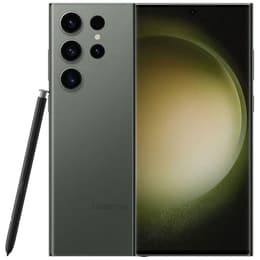
Galaxy S23 Ultra
Galaxy S23 Ultra
Starting at

Refurbished price:415.00

Versus €1,599.00 new

See options
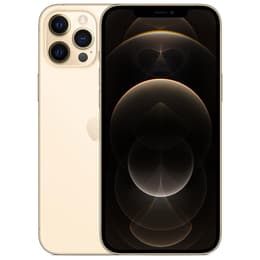
iPhone 12 Pro Max
iPhone 12 Pro Max
Starting at

Refurbished price:244.00

Versus €1,139.00 new

See options

Ratings

The Samsung Galaxy S23 Ultra, released in February 2023, and the Apple iPhone 12 Pro Max, launched in November 2020, represent flagship smartphones from their respective manufacturers. While both devices offer large displays and advanced camera systems, they differ significantly in their operating systems, release timelines, and specific hardware capabilities. The Galaxy S23 Ultra runs on Android, offering a highly customizable experience, whereas the iPhone 12 Pro Max operates on Apple's iOS, known for its integrated ecosystem and user-friendly interface.

Scores

Durability

The longevity of a smartphone is influenced by its build quality, software support, and the availability of repairs.

  • Release Timeline: The Galaxy S23 Ultra is a more recent device, released in February 2023, making it over two years newer than the iPhone 12 Pro Max, which launched in November 2020. This difference in release date impacts their remaining software support cycles.
  • Software Support: The Galaxy S23 Ultra is guaranteed four major Android OS updates and five years of security patches, extending its support until at least 2028. The iPhone 12 Pro Max typically receives major iOS updates for about five to six years from its release, with security updates potentially lasting up to seven years. It is likely to receive iOS 19 as its last major OS update, with security support continuing until around 2027.
  • Physical Durability: Both devices feature robust construction. The Galaxy S23 Ultra incorporates Gorilla Glass Victus 2 on its front and back, paired with an Armor Aluminum frame. The iPhone 12 Pro Max utilizes Apple's Ceramic Shield on the front and a stainless steel frame. Both models carry an IP68 rating for dust and water resistance.

Year of Release

2023

2020

Compatible with latest Update

Yes

Yes

OS

Android

iOS

Foldable

No

No

Performance

Performance is a key differentiator, affecting how smoothly applications run, how quickly tasks are completed, and the overall responsiveness of the device.

  • Processing Power: The Galaxy S23 Ultra is equipped with a more recent-generation processor, which translates to faster CPU and GPU speeds. This allows for smoother handling of demanding applications, complex multitasking, and graphically intensive games. The iPhone 12 Pro Max, powered by its A14 Bionic chip, still offers capable performance for everyday use and many modern applications, though it may show its age in the most intensive tasks compared to newer hardware.
  • Multitasking and Storage: The Galaxy S23 Ultra typically comes with 8GB or 12GB of RAM, providing ample capacity for keeping multiple applications open and switching between them without slowdowns. Storage options range from 256GB up to 1TB. The iPhone 12 Pro Max features 6GB of RAM and offers storage configurations of 128GB, 256GB, or 512GB.
  • Battery Behavior: The Galaxy S23 Ultra houses a larger 5000 mAh battery, often providing extended usage times, with many users reporting it can last through a full day of heavy use or longer with moderate use. The iPhone 12 Pro Max, with its 3687 mAh battery, was noted for its strong battery life at its release, often lasting a full day for most users.

Memory (GB)

8 GB

6 GB

Screen quality

The display is the primary interface for interaction, and differences in technology and specifications can significantly impact the visual experience.

  • Display Technology and Resolution: Both devices feature high-quality OLED displays, known for deep blacks and vibrant colors. The Galaxy S23 Ultra has a 6.8-inch Dynamic AMOLED 2X display with a QHD+ resolution (3088 x 1440 pixels). The iPhone 12 Pro Max features a 6.7-inch Super Retina XDR OLED display with a resolution of 2778 x 1284 pixels.
  • Refresh Rate and Brightness: The Galaxy S23 Ultra offers an adaptive refresh rate that can scale from 1Hz to 120Hz, providing smoother scrolling and more fluid animations. It also boasts a peak brightness of up to 1750 nits, enhancing visibility in bright outdoor conditions. The iPhone 12 Pro Max has a standard 60Hz refresh rate and a peak brightness of up to 1200 nits, which is still bright enough for most viewing environments.
  • Viewing Experience: The slightly larger screen and higher refresh rate of the S23 Ultra contribute to a more immersive and responsive viewing experience, particularly for media consumption and gaming. Both displays offer excellent clarity for text and images.

Resolution

1440 x 3088

1284 x 2778

Screen type

Dynamic AMOLED 2X

Super Retina XDR OLED

Audiovisual

Camera capabilities are a significant factor for many users, and both smartphones offer advanced systems for capturing photos and videos.

  • Rear Camera Systems: The Galaxy S23 Ultra features a versatile quad-camera setup, including a 200MP main sensor, a 12MP ultrawide lens, a 10MP telephoto lens with 3x optical zoom, and another 10MP telephoto lens with 10x optical zoom. This allows for exceptional detail and extensive zoom capabilities. The iPhone 12 Pro Max has a triple-camera system, consisting of a 12MP main sensor, a 12MP ultrawide lens, and a 12MP telephoto lens with 2.5x optical zoom.
  • Photography Performance: Users of the S23 Ultra praise its low-light performance and the detail captured by its high-resolution main sensor and zoom lenses, though some note occasional inconsistencies with skin tone accuracy and shutter lag when using the 200MP mode. The iPhone 12 Pro Max was recognized for its strong low-light performance and the inclusion of a LiDAR scanner for improved autofocus and Night Mode portraits.
  • Video Recording and Audio: The S23 Ultra is capable of recording video at up to 8K resolution. The iPhone 12 Pro Max supports 4K video recording at 60 frames per second, with Dolby Vision HDR capabilities. Both devices offer good microphone quality for calls and recordings, and their stereo speakers provide a clear audio experience for media consumption.

Main camera

200 megapixels

12 megapixels

Front camera

12 megapixels

12 megapixels

Miscellaneous

Beyond core features, several practical elements contribute to the overall user experience and daily usability of these devices.

  • Connectivity and Ports: The Galaxy S23 Ultra supports 5G, Wi-Fi 6E, and Bluetooth 5.3, offering faster wireless speeds and more stable connections. It features a USB-C port for charging and data transfer. The iPhone 12 Pro Max also supports 5G, along with Wi-Fi 6 and Bluetooth 5.0. It uses Apple's proprietary Lightning port.
  • Biometrics and Unique Features: The S23 Ultra includes an under-display fingerprint sensor and facial recognition for secure unlocking. A notable integrated feature is the S Pen, which allows for precise input, note-taking, and remote controls. The iPhone 12 Pro Max relies on Face ID for biometric authentication and supports MagSafe for magnetic attachment of accessories and wireless charging.
  • Design and Handling: The Galaxy S23 Ultra weighs 234g and measures 163.4 x 78.1 x 8.9 mm. The iPhone 12 Pro Max weighs 228g and has dimensions of 160.8 x 78.1 x 7.4 mm. Both are large devices, offering substantial screen real estate, though the S23 Ultra is slightly thicker and heavier.

Weight

234 g

226 g

Screen size (in)

6.8

6.7

Network

5G

5G

SIM card

Dual Physical SIM + eSIM

Physical SIM + eSIM

Carrier compatibility

Unlocked

Unlocked

Connector

USB-C

Lightning

User feedback for the Galaxy S23 Ultra frequently highlights its exceptional battery life, powerful performance for demanding tasks, and a highly versatile camera system, particularly its impressive zoom capabilities. Some users have noted occasional inconsistencies in camera processing, such as skin tone accuracy, and a slight shutter lag when utilizing the full 200MP resolution. The integrated S Pen is also a consistent point of praise for its utility.

For the iPhone 12 Pro Max, common praise centers on its enduring performance, robust build quality, and its camera system, which was considered top-tier at its release and still performs well in many scenarios. Its battery life was also a significant advantage for its generation. Criticisms often point to its 60Hz display, which feels less fluid compared to newer devices, and the use of the Lightning port, which is becoming less common than USB-C. Its software support is also nearing its typical end-of-life cycle.

Users prioritizing cutting-edge camera technology, extensive software support, a high refresh rate display, and integrated stylus functionality will find the Galaxy S23 Ultra well-suited to their needs. Conversely, users seeking a robust and reliable device within a proven ecosystem, strong performance for everyday use, and a large display may lean toward the iPhone 12 Pro Max, especially when considering a quality-assured refurbished option. Both devices offer distinct advantages, catering to different user preferences and priorities.


See all articles

Our recent comparisons