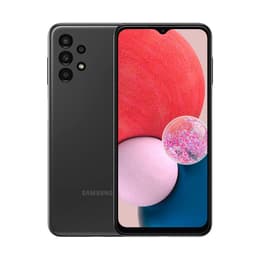
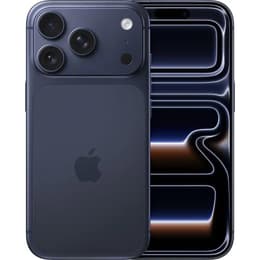


Galaxy A13 Vs iPhone 17 Pro

Galaxy A13
Galaxy A13
Starting at

Refurbished price:96.00

Versus €249.00 new

See options
iPhone 17 Pro
iPhone 17 Pro
Starting at

Refurbished price:1,100.00

Versus €1,339.00 new

See options

Ratings

The Samsung Galaxy A13, released in March 2022, and the hypothetical iPhone 17 Pro, anticipated for release in September 2025, represent distinct approaches to smartphone design and functionality. The Galaxy A13 offers a foundational Android experience, focusing on essential features and accessibility. In contrast, the iPhone 17 Pro is expected to deliver a high-performance, feature-rich iOS experience, targeting users who prioritize cutting-edge technology and advanced capabilities. These devices cater to different user needs, with the A13 providing a straightforward mobile solution and the 17 Pro aiming for a premium, advanced user experience.

Scores

Durability

The longevity of a smartphone is influenced by its initial release date, software support, and physical durability. The Galaxy A13, launched in March 2022, has already received two major Android OS updates and is now primarily receiving security updates. Apple typically provides major iOS updates for approximately five to six years from a device's release, with security updates often extending even longer. The iPhone 17 Pro, as a newer device, would benefit from this extended software support timeline.

  • Software Updates: The Galaxy A13, having launched in 2022 with Android 12, has received updates up to Android 14 and is now in its security update phase, with major OS updates having concluded. The iPhone 17 Pro, expected to launch with iOS 19, would likely receive major iOS updates for five to seven years, offering a longer period of new features and system enhancements.
  • Physical Durability: The Galaxy A13 features a glass front with Corning Gorilla Glass 5 protection, and a plastic frame and rear. The iPhone 17 Pro is anticipated to incorporate advanced materials like Ceramic Shield 2 for the display and a unibody aluminum frame, designed for enhanced scratch and drop resistance.
  • Expected Lifespan: Given its release timeline, the Galaxy A13 is nearing the end of its major software update cycle, transitioning to security updates. The iPhone 17 Pro, being a new release, would offer a significantly longer period of active software and security support, extending its practical lifespan for users who value the latest features and security protocols.

Year of Release

2022

2025

Compatible with latest Update

No

Yes

OS

Android

iOS

Foldable

No

No

Performance

Performance is a key differentiator, impacting how smoothly applications run, how quickly tasks are completed, and the overall responsiveness of the device. The Galaxy A13 is equipped with an entry-level processor, while the iPhone 17 Pro is expected to feature Apple's latest high-performance chip.

  • Processing Power: The Galaxy A13 utilizes an octa-core processor, such as the Exynos 850, which is suitable for everyday tasks like web browsing, social media, and light applications. Users may experience slower app loading times and less fluid multitasking with more demanding applications. The iPhone 17 Pro is expected to house an advanced A-series chip, such as the A19 Pro, built on a cutting-edge process, providing substantial power for intensive gaming, professional applications, and seamless multitasking.
  • System Responsiveness and Multitasking: The Galaxy A13's performance is generally described as adequate for basic use, but it may exhibit juddery app transitions and slower frame rates in more intensive scenarios. Its RAM options, typically 3GB to 6GB, support moderate multitasking. The iPhone 17 Pro is anticipated to offer a highly responsive user experience, with smooth transitions and efficient handling of numerous applications simultaneously, supported by a larger RAM capacity, likely 12GB.
  • Storage Capabilities: The Galaxy A13 offers internal storage options ranging from 32GB to 128GB, with the added flexibility of expandable storage via a microSD card up to 1TB. The iPhone 17 Pro is expected to come with higher base storage options, starting from 256GB and going up to 2TB for the Pro Max variant, utilizing fast internal storage without expandable options.

Memory (GB)

4 GB

12 GB

Screen quality

The display is the primary interface for user interaction, and differences in screen technology, resolution, and brightness significantly affect the viewing experience. The Galaxy A13 features a large LCD panel, while the iPhone 17 Pro is expected to offer a more advanced OLED display.

  • Display Technology and Clarity: The Galaxy A13 features a 6.6-inch PLS TFT LCD display with a resolution of 2408 x 1080 pixels, providing a clear viewing experience for general use. The iPhone 17 Pro is expected to feature a Super Retina XDR OLED display, likely around 6.3 inches, offering deep blacks, vibrant colors, and high contrast, which enhances the visual quality for all content.
  • Brightness and Refresh Rate: The Galaxy A13's display operates at a standard 60Hz refresh rate, which is suitable for everyday scrolling and video playback. The iPhone 17 Pro is anticipated to include ProMotion technology, offering an adaptive refresh rate up to 120Hz for smoother scrolling and more fluid animations. It is also expected to achieve significantly higher peak brightness levels, up to 3,000 nits for outdoor visibility, compared to the A13's typical brightness.
  • Viewing Experience: The Galaxy A13's large screen size provides ample space for media consumption and browsing, though its LCD technology may not offer the same color vibrancy or contrast as an OLED panel. The iPhone 17 Pro's display is designed for an immersive viewing experience, with high resolution, exceptional brightness, and an anti-reflective coating to reduce glare, making it well-suited for various lighting conditions and professional content creation.

Resolution

1080 x 2408

2622x1206

Screen type

PLS LCD

Super Retina XDR

Audiovisual

Camera capabilities are a significant factor for many users, influencing the quality of photos and videos captured in various environments. The Galaxy A13 offers a versatile quad-camera setup, while the iPhone 17 Pro is expected to feature a highly advanced professional camera system.

  • Rear Camera System: The Galaxy A13 includes a quad-camera system with a 50MP main sensor, a 5MP ultrawide, and 2MP macro and depth sensors. The 50MP main camera performs well in good lighting conditions, capturing decent detail and colors. The ultrawide camera, however, may show less detail, and the macro and depth sensors offer more specialized, less frequently used functions. The iPhone 17 Pro is expected to feature a triple 48MP Pro Fusion rear camera system, including main, ultrawide, and telephoto lenses, with larger sensors and advanced computational photography for exceptional detail, dynamic range, and low-light performance.
  • Low-Light and Video Performance: The Galaxy A13's low-light performance is generally limited, and video recording is capped at 1080p at 30 frames per second without 4K support. The iPhone 17 Pro is anticipated to excel in low-light conditions, producing clear and detailed images. It is also expected to offer advanced video recording capabilities, including 4K at higher frame rates, ProRes video, and cinematic modes, catering to professional content creation.
  • Front Camera and Audio: The Galaxy A13 features an 8MP front-facing camera that handles basic selfies adequately. The iPhone 17 Pro is expected to have an upgraded 18MP front camera with advanced features like Center Stage, designed for improved video calls and selfies. For audio, the iPhone 17 Pro is likely to offer high-quality stereo speakers and advanced microphone systems for clear calls and recordings, while the A13 provides a standard audio experience.

Main camera

50 megapixels

48 megapixels

Front camera

8 megapixels

18 megapixels

Miscellaneous

Beyond core performance and display, practical features like connectivity, ports, and physical design contribute to the overall user experience. These elements can significantly impact daily convenience and how a device integrates into a user's lifestyle.

  • Connectivity and Ports: The Galaxy A13 supports 4G LTE, Wi-Fi 5, and Bluetooth 5.0, and includes a 3.5mm headphone jack and a USB-C port for charging and data transfer. The iPhone 17 Pro is expected to feature the latest 5G connectivity, Wi-Fi 7, and advanced Bluetooth standards. It will likely utilize a USB-C port with faster data transfer speeds, potentially supporting Thunderbolt, but will not include a 3.5mm headphone jack.
  • Biometric Security and Navigation: The Galaxy A13 incorporates a side-mounted fingerprint scanner for secure unlocking. The iPhone 17 Pro is anticipated to rely on Face ID for biometric authentication, offering a secure and convenient facial recognition system.
  • Design and Handling: The Galaxy A13 has a minimalist design with a glossy plastic finish, weighing around 195g and measuring 8.8mm thick. Its dimensions make it a comfortable device to hold for many users. The iPhone 17 Pro is expected to feature a unibody aluminum frame and Ceramic Shield 2, offering a premium feel and enhanced durability. Its dimensions and weight will reflect its advanced internal components and build materials.

Weight

195 g

206 g

Screen size (in)

6.6

6.3

Network

4G

5G

SIM card

Dual Physical SIM

eSIM

Carrier compatibility

Unlocked

Unlocked

The Samsung Galaxy A13 and the iPhone 17 Pro cater to distinct user profiles, reflecting their different design philosophies and target markets. The Galaxy A13 is often praised for its enduring 5000 mAh battery, which can last for over 24 hours on a single charge, and its expandable storage via microSD. However, common criticisms include its slower performance for demanding tasks and a display that, while large, may not offer the vibrancy of more advanced panels. It suits users who need a reliable device for essential communication, web browsing, social media, and those who prioritize battery life and expandable storage for media.

The iPhone 17 Pro, on the other hand, is expected to be lauded for its cutting-edge performance, advanced camera system, and vibrant display. Anticipated features like its powerful processor, professional-grade cameras, and high-refresh-rate OLED screen are likely to be significant advantages. Potential concerns might revolve around its advanced feature set, which may exceed the needs of casual users. This device is well-suited for users who demand top-tier performance for gaming, content creation, and professional applications, as well as those who value a premium user experience and long-term software support.

Users prioritizing a straightforward, long-lasting battery experience with expandable storage may find the Galaxy A13 aligns with their needs. Conversely, individuals seeking the latest technological advancements, superior camera capabilities, and a highly responsive operating system will likely lean towards the iPhone 17 Pro. Both devices, whether new or as quality-assured refurbished options, offer viable choices depending on individual priorities and usage patterns.


See all articles

Our recent comparisons