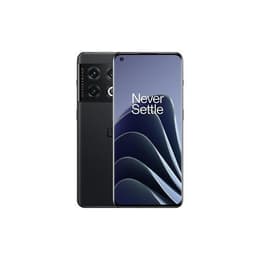


iPhone 13 Vs OnePlus 10 Pro

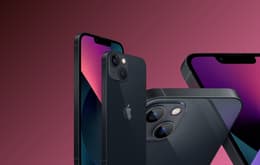
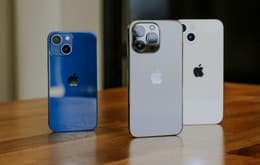
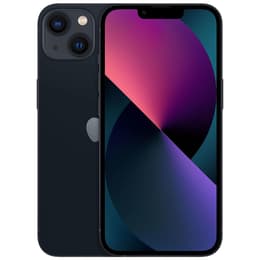
iPhone 13
iPhone 13
Starting at

Refurbished price:247.00

Versus €769.00 new

See options
OnePlus 10 Pro
OnePlus 10 Pro
Starting at

Refurbished price:228.00

Versus €999.00 new

See options

Ratings

The iPhone 13, released in September 2021, and the OnePlus 10 Pro, which saw its global launch in early 2022, are both advanced smartphones offering distinct user experiences. While the iPhone 13 operates on Apple's iOS ecosystem, the OnePlus 10 Pro runs on Android, specifically OxygenOS. Key differentiators between these two devices include their display technology, camera systems, and overall performance characteristics, catering to different user preferences.

Scores

Durability

When considering the long-term usability of these devices, several factors contribute to their expected lifespan, including software support and physical resilience.

  • Software Longevity: The iPhone 13, being an Apple device, benefits from an extended period of iOS updates, typically receiving major updates for five to six years from its release. It shipped with iOS 15 and is compatible with current iOS versions, including iOS 26.4 as of March 2026. The OnePlus 10 Pro, running Android, generally receives fewer major OS updates compared to Apple devices, though it typically offers several years of security updates.
  • Repairability: The iPhone 13 initially received a repairability score of 5 out of 10 from iFixit, which later improved to 6 out of 10 after an iOS update addressed issues with Face ID functionality post-screen replacement. This indicates that while some components are modular, certain repairs can be complex. Information regarding the OnePlus 10 Pro's specific repairability score is less widely detailed, but Android devices often present varying degrees of repair ease depending on their design.
  • Physical Durability: The iPhone 13 features a Ceramic Shield front cover and is rated IP68 for water and dust resistance, indicating protection against submersion up to 6 meters for 30 minutes. The OnePlus 10 Pro includes Gorilla Glass protection for its display. While it offers some level of water resistance, an official IP rating was not consistently provided for all regions, which can imply varying degrees of protection against liquids and dust.

Year of Release

2021

2022

Compatible with latest Update

Yes

Yes

OS

iOS

Android

Foldable

No

No

Performance

The performance of a smartphone is crucial for daily tasks, from launching applications to managing multiple processes simultaneously.

  • Processing Power: The iPhone 13 is equipped with a powerful processor that handles demanding applications and multitasking smoothly. This allows for fluid navigation, quick app loading, and efficient execution of graphics-intensive games. The OnePlus 10 Pro features a current-generation processor designed to deliver robust performance for gaming and heavy usage. Both devices offer responsive experiences, though their underlying architectures differ.
  • Storage and Multitasking: The iPhone 13 is available with storage options up to 512GB, providing ample space for apps, photos, and videos. It comes with 4GB of RAM, which supports efficient multitasking within the iOS environment. The OnePlus 10 Pro offers storage up to 256GB and is available with either 8GB or 12GB of RAM, allowing for extensive multitasking and keeping numerous applications open in the background without significant slowdowns.
  • Battery Behavior: The iPhone 13's battery is designed to last through a full day of moderate to heavy use, with some tests showing over 10 hours of continuous web browsing. The OnePlus 10 Pro, with its larger battery capacity, also aims for all-day usage, with some reports indicating it can last up to 12 hours in web surfing tests and over 21 hours in looped video playback. Both devices offer fast charging capabilities, with the OnePlus 10 Pro featuring particularly rapid wired and wireless charging speeds.

Memory (GB)

4 GB

8 GB

Screen quality

The display is a primary interface for any smartphone, and both the iPhone 13 and OnePlus 10 Pro offer high-quality viewing experiences with distinct characteristics.

  • Display Technology and Clarity: The iPhone 13 features a 6.1-inch Super Retina XDR OLED display, providing deep blacks, vibrant colors, and excellent contrast. Its resolution delivers sharp images and text at approximately 460 pixels per inch. The OnePlus 10 Pro boasts a larger 6.7-inch Fluid AMOLED display with a higher resolution, resulting in a pixel density of about 525 pixels per inch, offering a very detailed and expansive viewing area.
  • Brightness and Refresh Rate: The iPhone 13's display reaches a typical brightness of 800 nits and a peak HDR brightness of 1200 nits, ensuring good visibility in various lighting conditions. It operates at a standard 60Hz refresh rate. The OnePlus 10 Pro's display can achieve a peak brightness of 1300 nits, which is beneficial for outdoor use. A notable feature is its 120Hz LTPO adaptive refresh rate, which can dynamically adjust from 1Hz to 120Hz, providing smoother scrolling and more fluid animations while optimizing power consumption.
  • Viewing Experience: The iPhone 13 offers a consistent and color-accurate viewing experience, suitable for general media consumption and daily tasks. The OnePlus 10 Pro's larger, curved display and higher refresh rate contribute to an immersive experience, particularly for gaming and fast-paced content, with users often praising its visual quality.

Resolution

1170 x 2532

1440 x 3216

Screen type

Super Retina XDR OLED

LTPO2 Fluid AMOLED

Audiovisual

Both smartphones provide capable camera systems, designed to capture high-quality photos and videos, though they approach imaging with different philosophies.

  • Rear Camera Systems: The iPhone 13 features a dual 12MP camera system, comprising a wide-angle lens with a large aperture and sensor-shift optical image stabilization, and an ultra-wide lens with a 120-degree field of view. This setup excels in capturing detailed images with good color accuracy and strong low-light performance. The OnePlus 10 Pro offers a versatile triple camera array, including a 48MP main sensor with optical image stabilization, a 50MP ultra-wide sensor with a very wide 150-degree field of view, and an 8MP telephoto lens capable of 3.3x optical zoom. Its camera system benefits from a partnership with Hasselblad, influencing color science and professional modes.
  • Photography Performance: The iPhone 13 includes features like Cinematic mode for video, Night mode, Deep Fusion, and Smart HDR 4, which enhance photo and video quality across various scenarios. Users generally find its photos to be consistent and reliable. The OnePlus 10 Pro's main camera captures excellent detail and accurate colors in daylight, with good low-light performance. Its ultra-wide camera offers a unique perspective, though some users note that the extreme 150-degree field of view can introduce distortion.
  • Video Recording and Audio: The iPhone 13 supports HDR video recording with Dolby Vision up to 4K at 60 frames per second, and its Cinematic mode provides a shallow depth of field effect for videos. Both devices offer quality microphone performance for calls and video recording. The OnePlus 10 Pro can record 8K video at 24 frames per second and 4K video at up to 120 frames per second, providing more options for high-resolution video capture.

Main camera

12 megapixels

48 megapixels

Front camera

12 megapixels

32 megapixels

Miscellaneous

Beyond core performance and display, several practical features and design elements differentiate these two smartphones.

  • Connectivity and Ports: Both the iPhone 13 and OnePlus 10 Pro support 5G connectivity, Wi-Fi 6 (802.11ax), and NFC for contactless payments. The iPhone 13 uses Apple's proprietary Lightning port for charging and data transfer, and features Bluetooth 5.0. The OnePlus 10 Pro utilizes a USB-C port, which supports faster data transfer with compatible cables, and includes Bluetooth 5.2.
  • Biometric Security and Sensors: The iPhone 13 relies on Face ID for secure facial recognition. It also includes an Ultra Wideband chip for spatial awareness. The OnePlus 10 Pro features an in-display optical fingerprint scanner for biometric authentication. Both devices incorporate standard sensors like accelerometers, gyroscopes, and ambient light sensors.
  • Design and Handling: The iPhone 13 has a flat-edged design, measuring 146.7 x 71.5 x 7.65 mm and weighing around 174 grams. It is constructed with an aluminum frame and a Ceramic Shield front. The OnePlus 10 Pro has a slightly larger and heavier build, with dimensions of approximately 163 x 73.9 x 8.55 mm and a weight of around 200.5 grams. Its design often features a curved display and a distinct camera module.

Weight

173 g

201 g

Screen size (in)

6.1

6.7

Network

5G

5G

SIM card

Physical SIM + eSIM

Physical SIM

Carrier compatibility

Unlocked

Unlocked

Connector

Lightning

USB-C

The iPhone 13 and OnePlus 10 Pro each offer a compelling package, appealing to different user priorities. User feedback often highlights the iPhone 13's consistent performance, reliable camera, and excellent battery life as key strengths. Criticisms sometimes point to its 60Hz display, especially when compared to devices with higher refresh rates. For the OnePlus 10 Pro, users frequently praise its vibrant, high-refresh-rate display, rapid charging capabilities, and strong overall performance. Some common concerns include its camera performance not always matching the absolute best in its class and the software experience being less refined than previous OxygenOS iterations for some users.

Users prioritizing a long-term software support, a compact form factor, and a highly integrated ecosystem may find the iPhone 13 well-suited to their needs. Its consistent camera performance and robust durability features also make it a strong contender for those seeking a dependable device. Conversely, users who value a larger, high-refresh-rate display, exceptionally fast charging, and a more customizable Android experience may lean toward the OnePlus 10 Pro. Its powerful processor and versatile camera system cater to those who enjoy mobile gaming and photography with a wider range of creative options. Both devices are available as quality-assured refurbished options, providing an eco-friendly alternative for consumers.


See all articles

Our recent comparisons