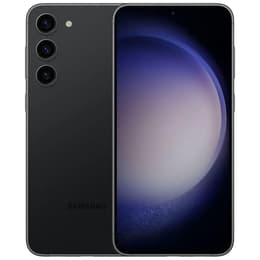
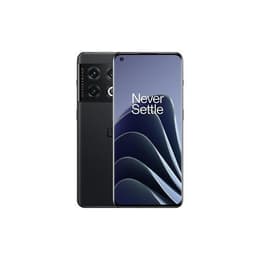


Galaxy S23+ Vs OnePlus 10 Pro

Galaxy S23+
Galaxy S23+
Starting at

Refurbished price:295.00

Versus €1,019.00 new

See options
OnePlus 10 Pro
OnePlus 10 Pro
Starting at

Refurbished price:228.00

Versus €999.00 new

See options

Ratings

The Samsung Galaxy S23 Plus, released in February 2023, and the OnePlus 10 Pro, launched globally in March 2022, are both Android smartphones that offer distinct user experiences. While the Galaxy S23 Plus focuses on a refined ecosystem and consistent performance, the OnePlus 10 Pro emphasizes rapid charging and a unique camera collaboration. Both devices run on the Android operating system, with Samsung's One UI and OnePlus's OxygenOS providing different software interfaces and feature sets.

Scores

Durability

When considering the longevity of these devices, several factors come into play, including their release timelines and software support policies.

  • Release Timeline: The Galaxy S23 Plus is a newer device, released in February 2023, making it approximately a year younger than the OnePlus 10 Pro, which had its global launch in March 2022.
  • OS Support: Samsung generally offers a longer software support window for its flagship devices. The Galaxy S23 Plus is expected to receive four years of major OS updates and five years of security updates, extending its software relevance further into the future. The OnePlus 10 Pro, on the other hand, typically receives three major Android updates and four years of security updates.
  • Durability Features: The Galaxy S23 Plus features Gorilla Glass Victus 2 on both the front and back, along with an IP68 rating for dust and water resistance. The OnePlus 10 Pro uses Gorilla Glass Victus on the front and Gorilla Glass 5 on the back. While some carrier versions of the OnePlus 10 Pro may have an IP68 rating, the global version generally does not carry an official IP rating.

Year of Release

2023

2022

Compatible with latest Update

Yes

Yes

OS

Android

Android

Foldable

No

No

Performance

Both smartphones deliver robust performance for daily tasks and demanding applications, though they utilize different generations of internal components.

  • Processor Capabilities: The Galaxy S23 Plus is equipped with a more recent-generation processor, which provides enhanced speed and efficiency for running applications, multitasking, and graphic-intensive gaming. The OnePlus 10 Pro features a powerful processor from the previous generation, capable of handling most demanding apps and games smoothly.
  • Storage and RAM: The Galaxy S23 Plus offers 8GB of RAM with storage options of 256GB and 512GB, utilizing faster UFS 4.0 storage for quicker data access. The OnePlus 10 Pro comes with 8GB or 12GB of RAM and storage options including 128GB, 256GB, and 512GB, typically using UFS 3.1 storage.
  • Battery Behavior: The OnePlus 10 Pro has a larger 5000 mAh battery, which often translates to extended usage times for many users. The Galaxy S23 Plus features a 4700 mAh battery, which, combined with its efficient processor, provides reliable all-day power for typical usage.

Memory (GB)

8 GB

8 GB

Screen quality

The visual experience on both devices is characterized by vibrant displays, though with some differences in resolution and brightness.

  • Display Technology and Size: The Galaxy S23 Plus features a 6.6-inch Dynamic AMOLED 2X display. The OnePlus 10 Pro has a slightly larger 6.7-inch LTPO2 Fluid AMOLED display. Both technologies offer deep blacks and rich colors.
  • Resolution and Clarity: The OnePlus 10 Pro provides a higher resolution display at 1440 x 3216 pixels, resulting in a sharper image. The Galaxy S23 Plus offers a Full HD+ resolution of 1080 x 2340 pixels, which still delivers clear visuals for most content.
  • Brightness and Refresh Rate: The Galaxy S23 Plus can reach a peak brightness of 1750 nits, offering excellent visibility in bright outdoor conditions. The OnePlus 10 Pro has a peak brightness of 1300 nits. Both phones feature adaptive refresh rates up to 120Hz for smooth scrolling and responsive interactions, with the OnePlus 10 Pro's LTPO 2.0 technology allowing it to scale down to 1Hz for power efficiency.

Resolution

1080 x 2340

1440 x 3216

Screen type

Dynamic AMOLED 2X

LTPO2 Fluid AMOLED

Audiovisual

Both smartphones offer versatile camera systems, each with distinct strengths in photography and videography.

  • Rear Camera Systems: The Galaxy S23 Plus features a triple camera setup with a 50 MP main sensor, a 12 MP ultrawide, and a 10 MP telephoto lens with 3x optical zoom. The OnePlus 10 Pro also has a triple camera system, co-developed with Hasselblad, consisting of a 48 MP main sensor, a 50 MP ultrawide with a wide 150˚ field of view, and an 8 MP telephoto lens with 3.3x optical zoom.
  • Photography Performance: The Galaxy S23 Plus excels in producing detailed and color-accurate images in various lighting conditions, with improvements driven by its advanced processing. The OnePlus 10 Pro's Hasselblad partnership focuses on natural color calibration and offers a Pro Mode for advanced users, including 12-bit RAW capture.
  • Video Recording and Front Camera: Both devices are capable of high-resolution video recording. The Galaxy S23 Plus has a 12 MP front camera. The OnePlus 10 Pro features a 32 MP front camera, which can capture detailed selfies.

Main camera

50 megapixels

48 megapixels

Front camera

12 megapixels

32 megapixels

Miscellaneous

Beyond core specifications, several practical elements differentiate the user experience of these two devices.

  • Connectivity: The Galaxy S23 Plus supports Wi-Fi 6E and Bluetooth 5.3, offering faster and more stable wireless connections. The OnePlus 10 Pro supports Wi-Fi 6 and Bluetooth 5.2. Both devices offer 5G connectivity.
  • Ports and Sensors: Both phones feature a USB-C port for charging and data transfer. The Galaxy S23 Plus includes an ultrasonic in-display fingerprint sensor, while the OnePlus 10 Pro uses an optical in-display fingerprint sensor. The Galaxy S23 Plus also includes UWB (Ultra Wideband) technology.
  • Design and Handling: The Galaxy S23 Plus measures 157.8 x 76.2 x 7.6 mm and weighs 196g. The OnePlus 10 Pro is slightly larger and heavier at 163 x 73.9 x 8.55 mm and 200.5g. The Galaxy S23 Plus has a flat display and back, with individual camera lenses protruding, offering a clean aesthetic.

Weight

168 g

201 g

Screen size (in)

6.6

6.7

Network

5G

5G

SIM card

Dual Physical SIM + eSIM

Physical SIM

Carrier compatibility

Unlocked

Unlocked

Connector

USB-C

USB-C

User feedback for the Samsung Galaxy S23 Plus often highlights its consistent performance, reliable camera system, and the extended software support provided by Samsung. Users appreciate the device's balanced approach to features and its refined user interface. Some common praise points include its bright display and improved battery efficiency compared to its predecessor. Criticisms are less frequent but sometimes point to its design being a subtle evolution rather than a radical change.

The OnePlus 10 Pro is frequently praised for its rapid charging capabilities, vibrant display, and the unique color science offered by its Hasselblad-tuned cameras. Users often commend its smooth performance and the clean OxygenOS experience. However, some users have noted concerns regarding its software update consistency compared to some competitors and the lack of an official IP rating for all global variants. The camera performance, while generally good, can be a point of discussion among photography enthusiasts.

For users prioritizing long-term software support, a robust IP rating, and a highly optimized ecosystem, the Galaxy S23 Plus may be a more suitable choice. Its consistent performance and refined user experience cater to those seeking a dependable daily driver. Conversely, users who value extremely fast charging, a distinctive camera experience with advanced manual controls, and a slightly larger, higher-resolution display might find the OnePlus 10 Pro more appealing. Both devices represent strong options in the Android smartphone market, and considering a quality-assured refurbished option for either model can be a sustainable choice for consumers.


See all articles

Our recent comparisons






