

iPhone 11 Vs Xiaomi Redmi Note 11

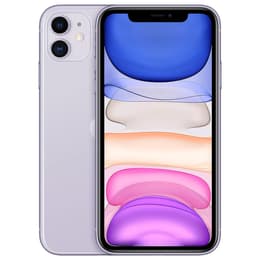
iPhone 11
iPhone 11
Starting at

Refurbished price:141.00

Versus €589.00 new

See options
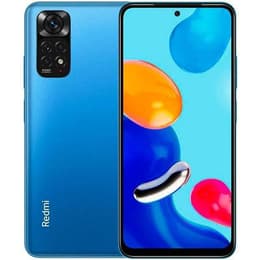
Xiaomi Redmi Note 11
Starting at

Refurbished price:108.00

Versus €249.99 new

See options

Ratings

The iPhone 11, released in September 2019, and the Xiaomi Redmi Note 11, launched in January 2022, are smartphones from different ecosystems, offering distinct user experiences. While the iPhone 11 operates on Apple's iOS, known for its integrated software and hardware, the Redmi Note 11 runs on Android, providing a more open and customizable platform. These devices cater to varying preferences, with key differences in their display technology, camera capabilities, and overall performance.

Scores

Durability

When considering the long-term usability of these devices, their release timelines and software support play a significant role.

  • Software Longevity: The iPhone 11, launched in 2019, is expected to receive major iOS updates until Fall 2026, with security updates continuing for an additional one to two years. This provides a substantial period of software support, ensuring access to new features and security patches. The Redmi Note 11, released in 2022, originally shipped with Android 11 and MIUI 13, and has since been updated to HyperOS based on Android 13. Android update cycles can vary by manufacturer and model, but typically offer several years of major OS updates and security patches.
  • Repairability: The iPhone 11 has an iFixit repairability score of 6 out of 10, indicating a moderate level of ease for repairs. The Redmi Note 11 (4G variant) has a repairability index score of 6.5 out of 10, suggesting a similar or slightly better ease of repair, particularly concerning component accessibility and spare part availability.
  • Practical Lifespan: Both devices are built to offer several years of practical use. The iPhone 11's extended software support and robust ecosystem contribute to its longevity, while the Redmi Note 11's design for component accessibility can aid in extending its life through repairs.

Year of Release

2019

2022

Compatible with latest Update

Yes

No

OS

iOS

Android

Foldable

No

No

Performance

The performance of a smartphone is crucial for daily tasks, app responsiveness, and multitasking capabilities.

  • Processing Power: The iPhone 11 is equipped with a processor designed to handle demanding applications and provide a fluid user experience, which was considered powerful at its release. The Redmi Note 11 features a processor built on an energy-efficient 6nm manufacturing process, which balances performance with power conservation, suitable for everyday use and moderate multitasking.
  • System Responsiveness: Users of the iPhone 11 generally experience smooth navigation and quick app loading, even with multiple applications running simultaneously. The Redmi Note 11 offers responsive performance for typical smartphone activities, with its processor designed to manage various tasks efficiently.
  • Storage and Multitasking: The iPhone 11 is available with 64GB, 128GB, or 256GB of internal storage. The Redmi Note 11 offers storage options of 64GB or 128GB, and supports expandable storage up to 1TB via a microSD card, providing flexibility for users who require more space for media and applications.
  • Battery Behavior: The iPhone 11, with its 3110 mAh battery, typically provides 8 to 10 hours of screen-on time for moderate use and around 4 to 6 hours for continuous gaming. The Redmi Note 11, featuring a larger 5000 mAh battery, is noted for its extended endurance, often lasting up to 11 hours of continuous usage or 6-8 hours for gaming and social media, and supports 33W fast charging to replenish its battery quickly.

Memory (GB)

4 GB

4 GB

Screen quality

The display is a primary interface for smartphone interaction, and both devices offer different visual experiences.

  • Display Technology: The iPhone 11 features a 6.1-inch Liquid Retina HD display, which is an IPS LCD panel known for its accurate color reproduction and wide viewing angles. The Redmi Note 11 boasts a 6.43-inch FHD+ AMOLED DotDisplay, which typically offers deeper blacks, higher contrast, and more vibrant colors compared to LCD technology.
  • Resolution and Clarity: The iPhone 11 has a resolution of 1792 x 828 pixels, resulting in a pixel density of 326 pixels per inch (ppi). The Redmi Note 11 provides a sharper viewing experience with a 2400 x 1080 pixel resolution and a higher pixel density of 409 ppi.
  • Brightness and Refresh Rate: The iPhone 11 offers a maximum typical brightness of 625 nits, which is adequate for most indoor and outdoor conditions. Its display operates at a standard 60 Hz refresh rate. The Redmi Note 11 features a peak brightness of 1000 nits (700 nits typical HBM), making its screen content highly readable even in bright sunlight. It also provides a smoother visual experience with a 90 Hz refresh rate.

Resolution

828 x 1792

1080 x 2400

Screen type

Liquid Retina IPS LCD

AMOLED

Audiovisual

Photography and videography capabilities are key considerations for many smartphone users, and these devices approach them differently.

  • Rear Camera System: The iPhone 11 features a dual 12MP camera system, comprising a wide-angle lens with an ƒ/1.8 aperture and an ultra-wide-angle lens with an ƒ/2.4 aperture and a 120° field of view. It includes features like Night mode for improved low-light photography, Deep Fusion for enhanced detail, and Smart HDR. The Redmi Note 11 comes with a versatile quad-camera setup, including a 50MP main sensor with an ƒ/1.8 aperture, an 8MP ultra-wide lens with a 118° field of view, a 2MP macro camera, and a 2MP depth sensor.
  • Photography Performance: The iPhone 11 is recognized for its consistent image quality, particularly its ability to capture natural-looking photos with good dynamic range and effective low-light performance through Night mode. The Redmi Note 11's 50MP main sensor is capable of capturing detailed images in good lighting, with its ultra-wide lens offering a broader perspective.
  • Video Recording: The iPhone 11 supports 4K video recording at up to 60 frames per second across its rear cameras, offering strong video stabilization and quality. The Redmi Note 11 records video at 1080p at 30 frames per second from its rear camera.
  • Front Camera: For selfies and video calls, the iPhone 11 has a 12MP front camera. The Redmi Note 11 is equipped with a 13MP front camera.

Main camera

12 megapixels

50 megapixels

Front camera

12 megapixels

13 megapixels

Miscellaneous

Beyond core features, several practical elements contribute to the overall user experience.

  • Connectivity and Ports: The iPhone 11 utilizes Apple's proprietary Lightning port for charging and data transfer. The Redmi Note 11 features a USB-C port, which is a widely adopted standard, and also includes a 3.5mm headphone jack, offering flexibility for audio accessories. Both devices support common Wi-Fi standards and Bluetooth for wireless connectivity.
  • Biometric Security and Sensors: The iPhone 11 relies on Face ID for secure authentication, using its TrueDepth camera system. The Redmi Note 11 incorporates a side-mounted fingerprint sensor for convenient unlocking and also supports AI Face Unlock. The Redmi Note 11 also includes an IR blaster, allowing it to function as a universal remote control for compatible home appliances.
  • Build and Handling: The iPhone 11 has dimensions of 150.9 x 75.7 x 8.3 mm and weighs 194 grams, featuring an aluminum chassis and a glass back. It carries an IP68 rating for water and dust resistance, capable of withstanding submersion up to 2 meters for 30 minutes. The Redmi Note 11 measures 159.87 x 73.87 x 8.09 mm and weighs 179 grams. It offers IP53 dust and splash resistance, providing protection against light splashes and dust ingress.

Weight

194 g

179 g

Screen size (in)

6.1

6.43

Network

4G

4G

SIM card

Physical SIM + eSIM

Dual Physical SIM

Carrier compatibility

Unlocked

Unlocked

The iPhone 11 and Xiaomi Redmi Note 11 offer distinct propositions for smartphone users, reflecting their different ecosystems and design philosophies. User feedback for the iPhone 11 often praises its consistent performance, reliable camera system, and the long-term software support provided by Apple. Some users appreciate its balanced size and the intuitive nature of iOS. Criticisms sometimes point to the LCD display technology compared to newer OLED panels and the standard 60Hz refresh rate.

For the Redmi Note 11, users frequently highlight its vibrant AMOLED display with a smoother 90Hz refresh rate, its impressive battery life with fast charging capabilities, and the inclusion of features like expandable storage and a headphone jack. Some common observations relate to its performance being suitable for everyday tasks rather than intensive gaming, and the software experience of MIUI on Android.

Users prioritizing a highly integrated ecosystem, consistent performance, and extended software updates may find the iPhone 11 well-suited to their needs. Its robust video capabilities and reliable camera are also strong points. Conversely, users who value a more customizable Android experience, a high-refresh-rate AMOLED display, exceptional battery endurance, and flexible storage options might lean towards the Redmi Note 11. Its inclusion of an IR blaster and a headphone jack also caters to specific user preferences.

Both devices, whether new or as a quality-assured refurbished option, represent viable choices depending on individual priorities and usage patterns. Opting for a refurbished model can be an eco-friendly alternative, providing access to these features while contributing to a more sustainable consumption cycle.


See all articles

Our recent comparisons