

Compare models

iPhone 11 Vs iPhone 13 Pro

  • 1-year minimum warranty
  • Free delivery on all orders
  • Free 30-day returns
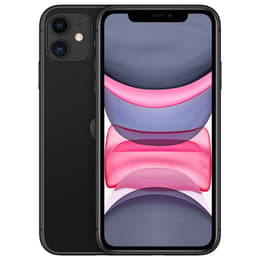
iPhone 11
iPhone 11
Starting at

Refurbished price:141.00

Versus €589.00 new

See options
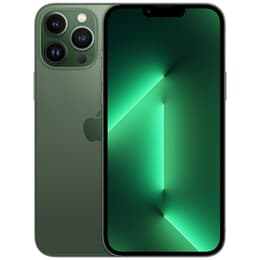
iPhone 13 Pro
iPhone 13 Pro
Starting at

Refurbished price:315.00

Versus €1,149.00 new

See options

Differences at a glance

The iPhone 11, released in September 2019, and the iPhone 13 Pro, launched in September 2021, represent different generations within Apple's smartphone lineup. While both operate on the iOS platform, the iPhone 13 Pro introduces several advancements in display technology, camera capabilities, and processing power, reflecting its 'Pro' designation and newer release. This comparison will explore the practical differences between these two devices to help users understand which model aligns best with their needs, considering quality-assured refurbished options as a sustainable choice.

Scores

Durability

The practical lifespan of a smartphone is influenced by its build quality, software support, and repairability. These two models offer different expectations in these areas.

  • Software Longevity: The iPhone 11, released in 2019, launched with iOS 13 and is compatible with iOS 26 as of March 2026, indicating a substantial period of software support. The iPhone 13 Pro, from 2021, started with iOS 15 and is compatible with iOS 18.x as of March 2026, suggesting it will receive updates for a longer duration into the future due to its newer release.
  • Physical Durability: Both devices feature glass and aluminum construction, with the iPhone 13 Pro introducing a Ceramic Shield front cover for enhanced drop protection. Both are rated IP68 for water and dust resistance, though the iPhone 11 is rated for a maximum depth of 2 meters for up to 30 minutes, while the iPhone 13 Pro offers improved water resistance.
  • Repairability: The iPhone 11 received a repairability score of 6 out of 10 from iFixit, with display and battery replacements being relatively straightforward. The iPhone 13 Pro, however, received a lower score of 5 out of 10, with some components, like the rear glass, being particularly challenging to replace, and software limitations potentially affecting third-party repairs, especially concerning Face ID functionality after screen replacement.

Year of Release

2019

2021

Compatible with latest Update

Yes

Yes

OS

iOS

iOS

Foldable

No

No

Performance

The performance of these devices is driven by their internal processing units, impacting everything from app responsiveness to multitasking efficiency.

  • Processing Power: The iPhone 11 is equipped with a capable processor that handles everyday applications and moderate multitasking smoothly. The iPhone 13 Pro features a newer, more advanced processor with a more powerful graphics processing unit, resulting in noticeably faster app loading times, smoother transitions, and enhanced performance for demanding tasks like high-fidelity gaming and video editing.
  • Multitasking and Responsiveness: The iPhone 11 comes with 4 GB of RAM, which is sufficient for typical daily use. The iPhone 13 Pro includes 6 GB of RAM, providing more headroom for keeping multiple applications open simultaneously and switching between them without delays, contributing to an overall more fluid user experience.
  • Storage Options: The iPhone 11 was available with storage capacities up to 256 GB. The iPhone 13 Pro offers a wider range of storage options, extending up to 1 TB, which is beneficial for users who store large amounts of photos, videos, or applications.

Memory (GB)

4 GB

6 GB

Screen quality

The visual experience is a key differentiator, with significant advancements in display technology between these two iPhone models.

  • Display Technology and Clarity: The iPhone 11 features a 6.1-inch Liquid Retina HD LCD display with a resolution of 1792 x 828 pixels, offering clear visuals for general use. The iPhone 13 Pro, also with a 6.1-inch screen, boasts a Super Retina XDR OLED display with a higher resolution of 2532 x 1170 pixels, providing superior contrast, deeper blacks, and more vibrant colors.
  • Brightness and Refresh Rate: The iPhone 11 has a typical maximum brightness of 625 nits, which is adequate for most indoor and outdoor conditions. The iPhone 13 Pro significantly increases this to a typical maximum brightness of 1000 nits and a peak brightness of 1200 nits for HDR content, improving visibility in bright sunlight. Additionally, the iPhone 13 Pro introduces ProMotion technology, offering an adaptive refresh rate that can scale from 10Hz to 120Hz, resulting in smoother scrolling and more responsive interactions compared to the iPhone 11's fixed 60Hz refresh rate.
  • Color Accuracy: Both models support True Tone and Wide Color (P3), ensuring accurate and consistent color representation across various lighting environments.

Resolution

828 x 1792

1170 x 2532

Screen type

Liquid Retina IPS LCD

Super Retina XDR OLED

Audiovisual

Camera capabilities have seen substantial evolution between these generations, particularly in advanced features and low-light performance.

  • Rear Camera System: The iPhone 11 features a dual 12MP camera system with Wide and Ultra Wide lenses, capable of 2x optical zoom out and 5x digital zoom. The iPhone 13 Pro elevates this with a triple 12MP camera system, adding a Telephoto lens for 3x optical zoom in, 2x optical zoom out, and 15x digital zoom. The 13 Pro's cameras also benefit from larger sensors and apertures, enhancing light gathering.
  • Low-Light Photography and Advanced Features: The iPhone 11 introduced Night mode for its Wide camera, significantly improving low-light photos. The iPhone 13 Pro extends Night mode functionality to all its cameras, including the Ultra Wide and Telephoto lenses, and features a macro photography mode for close-up shots. For video, the iPhone 13 Pro introduces Cinematic Mode, which allows for depth-of-field effects and focus transitions, and supports ProRes video recording for professional-grade video capture, a feature not available on the iPhone 11.
  • Video Recording: Both devices support 4K video recording up to 60 frames per second. The iPhone 13 Pro further enhances video capabilities with features like Cinematic Mode and ProRes recording, offering more creative control and higher quality output for videographers.

Main camera

12 megapixels

12 megapixels

Front camera

12 megapixels

12 megapixels

Miscellaneous

Beyond core features, several practical elements contribute to the overall user experience and daily usability of these devices.

  • Connectivity: The iPhone 11 supports 4G LTE and Wi-Fi 6. The iPhone 13 Pro offers advanced connectivity with 5G support, enabling faster download and upload speeds in compatible networks, alongside Wi-Fi 6. Both include Bluetooth 5.0 and NFC.
  • Physical Design and Handling: The iPhone 11 has dimensions of 150.9 x 75.7 x 8.3 mm and weighs 194 grams. The iPhone 13 Pro is slightly more compact at 146.7 x 71.5 x 7.65 mm but is heavier at 204 grams, partly due to its stainless steel frame compared to the iPhone 11's aluminum frame. The iPhone 13 Pro also features a smaller notch for its Face ID system.
  • Ports and Biometrics: Both models utilize the Lightning connector for charging and data transfer. Both rely on Face ID for secure authentication. The iPhone 13 Pro also integrates a LiDAR scanner, which enhances augmented reality experiences and improves autofocus in low-light conditions.

Weight

194 g

203 g

Width

7,57 cm

7,15 cm

Height

15,09 cm

14,67 cm

Depth

0,83 cm

0,76 cm

Screen size (in)

6.1

6.1

Network

4G

5G

SIM card

Physical SIM + eSIM

Physical SIM + eSIM

Carrier compatibility

Unlocked

Unlocked

Connector

Lightning

Lightning

What the community thinks

The iPhone 11 and iPhone 13 Pro cater to different user priorities, reflecting the technological advancements made over two years. Users often praise the iPhone 11 for its reliable performance, good battery life for its generation, and capable camera system, especially its introduction of Night mode. Common criticisms sometimes point to its LCD display compared to newer OLED panels and the absence of a telephoto lens.

The iPhone 13 Pro, on the other hand, is frequently lauded for its vibrant OLED display with ProMotion, significantly improved camera system with features like Cinematic Mode and ProRes, and extended battery life. Its more powerful processor also receives positive feedback for handling demanding tasks. Some users note its increased weight and the complexities surrounding third-party repairs as potential drawbacks.

Users prioritizing a device with a modern, high-refresh-rate display, advanced camera features for photography and videography, and the latest processing power for demanding applications will find the iPhone 13 Pro well-suited to their needs. Those seeking a dependable smartphone for everyday tasks, with solid performance and camera capabilities, may find the iPhone 11 to be a practical choice. Both models are available as quality-assured refurbished options, providing an eco-friendly alternative for consumers.