

Compare models

Dell Latitude 5430 14" Vs Microsoft Surface Laptop 4 13"

  • 1-year minimum warranty
  • Free delivery on all orders
  • Free 30-day returns
Dell Latitude 5430 14"
Starting at

Refurbished price:€380.00

Versus €1,024.78 new

See options
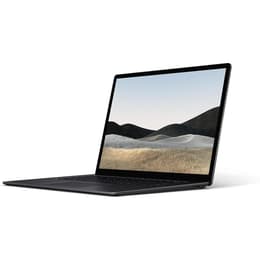
Microsoft Surface Laptop 4 13"
Starting at

Refurbished price:€395.00

Versus €1,108.26 new

See options

Differences at a glance

The Dell Latitude 5430 14" (2022) and the Microsoft Surface Laptop 4 13" (2021) are mid-range portable computers designed for professionals, students, and everyday multitaskers. While both run on desktop operating systems and handle standard office workflows with ease, they approach mobile computing through different design philosophies. The Dell model prioritizes modular utility and physical connectivity, whereas the Microsoft alternative focuses on a streamlined profile and visual workspace integration.

Available Models

Storage

Processor

Memory

Scores

Durability

When evaluating structural longevity and software support, both laptops provide reliable long-term usability backed by standard industry operating system updates.

  • Support timeline: Both computers receive regular security updates and software patches from their respective operating system ecosystems, ensuring multi-year usability.
  • Repairability and maintenance: The Dell Latitude 5430 offers greater modularity with easily replaceable components, while the Microsoft Surface Laptop 4 features a more integrated build that requires specialized handling for internal repairs.
  • Expected lifespan: Selecting a quality-assured refurbished option extends the active lifecycle of these devices while reducing electronic waste through sustainable reuse.

Year of Release

2022

2020

OS

Windows 11

Windows 11

Performance

Daily computing responsiveness varies slightly depending on thermal management and hardware allocation for demanding background tasks.

  • Multitasking and processing: Both machines handle browser tabs, document editing, and communication software smoothly, though intensive video rendering requires patience on both platforms.
  • Battery behavior: The Microsoft Surface Laptop 4 maintains power efficiently through standard work hours, while the Dell Latitude 5430 offers configuration options with varying battery capacities that influence time away from an outlet.
  • Storage capacity: Both systems provide multiple solid-state drive configurations for file storage, ensuring rapid application loading and responsive system boot times.

Graphic card

Integrated Graphics

Integrated Graphics

Screen quality

Visual workspace presentation differs primarily in screen dimensions, aspect ratios, and surface finishes designed for varied working environments.

  • Display dimensions and format: The Microsoft Surface Laptop 4 utilizes a taller screen aspect ratio suited for document editing, while the Dell Latitude 5430 provides a conventional widescreen layout ideal for side-by-side window multitasking.
  • Resolution and clarity: Both displays offer sharp text rendering and high pixel density for comfortable reading during extended working sessions.
  • Surface coatings: The Dell model often features an anti-glare matte coating to reduce reflections in brightly lit offices, whereas the Microsoft model utilizes a glossy glass finish that enhances color vibrancy.

Resolution

1920 x 1080

2496 x 1664

Screen type

IPS

LED

Audiovisual

Multimedia capabilities focus on remote communication clarity and integrated audio output for virtual meetings and media consumption.

  • Webcam performance: Both laptops include integrated webcams adequate for video conferencing, supported by software adjustments for varying indoor lighting conditions.
  • Audio output: The Microsoft Surface Laptop 4 delivers robust built-in speaker sound clarity for media playback, while the Dell Latitude 5430 provides balanced audio suited for voice calls and standard office applications.
  • Microphone clarity: Integrated dual microphone arrays on both devices effectively isolate ambient room noise during voice communication.

Miscellaneous

Physical connectivity and portability characteristics define how each laptop integrates into mobile or stationary work setups.

  • Port selection: The Dell Latitude 5430 includes a broad array of built-in connections including traditional USB ports and network jacks, whereas the Microsoft Surface Laptop 4 relies heavily on a minimalist port layout requiring adapters for legacy accessories.
  • Dimensions and weight: The Microsoft device emphasizes a thin and lightweight profile for travel convenience, while the Dell alternative trades slight thickness for enhanced structural reinforcement.
  • Biometric security: Both computers offer integrated recognition options for quick and secure system login without manual password entry.

Weight

1360 g

1500 g

Screen size

14

13

What the community thinks

User feedback highlights distinct preferences for each laptop based on daily workflow requirements. Owners of the Dell Latitude 5430 frequently praise its extensive port selection and sturdy physical build, which minimizes the need for carrying external adapters. Conversely, users of the Microsoft Surface Laptop 4 often highlight its polished aesthetic design, comfortable keyboard feel, and vibrant screen clarity as major daily benefits. Frequent criticisms for the Dell model mention its heavier build weight, while Microsoft users occasionally note limitations regarding external accessory connectivity.

Users prioritizing physical connectivity and hardware modularity may prefer the Dell Latitude 5430, while users prioritizing a lightweight profile and a taller screen format for writing will lean toward the Microsoft Surface Laptop 4. Choosing a quality-assured refurbished model provides an eco-friendly alternative for both devices, supporting sustainable technology consumption without compromising on functional reliability.


Our recent comparisons