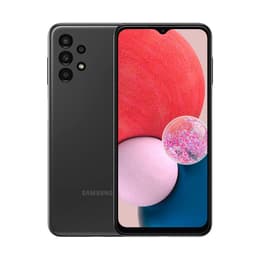
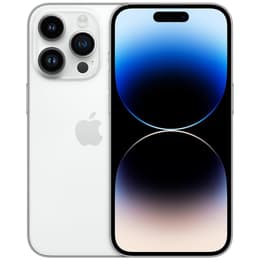

Galaxy A13 Vs iPhone 14 Pro

Galaxy A13
Galaxy A13
Starting at

Refurbished price:97.00

Versus €249.00 new

See options
iPhone 14 Pro
iPhone 14 Pro
Starting at

Refurbished price:424.00

Versus €1,339.00 new

See options

Ratings

The Samsung Galaxy A13 and the iPhone 14 Pro, both released in 2022, cater to different user priorities within the smartphone market. The Galaxy A13, an Android-powered device, is designed for essential daily tasks, while the iPhone 14 Pro, running on iOS, offers advanced features and a sophisticated user experience. This comparison highlights their core differences to help users determine which device best aligns with their needs.

Scores

Durability

The practical lifespan and software support differ significantly between these two models, reflecting their respective operating systems and build philosophies.

  • Software Updates: The iPhone 14 Pro typically receives major iOS updates for five to six years from its release, ensuring long-term access to new features and security patches. The Galaxy A13, as an Android device, generally receives fewer major OS updates, often around two to three years, followed by security updates for a similar period.
  • Build Longevity: The iPhone 14 Pro features a durable Ceramic Shield front cover, a textured matte glass back, and a stainless steel frame, offering enhanced resistance to drops and scratches. The Galaxy A13 uses a plastic build, with its display protected by Corning Gorilla Glass 5.
  • Repairability: The Galaxy A13 has demonstrated a repairability score of 8 out of 10, indicating a design that facilitates easier repairs. The iPhone 14 Pro's premium components may lead to higher repair costs, though both devices offer a degree of repairability.

Year of Release

2022

2022

Compatible with latest Update

No

Yes

OS

Android

iOS

Foldable

No

No

Performance

Performance capabilities are a primary differentiator, reflecting their respective market positions and intended use cases.

  • Everyday Responsiveness: The iPhone 14 Pro delivers exceptionally smooth and fast performance, handling demanding applications, complex games, and intensive multitasking without hesitation. The Galaxy A13 provides adequate performance for basic tasks like web browsing, social media, and light communication.
  • Multitasking and Storage: The iPhone 14 Pro comes with 6GB of RAM, supporting seamless app switching and background processes. It offers storage options ranging from 128GB up to 1TB. The Galaxy A13 is available with 3GB, 4GB, or 6GB of RAM and storage options of 32GB, 64GB, or 128GB, with the added flexibility of expandable storage via a microSD card.
  • Battery Behavior: The Galaxy A13 is equipped with a 5000 mAh battery, offering substantial longevity that can extend beyond a full day of typical use. The iPhone 14 Pro, with its 3200 mAh battery, generally provides solid battery life, lasting a full day for most users, though heavy usage might necessitate an evening charge.

Memory (GB)

4 GB

6 GB

Screen quality

The display technologies and visual experiences offered by these devices are markedly different, impacting clarity, brightness, and overall smoothness.

  • Display Technology and Clarity: The iPhone 14 Pro features a Super Retina XDR OLED display, known for its deep blacks, vibrant colors, and high contrast. It has a resolution of 2556 by 1179 pixels at 460 pixels per inch on a 6.1-inch screen. The Galaxy A13 uses a PLS LCD panel, offering a 1080 by 2408 pixel resolution on a larger 6.6-inch display.
  • Brightness and Smoothness: The iPhone 14 Pro's display achieves significantly higher peak brightness, reaching up to 1000 nits typical, 1600 nits for HDR content, and a peak of 2000 nits outdoors, making it highly visible even in direct sunlight. It also features ProMotion technology, providing an adaptive refresh rate up to 120Hz for smooth scrolling and responsiveness, capable of dropping to 1Hz for static content to conserve power. The Galaxy A13 typically has a 60Hz refresh rate, with some 5G variants offering 90Hz.
  • Additional Display Features: The iPhone 14 Pro introduces features like the Dynamic Island and an Always-On display, enhancing user interaction and information visibility.

Resolution

1080 x 2408

1179 x 2556

Screen type

PLS LCD

LTPO Super Retina XDR OLED

Audiovisual

The camera systems on these two devices offer distinct capabilities, influencing the quality of photos and videos in various lighting conditions.

  • Camera System Configuration: The iPhone 14 Pro is equipped with a Pro camera system, including a 48-megapixel main sensor, a 12-megapixel ultrawide lens, and a 12-megapixel telephoto lens with 3x optical zoom. The Galaxy A13 typically features a quad-camera setup, comprising a 50-megapixel main sensor, a 5-megapixel ultrawide, a 2-megapixel macro, and a 2-megapixel depth sensor.
  • Photography Performance: The iPhone 14 Pro excels in low-light photography, producing sharp images with noticeable detail and improved low-light capabilities. The Galaxy A13 performs adequately in well-lit environments, but its camera can struggle in low-light conditions.
  • Video Recording and Front Camera: The iPhone 14 Pro records high-quality video up to 4K at 60 frames per second, featuring advanced stabilization and cinematic effects. It also includes a 12-megapixel front camera with autofocus. The Galaxy A13 records video up to 1080p and has an 8-megapixel front camera.

Main camera

50 megapixels

48 megapixels

Front camera

8 megapixels

12 megapixels

Miscellaneous

Beyond core features, several practical elements differentiate these two smartphones, impacting daily usability and connectivity.

  • Connectivity and Ports: Both devices support 5G connectivity for faster mobile data speeds. The iPhone 14 Pro supports Wi-Fi 6 and Bluetooth 5.3, while the Galaxy A13 typically supports Wi-Fi 5 and Bluetooth 5.0. For charging and data transfer, the iPhone 14 Pro uses a Lightning port, whereas the Galaxy A13 features a USB-C port and retains a 3.5mm headphone jack.
  • Biometric Security: The iPhone 14 Pro relies on Face ID, an advanced facial recognition system for secure unlocking and authentication. The Galaxy A13 typically uses a side-mounted fingerprint sensor for biometric security.
  • Design and Handling: The iPhone 14 Pro weighs 206 grams and measures 147.5 x 71.5 x 7.9 mm. Its stainless steel frame can contribute to a feeling of density. The Galaxy A13 weighs 195 grams and measures 165.1 x 76.4 x 8.8 mm.

Weight

195 g

206 g

Screen size (in)

6.6

6.1

Network

4G

5G

SIM card

Dual Physical SIM

Physical SIM + eSIM

Carrier compatibility

Unlocked

Unlocked

User feedback for the iPhone 14 Pro frequently highlights its crisp and smooth display, responsive performance, and excellent camera capabilities, particularly in low-light conditions. The Dynamic Island is often noted as a useful feature for multitasking. Some users have observed that the stainless steel frame can make the device feel substantial, and pushing the camera for professional-grade RAW photography in rapid succession can lead to the device becoming warm and experiencing performance dips.

Conversely, the Samsung Galaxy A13 is generally praised by users for its suitability for basic daily tasks such as calling, messaging, web browsing, and streaming. However, a common concern among users is a noticeable degradation in performance over time, with reports of the device becoming slow and laggy, apps freezing, and battery drain issues. The camera and speaker quality are also frequently mentioned as areas where the device does not excel.

Users prioritizing advanced camera features, high-end performance for demanding applications, a vibrant and exceptionally smooth display, and extended software support may find the iPhone 14 Pro well-suited to their needs. Conversely, users primarily seeking a device for essential communication, casual web browsing, and media consumption, who also value expandable storage and a traditional headphone jack, might lean towards the Galaxy A13. Both devices are available as quality-assured refurbished options, offering a sustainable choice for consumers.


See all articles

Our recent comparisons








