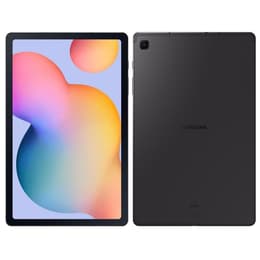
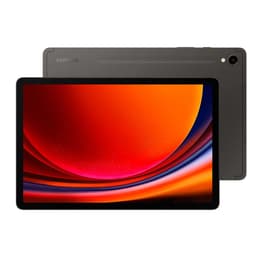


Galaxy Tab S6 Lite (10.4", 2024) Vs Galaxy Tab S9 (11.0", 2023)

Galaxy Tab S6 Lite (10.4", 2024)
Starting at

Refurbished price:170.00

Versus €482.00 new

See options
Galaxy Tab S9 (11.0", 2023)
Starting at

Refurbished price:491.00

Versus €1,219.00 new

See options

Ratings

The Samsung Galaxy Tab S6 Lite (2024) and the Samsung Galaxy Tab S9 (2023) are two distinct Android tablets designed to cater to different user needs. The Tab S6 Lite (2024), released in March 2024, offers a versatile experience for productivity and entertainment, while the Galaxy Tab S9, launched in August 2023, is positioned as a more premium device with enhanced specifications. The primary differences between these models lie in their display technology, processing power, and overall build quality, influencing their suitability for various tasks and user expectations. Both devices operate on the Android platform, offering access to a wide ecosystem of applications and services.

Scores

Durability

When considering the long-term usability of these tablets, several factors contribute to their expected practical lifespan, including software support and physical durability.

  • Release Timeline and Software Support: The Galaxy Tab S9, released in August 2023, benefits from a longer projected software support window compared to the Galaxy Tab S6 Lite (2024), which was released in March 2024. The Tab S9 is expected to receive major Android updates for approximately four to five years from its release, along with security updates. The Tab S6 Lite (2024) typically receives around two to three major Android updates and up to five years of security updates, starting with Android 14 out of the box.
  • Durability Features: The Galaxy Tab S9 features an Armor Aluminum build and an IP68 rating for water and dust resistance, offering a higher level of protection against environmental elements. The Galaxy Tab S6 Lite (2024) has a metal unibody design but lacks an official IP rating, making it less resistant to water and dust exposure.
  • Repairability and Practical Lifespan: While specific repairability scores can vary, the robust construction of the Tab S9 suggests a design intended for greater resilience. Both tablets, when considering a quality-assured refurbished option, can offer an extended and sustainable choice for users.

Year of Release

2024

2023

Compatible with latest Update

Yes

Yes

OS

Android

Android

Performance

The performance capabilities of these two tablets differ significantly, impacting their responsiveness across various applications and multitasking scenarios.

  • Processing Power: The Galaxy Tab S9 is equipped with a high-performance processor, enabling it to handle demanding applications, graphic-intensive games, and complex multitasking with considerable fluidity. The Galaxy Tab S6 Lite (2024) features a mid-range processor, which provides adequate performance for everyday tasks such as web browsing, video streaming, and note-taking.
  • Multitasking and Responsiveness: Users of the Galaxy Tab S9 will experience smooth transitions between applications and efficient handling of multiple tasks simultaneously, supported by its higher RAM configurations (8GB or 12GB). The Galaxy Tab S6 Lite (2024), typically with 4GB of RAM, may exhibit occasional slowdowns when managing numerous applications or engaging in heavy multitasking.
  • Storage Options and Battery Behavior: Both tablets offer expandable storage via microSD cards. The Tab S9's larger battery (8400 mAh) supports its powerful components, providing around 11-12 hours of video playback, while the Tab S6 Lite (2024) with its 7040 mAh battery offers approximately 7.5 to 14 hours of video playback, depending on usage. The Tab S9 also supports faster 45W wired charging compared to the Tab S6 Lite's 15W.

Memory (GB)

4 GB

8 GB

Processor

Exynos 1280

Qualcomm SM8550-AC Snapdragon 8 Gen 2

Screen quality

The visual experience on these tablets is a key differentiator, primarily due to their distinct display technologies and specifications.

  • Display Technology and Clarity: The Galaxy Tab S9 features an 11-inch Dynamic AMOLED 2X display with a resolution of 2560 x 1600 pixels, offering deep blacks, high contrast, and vibrant colors. In contrast, the Galaxy Tab S6 Lite (2024) comes with a 10.4-inch TFT LCD display with a resolution of 2000 x 1200 pixels, providing clear visuals suitable for general use.
  • Refresh Rate and Brightness: The Tab S9 boasts a 120Hz adaptive refresh rate, resulting in smoother scrolling and more fluid animations, enhancing the overall user interaction. The Tab S6 Lite (2024) has a standard 60Hz refresh rate. The AMOLED panel on the Tab S9 also typically offers higher peak brightness, improving visibility in bright environments.
  • Screen Size and Viewing Experience: The slightly larger 11-inch screen of the Tab S9, combined with its superior display technology, provides a more immersive viewing experience for media consumption and detailed work. The Tab S6 Lite's 10.4-inch screen is still ample for most tasks, but the visual quality is less dynamic.

Resolution

1200 x 2000

1600 x 2560

Screen type

TFT LCD

Dynamic AMOLED 2X

Pixel density

230ppp

280ppp

Audiovisual

While tablets are not typically chosen for their camera prowess, both models include camera systems suitable for various practical uses, though with differing capabilities.

  • Rear Camera Performance: The Galaxy Tab S9 is equipped with a 13MP rear camera, capable of capturing more detailed images and offering better overall image quality, particularly in well-lit conditions. The Galaxy Tab S6 Lite (2024) features an 8MP rear camera, which is suitable for casual photography, document scanning, and video calls.
  • Front Camera and Video Recording: For video conferencing and selfies, the Tab S9 includes a 12MP ultra-wide front camera, providing a wider field of view and generally higher quality for video calls. The Tab S6 Lite (2024) has a 5MP front camera. Both tablets can record video, with the Tab S9 offering higher resolution options.
  • Audio Experience: Both tablets feature stereo speakers, with the Tab S9 often tuned for a richer audio experience. The Tab S6 Lite (2024) retains a 3.5mm headphone jack, a feature absent on the Tab S9.

Miscellaneous

Beyond core specifications, several practical elements contribute to the overall user experience and differentiate these two Samsung tablets.

  • Connectivity and Ports: The Galaxy Tab S9 supports Wi-Fi 6E and offers optional 5G connectivity, providing faster and more reliable wireless connections. It features a USB Type-C 3.2 port for quicker data transfer. The Galaxy Tab S6 Lite (2024) supports Wi-Fi 5 (802.11ac) and has a USB Type-C 2.0 port. The Tab S6 Lite also includes a 3.5mm headphone jack, which is not present on the Tab S9.
  • Biometrics and Sensors: The Tab S9 incorporates an in-display fingerprint sensor for secure and convenient unlocking, alongside facial recognition. The Tab S6 Lite (2024) relies on facial recognition for biometric security.
  • Design and Handling: The Galaxy Tab S9 is slightly heavier at 498g but thinner at 5.9mm, with dimensions of 254.3 x 165.8 mm. The Tab S6 Lite (2024) weighs around 465g and measures 244.5 x 154.3 x 7.0 mm. Both tablets come with an S Pen included, offering precise input for note-taking and drawing.

Weight

467 g

129 g

Screen size (in)

10.4

11.0

Network

Wi-Fi + 4G

Wi-Fi

Carrier compatibility

Unlocked

Unlocked

Connector

USB Type-C

USB Type-C

The Samsung Galaxy Tab S6 Lite (2024) and the Galaxy Tab S9 (2023) cater to distinct user profiles, each excelling in different areas based on user priorities. Users frequently praise the Tab S9 for its exceptional display quality, powerful performance, and premium build with water and dust resistance. However, some users note that its battery life, while still good, may not match older models due to the demanding AMOLED screen. The Tab S6 Lite (2024) is often lauded for its value as a note-taking device, especially with the included S Pen, and its suitability for media consumption and everyday tasks. Criticisms sometimes point to its less vibrant display and potential for sluggishness during heavy multitasking due to its 4GB RAM.

Users prioritizing a top-tier visual experience, robust performance for demanding applications, and a highly durable build will find the Galaxy Tab S9 well-suited to their needs. It is an ideal choice for professionals, artists, and power users who require a responsive and immersive tablet experience. Conversely, users who prioritize note-taking, casual media consumption, and general productivity without the need for high-end performance may prefer the Galaxy Tab S6 Lite (2024). It serves as a practical and accessible option for students or those seeking a reliable tablet for everyday use. Both models, whether new or as a quality-assured refurbished option, represent a thoughtful choice for different user requirements, enabling informed and sustainable purchasing decisions.


See all articles

Our recent comparisons






