

iPad 10 (2022, A14 series) Vs iPad Air 3 (2019, A12 series)

iPad 10 (2022, A14 series)
Starting at

Refurbished price:294.00

Versus €449.00 new

See options
iPad Air 3 (2019, A12 series)
Starting at

Refurbished price:193.00

Versus €709.00 new

See options

Ratings

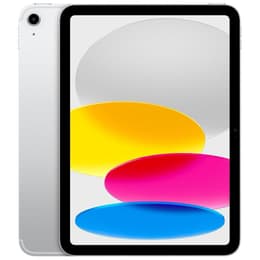
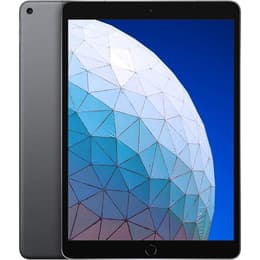
The iPad 2022, also known as the 10th generation iPad, was released in October 2022, while the iPad Air 2019, the 3rd generation of the Air series, launched in March 2019. Both devices operate on Apple's iPadOS, offering a consistent software experience. The primary distinctions between these two tablets lie in their design, internal processing capabilities, and port technology. The iPad 2022 features a modernized, full-screen design with a USB-C port and a landscape-oriented front camera, whereas the iPad Air 2019 retains a more traditional design with a home button and a Lightning port.

Scores

Durability

When considering the longevity of these tablets, several factors come into play, including their release timelines and expected software support.

  • Release Timeline and OS Support: The iPad 2022, being a newer device from October 2022, is anticipated to receive iPadOS updates for approximately five to seven years from its release, potentially extending support until 2027 or beyond. The iPad Air 2019, released in March 2019, has already received several major iPadOS updates, with some users reporting it still runs current iPadOS versions effectively in 2024 and 2025.
  • Design and Practical Lifespan: The iPad 2022 adopts a contemporary design with flatter edges, aligning it visually with newer iPad Air and Pro models. The iPad Air 2019 features a design with a home button and slightly thicker bezels. Both devices are generally robust, and their practical lifespan often extends beyond official software support, depending on user needs and application requirements.
  • Accessory Compatibility: Both tablets support the first-generation Apple Pencil. However, the iPad 2022's transition to USB-C means that charging the first-generation Apple Pencil requires a specific adapter. The iPad Air 2019, with its Lightning port, charges the first-generation Apple Pencil directly.

Year of Release

2022

2019

Compatible with latest Update

Yes

Yes

OS

iPadOS

iPadOS

Maximum Operating System supported

iPadOS 18

iPadOS 18

Performance

The performance of a tablet is largely dictated by its internal components, influencing how smoothly apps run and how efficiently tasks are handled.

  • Processor Capabilities: The iPad 2022 is equipped with a more recent processor, which allows it to handle demanding applications and multitasking with notable fluidity. This results in a responsive experience for everyday tasks, gaming, and even some creative software. The iPad Air 2019 features an earlier generation processor, which still delivers solid performance for daily activities such as note-taking, document editing, and media consumption.
  • Multitasking and Responsiveness: The iPad 2022, with its newer processor and 4GB of RAM, offers a slightly more robust experience for heavy multitasking, allowing users to switch between applications with minimal delay. While the iPad Air 2019, with 3GB of RAM, capably handles most tasks, some users might observe that apps may need to reload more frequently when many applications are open simultaneously.
  • Storage and Battery Behavior: Both models are available with 64GB and 256GB storage options. In terms of battery, both tablets are rated to provide up to 10 hours of web browsing or video playback on a single charge. User experiences generally confirm good battery performance for both, though the iPad Air 2019's battery, being an older device, may show some natural degradation over several years of consistent use.

Memory (GB)

4 GB

3 GB

Processor

Apple A14 Bionic

Apple A12 Bionic

Screen quality

The display is a key component of any tablet, directly impacting the visual experience for various activities from reading to creative work.

  • Display Technology and Clarity: The iPad 2022 features a 10.9-inch Liquid Retina IPS LCD with a resolution of 2360 x 1640 pixels, providing clear visuals at 264 pixels per inch (ppi). The iPad Air 2019 has a 10.5-inch Retina IPS LCD with a resolution of 2224 x 1668 pixels, also at 264 ppi, offering comparable sharpness.
  • Lamination and Color Gamut: A notable difference is that the iPad Air 2019's display is fully laminated and includes an anti-reflective coating, which reduces the gap between the glass and the display and minimizes glare. It also supports the P3 wide color gamut, resulting in richer and more vibrant colors, particularly beneficial for photo and video editing. The iPad 2022's display is not fully laminated and supports the sRGB color gamut.
  • Brightness and Refresh Rate: Both tablets offer a typical brightness of 500 nits, ensuring good visibility in various lighting conditions. Both displays also feature a standard 60Hz refresh rate, providing a smooth experience for general use, though not the ultra-smooth scrolling found on higher refresh rate displays.

Resolution

2360 x 1640

2224 x 1668

True Tone

Yes

Yes

Pro-Motion

No

No

Screen type

Liquid Retina display

Retina display

Pixel density

264ppp

264ppp

Brightness

500 nits brightness

500 nits brightness

Sound quality

Speakers

Stereo speakers

Stereo speakers

Audiovisual

Tablet cameras have evolved to serve more than just basic photography, becoming integral for video calls and quick captures.

  • Rear Camera System: The iPad 2022 is equipped with a 12 MP wide rear camera with an f/1.8 aperture, capable of recording 4K video. This allows for sharper images and higher-resolution video capture. The iPad Air 2019 features an 8 MP wide rear camera with an f/2.4 aperture, which records video at 1080p. While sufficient for casual use, its capabilities are more limited in comparison.
  • Front Camera and Video Conferencing: The iPad 2022 significantly upgrades its front camera to a 12 MP ultrawide lens with an f/2.4 aperture, positioned on the longer edge of the device. This landscape orientation, combined with Center Stage technology, greatly enhances video call experiences by keeping the user centered in the frame. The iPad Air 2019 has a 7 MP front camera with an f/2.2 aperture, suitable for standard video calls.
  • Audio Experience: The iPad 2022 features a quad-speaker setup, providing a more immersive audio experience for media consumption. Both models include dual microphones for clear audio input during calls and recordings. The iPad Air 2019 has stereo speakers, both located on the bottom edge when held in portrait orientation.

Miscellaneous

Beyond core performance and display, practical features like connectivity, ports, and physical design contribute to the overall user experience.

  • Connectivity and Ports: The iPad 2022 supports Wi-Fi 6 and Bluetooth 5.2, offering faster and more stable wireless connections, with optional 5G cellular capabilities. It also features a USB-C port for charging and data transfer, though at USB 2.0 speeds, and lacks a traditional headphone jack. The iPad Air 2019 includes Wi-Fi 5 and Bluetooth 5.0, with optional 4G LTE. It retains the Lightning port and a 3.5mm headphone jack.
  • Security and Physical Design: Both tablets incorporate Touch ID for secure authentication; the iPad 2022 integrates it into the power button, while the iPad Air 2019 has it embedded in the home button. In terms of dimensions, the iPad 2022 measures 248.6 x 179.5 x 7 mm and weighs 477g (Wi-Fi model). The iPad Air 2019 is slightly thinner and lighter at 250.6 x 174.1 x 6.1 mm and 456g (Wi-Fi model).
  • Build Materials: Both devices are constructed with an aluminum chassis, providing a durable and premium feel. The iPad 2022's design with flatter edges aligns it with Apple's more recent tablet aesthetic.

Weight

477 g

464 g

Width

17.95 cm

17.41 cm

Height

24.86 cm

25.06 cm

Depth

0.7 cm

0.61 cm

Screen size (in)

10.9

10.5

Network

Wi-Fi

Wi-Fi + 4G

Carrier compatibility

Without SIM Port

Unlocked

Wi-Fi technology

Wi-Fi 6 802.11ax

Wi-Fi 6 802.11a/b/g/n/ac

Bluetooth Version

Bluetooth 5.2

Bluetooth 5.0

Face ID

No

No

Touch ID

Yes

Yes

Connector

USB Type-C

Lightning connector

The iPad 2022 and iPad Air 2019 cater to slightly different user preferences, reflecting their respective positions in Apple's tablet lineup. The iPad 2022 is often praised for its modernized design, the convenience of its USB-C port, and its improved landscape-oriented front-facing camera, which is particularly beneficial for video calls. However, some users have noted the non-laminated display and the requirement for an adapter to charge the first-generation Apple Pencil as points of criticism.

Conversely, the iPad Air 2019 receives commendation for its solid performance in daily tasks, its reliable battery life, and the inclusion of a traditional headphone jack. Common feedback also highlights its fully laminated display, which offers a more direct and vibrant visual experience. Criticisms sometimes point to its older design with larger bezels and a less advanced camera system compared to newer models.

Users prioritizing a contemporary design, enhanced video calling capabilities, and the versatility of USB-C connectivity will find the iPad 2022 a well-suited option for general use, content consumption, and light productivity. For individuals who value a fully laminated display for a more refined drawing or writing experience, or who prefer the familiarity of a home button with Touch ID and a dedicated headphone jack, the iPad Air 2019 remains a capable device for everyday tasks and media. Both models offer a pathway to owning a functional tablet, and exploring a quality-assured refurbished option can be an eco-friendly alternative for either device.


See all articles

Our recent comparisons