
Galaxy Tab S8+ (12.4", 2022) Vs iPad Air 7 (2025, M3 series)

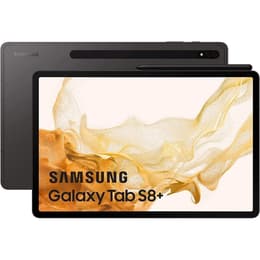
Galaxy Tab S8+ (12.4", 2022)
Starting at

Refurbished price:483.00

Versus €999.00 new

See options
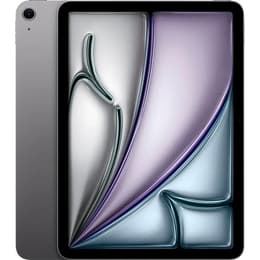
iPad Air 7 (2025, M3 series)
Starting at

Refurbished price:435.00

Versus €729.00 new

See options

Ratings

The Samsung Galaxy Tab S8+ (released in 2022) and the Apple iPad Air (M3 series, released in 2025) represent distinct approaches to the premium tablet experience. While the Galaxy Tab S8+ operates on Android with Samsung's One UI, the iPad Air runs on Apple's iPadOS. A key differentiator lies in their display technologies and the ecosystems they belong to, influencing overall user interaction and software availability. Both devices aim to provide robust performance for a variety of tasks, from creative work to media consumption.

Scores

Durability

When considering the long-term usability of these tablets, their release timelines and software support policies are important factors. The Galaxy Tab S8+, launched in February 2022, typically receives up to four major Android OS upgrades, extending its software longevity for several years from its release date. The iPad Air (M3 series), released in March 2025, benefits from Apple's generally longer software support cycle for its devices, ensuring it receives iPadOS updates for an extended period, potentially longer than its Android counterpart.

  • Software Updates: The iPad Air (M3) is expected to receive iPadOS updates for a longer duration compared to the Galaxy Tab S8+'s Android update cycle, offering extended access to new features and security enhancements.
  • Physical Durability: The Galaxy Tab S8+ features an aluminum frame and Gorilla Glass 5 for screen protection, contributing to its physical resilience. The iPad Air (M3) also features a durable build with a focus on a slim design.
  • Repairability: While specific repairability scores can vary, both manufacturers offer repair services, and the availability of parts and independent repair options can influence the practical lifespan of each device.

Year of Release

2022

2025

Compatible with latest Update

Yes

Yes

OS

Android

iPadOS

Performance

Performance is a core aspect where these two tablets offer different experiences, driven by their respective processors and operating system optimizations. The Galaxy Tab S8+ is powered by a capable processor designed for demanding Android applications and multitasking. The iPad Air (M3 series) integrates Apple's M3 chip, known for its efficiency and strong performance across a wide range of tasks, including graphically intensive applications.

  • Processing Power: The iPad Air (M3) offers substantial processing power, enabling smooth operation for demanding applications, complex multitasking, and advanced gaming experiences. The Galaxy Tab S8+ handles everyday tasks and moderate multitasking effectively.
  • Multitasking Capabilities: Both tablets are designed to handle multiple applications simultaneously. The iPad Air benefits from iPadOS's Stage Manager and robust RAM management, while the Galaxy Tab S8+ leverages Samsung's One UI features for enhanced productivity.
  • Storage and RAM: The Galaxy Tab S8+ offers configurations with 8GB or 12GB of RAM and storage options up to 256GB, expandable via microSD. The iPad Air (M3) comes with 8GB of RAM and storage options ranging from 128GB up to 1TB, without expandable storage.

Memory (GB)

8 GB

8 GB

Screen quality

The visual experience on these tablets is a significant point of comparison, primarily due to their differing display technologies. The Galaxy Tab S8+ features a Super AMOLED display, known for its deep blacks and vibrant colors, while the iPad Air (M3) utilizes a Liquid Retina IPS LCD, offering accurate color reproduction and good brightness.

  • Display Technology: The Galaxy Tab S8+ boasts a 12.4-inch Super AMOLED display with a resolution of 2800 x 1752 pixels, providing excellent contrast and color saturation. The iPad Air (M3) is available in 11-inch and 13-inch Liquid Retina IPS LCD options, with resolutions of 2360 x 1640 and 2732 x 2048 pixels respectively, offering consistent color and wide viewing angles.
  • Refresh Rate and Brightness: The Galaxy Tab S8+ features a 120Hz refresh rate for smoother scrolling and animations, with brightness levels reaching up to 601 nits. The iPad Air (M3) maintains a standard 60Hz refresh rate, with brightness up to 500 nits for the 11-inch model and 600 nits for the 13-inch model.
  • Viewing Experience: Users prioritizing deep blacks and high contrast for media consumption may find the Super AMOLED of the Tab S8+ appealing. The iPad Air's Liquid Retina display provides a bright and color-accurate canvas suitable for a broad range of tasks, including creative work and general use.

Resolution

1752 x 2800

2360 x 1640

Screen type

Super AMOLED

Liquid Retina display

Pixel density

270ppp

264ppp

Audiovisual

Both tablets include camera systems designed for various uses, from video calls to document scanning and casual photography. While tablets are not typically primary photography devices, their camera capabilities contribute to their overall utility.

  • Rear Camera System: The Galaxy Tab S8+ features a dual rear camera setup with a 13MP main sensor and a 6MP ultra-wide lens, capable of recording 4K video at 30fps. The iPad Air (M3) has a single 12MP Wide rear camera that also supports 4K video recording.
  • Front Camera and Video Calls: For video conferencing and selfies, the Galaxy Tab S8+ includes a 12MP ultra-wide front camera. The iPad Air (M3) features a 12MP Center Stage front camera, which automatically adjusts to keep the user in frame during video calls.
  • Audio Experience: The Galaxy Tab S8+ is equipped with quad stereo speakers tuned by AKG with Dolby Atmos support, providing a rich audio experience. The iPad Air (M3) also offers landscape stereo speakers, enhancing media consumption.

Miscellaneous

Beyond the core specifications, several practical elements contribute to the overall user experience and differentiate these two tablets. These include connectivity options, port types, biometric security, and physical design characteristics.

  • Connectivity and Ports: The Galaxy Tab S8+ supports Wi-Fi 6E, Bluetooth 5.2, and optional 5G connectivity, featuring a USB-C 3.2 port. The iPad Air (M3) also offers Wi-Fi 6E, Bluetooth 5.3, and optional 5G (eSIM only), with a USB-C port supporting up to 10 Gbps data transfer speeds.
  • Biometric Security: The Galaxy Tab S8+ incorporates an on-screen fingerprint sensor for secure unlocking and authentication. The iPad Air (M3) features Touch ID integrated into the top button.
  • Design and Accessories: The Galaxy Tab S8+ has a slim profile at 5.7mm and weighs around 567-572g, and includes the S Pen in the box. The iPad Air (M3) is also thin at 6.1mm and weighs 461g (11-inch) or 616g (13-inch), supporting the Apple Pencil Pro and Magic Keyboard (sold separately).

Weight

567 g

460 g

Screen size (in)

12.4

11

Network

Wi-Fi

Wi-Fi

Carrier compatibility

Without SIM Port

Without SIM Port

User sentiment for the Samsung Galaxy Tab S8+ often highlights its stunning Super AMOLED display, which provides deep blacks and vibrant colors, making it a strong contender for media consumption. The inclusion of the S Pen in the box is frequently praised, adding significant value for note-taking and creative tasks. Some users, however, note that Android's tablet software experience, while improved by Samsung's One UI, can still feel less optimized than iPadOS for certain workflows. Battery life is generally considered acceptable, though heavy users might find themselves charging more frequently.

The iPad Air (M3 series) receives consistent acclaim for its powerful M3 chip, which delivers exceptional performance for demanding applications and ensures a smooth user experience. Its long battery life and quality Liquid Retina display are also frequently mentioned as strong positives. Common observations include the lack of a higher refresh rate display (ProMotion) and the continued use of an LCD panel instead of OLED, which some users might expect in a premium tablet. The cost of essential accessories like the Apple Pencil and Magic Keyboard, sold separately, is also a recurring point of consideration.

Users prioritizing a vibrant, high-contrast display and an included stylus for drawing and note-taking within the Android ecosystem may find the Galaxy Tab S8+ well-suited to their needs. Conversely, individuals seeking top-tier processing power, a consistently optimized software experience, and a longer software support window, particularly for creative and productivity tasks within the Apple ecosystem, may lean towards the iPad Air (M3). Both tablets offer compelling features, and choosing between them often comes down to personal preference for operating system, display technology, and accessory integration. For those considering either device, exploring quality-assured refurbished options can provide an eco-friendly alternative.


See all articles

Our recent comparisons