

Huawei P30 Pro Vs iPhone 12 Pro

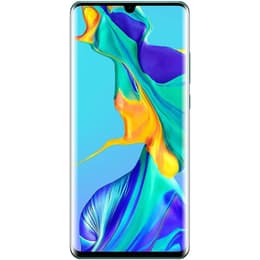
Huawei P30 Pro
Huawei P30 Pro
Starting at

Refurbished price:186.00

Versus €849.00 new

See options
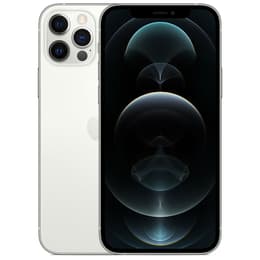
iPhone 12 Pro
iPhone 12 Pro
Starting at

Refurbished price:214.00

Versus €1,039.00 new

See options

Ratings

The Huawei P30 Pro, released in March 2019, and the iPhone 12 Pro, launched in October 2020, represent flagship smartphones from their respective manufacturers. While both devices offer premium experiences, they cater to different user preferences through their distinct operating systems and hardware philosophies. The P30 Pro runs on Android, emphasizing camera zoom capabilities and battery endurance, whereas the iPhone 12 Pro operates on iOS, focusing on a powerful and integrated ecosystem with advanced computational photography and a durable design.

Scores

Durability

The longevity of a smartphone is influenced by its build quality, software support, and ease of repair. These two devices offer different timelines and approaches to durability and sustained use.

  • Release Timeline & Software Support: The Huawei P30 Pro, launched in March 2019, has received Android updates up to EMUI 12 (based on Android 11) in some regions, indicating a solid, though now concluded, update cycle for an Android device of its era. The iPhone 12 Pro, released in October 2020, benefits from Apple's typically longer software support, with devices often receiving major iOS updates for five to six years from their release, extending its practical software lifespan further into the future.
  • Physical Durability: Both devices feature an IP68 rating for water and dust resistance, meaning they can withstand submersion in water under specific conditions. The iPhone 12 Pro introduced a Ceramic Shield front cover, designed to offer enhanced drop performance compared to previous iPhone models, alongside its stainless steel frame and glass back. The P30 Pro uses a glass front and back with a metal frame.
  • Repairability: iFixit awarded the Huawei P30 Pro a repairability score of 4 out of 10, noting that its construction, with heavily glued components and compact internal layout, makes repairs challenging. The iPhone 12 Pro received a slightly higher iFixit repairability score of 6 out of 10, with many components being modular and relatively easy to replace, though proprietary screws and increased waterproofing can complicate some repairs.

Year of Release

2019

2020

Compatible with latest Update

No

Yes

OS

Android

iOS

Foldable

No

No

Performance

Performance in daily use is determined by the interplay of the processor, RAM, and software optimization, affecting app responsiveness, multitasking, and gaming.

  • Processing Power: The Huawei P30 Pro is equipped with a processor that handles everyday tasks, navigation, and most applications smoothly. It provides a capable experience for general use and moderate gaming. The iPhone 12 Pro features a newer generation processor designed for demanding applications, advanced computational photography, and efficient handling of graphics-intensive games, offering a highly responsive and fluid user experience.
  • Multitasking and Storage: The P30 Pro comes with 6GB or 8GB of RAM, allowing for effective multitasking with multiple apps open. Storage options range from 128GB to 512GB. The iPhone 12 Pro includes 6GB of RAM, which, combined with iOS's memory management, ensures smooth transitions between applications and efficient background processes. It offers storage configurations of 128GB, 256GB, and 512GB.
  • Battery Behavior: The P30 Pro houses a 4200 mAh battery, which typically provides extended usage times for many users, often lasting through a full day of heavy use. The iPhone 12 Pro has a 2815 mAh battery. While its battery capacity is smaller, iOS's power efficiency helps optimize usage, though very heavy users might find themselves needing to recharge more frequently.

Memory (GB)

8 GB

6 GB

Screen quality

The display is a primary interface for smartphone interaction, and both devices offer high-quality viewing experiences with distinct characteristics.

  • Display Technology and Size: The Huawei P30 Pro features a 6.47-inch OLED display, providing deep blacks and vibrant colors across its larger screen area. The iPhone 12 Pro comes with a 6.1-inch Super Retina XDR OLED display, which also delivers excellent contrast and color accuracy in a slightly more compact form factor.
  • Resolution and Clarity: The P30 Pro offers a resolution of 2340x1080 pixels, resulting in a pixel density of approximately 398 pixels per inch (ppi). The iPhone 12 Pro has a higher resolution of 2532x1170 pixels, yielding a sharper 460 ppi, contributing to finer detail in text and images.
  • Brightness and Refresh Rate: Both displays typically operate at a standard 60Hz refresh rate. The iPhone 12 Pro's display can reach 800 nits of typical maximum brightness and up to 1200 nits for HDR content, making it highly visible in various lighting conditions, including bright sunlight. The P30 Pro's OLED panel also offers good brightness and supports HDR10 for an enhanced viewing experience.

Resolution

1080 x 2340

1170 x 2532

Screen type

OLED

Super Retina XDR OLED

Audiovisual

Both smartphones were recognized for their camera capabilities at their respective launches, though they approach photography with different strengths.

  • Rear Camera Systems: The Huawei P30 Pro boasts a quad-camera system, including a 40MP wide lens, a 20MP ultrawide lens, an 8MP periscope telephoto lens with 5x optical zoom, and a Time-of-Flight (ToF) sensor. This setup is particularly noted for its impressive optical zoom and strong low-light performance. The iPhone 12 Pro features a triple 12MP camera system, comprising wide, ultrawide, and telephoto lenses, complemented by a LiDAR Scanner. It offers a 4x optical zoom range and excels in consistent image quality across its lenses, with the LiDAR enhancing low-light autofocus and depth sensing.
  • Photography Features: The P30 Pro's camera system was a pioneer in advanced zoom capabilities for smartphones. The iPhone 12 Pro includes features like Night mode, Deep Fusion, and Smart HDR 3, which contribute to detailed and well-exposed photos in various conditions. Its LiDAR Scanner also improves Portrait mode effects.
  • Video and Audio: The P30 Pro supports video recording up to 4K at 30 frames per second. The iPhone 12 Pro can record 4K video at up to 60 frames per second and introduced HDR video recording with Dolby Vision, offering enhanced dynamic range and color in video content. For audio, the P30 Pro uses an innovative Acoustic Display Technology for its earpiece, while the iPhone 12 Pro provides stereo speakers with spatial audio support for an immersive media consumption experience.

Main camera

40 megapixels

12 megapixels

Front camera

32 megapixels

12 megapixels

Miscellaneous

Beyond core features, several practical elements contribute to the overall user experience and device utility.

  • Connectivity and Ports: The Huawei P30 Pro supports Wi-Fi 5 (802.11ac) and Bluetooth 5.0, and includes a USB-C 3.1 port for charging and data transfer. It does not support 5G cellular networks. The iPhone 12 Pro features Wi-Fi 6 (802.11ax) and Bluetooth 5.0, along with a Lightning port. A key difference is its support for 5G connectivity, including both sub-6 GHz and mmWave in certain regions, enabling faster cellular data speeds.
  • Biometrics and Sensors: The P30 Pro incorporates an in-display optical fingerprint sensor for secure unlocking. It also includes an IR sensor. The iPhone 12 Pro relies on Face ID, Apple's facial recognition system, for biometric security. It also features a U1 Ultra Wideband chip for enhanced spatial awareness and precise location services.
  • Design and Handling: The P30 Pro measures 158 x 73.4 x 8.4 mm and weighs 192g, offering a larger screen experience. The iPhone 12 Pro is slightly more compact at 146.7 x 71.5 x 7.4 mm and weighs 189g, which can contribute to easier one-handed use for some individuals. Both devices feature premium build materials, with the iPhone 12 Pro utilizing a stainless steel frame and the P30 Pro a metal frame.

Weight

192 g

187 g

Screen size (in)

6.47

6.1

Network

4G

5G

SIM card

Dual Physical SIM

Physical SIM + eSIM

Carrier compatibility

Unlocked

Unlocked

User feedback for the Huawei P30 Pro often highlights its exceptional camera zoom capabilities and generally strong battery life as significant advantages. Users frequently praise its ability to capture distant subjects with clarity and its endurance through a day's use. Some common criticisms, particularly in the current landscape, revolve around the uncertainty of long-term software updates and the absence of 5G connectivity.

For the iPhone 12 Pro, users consistently commend its powerful and consistent performance, the reliability of its camera system, and the extended software support provided by Apple. The seamless integration within the iOS ecosystem is also a frequently cited positive. Conversely, some users have noted that its battery life, while optimized, may require more frequent charging for very heavy usage compared to some Android counterparts, and the continued use of the Lightning port is sometimes mentioned as a point of divergence from the more universal USB-C standard.

Users prioritizing advanced optical zoom, a larger display, and a robust battery for extended use, and who are comfortable within the Android ecosystem, may find the Huawei P30 Pro well-suited to their needs. Conversely, individuals seeking long-term software support, a powerful and consistent camera system with LiDAR capabilities, and a compact yet durable design within the iOS ecosystem will likely lean toward the iPhone 12 Pro. Both devices offer distinct strengths, and choosing between them often comes down to individual priorities regarding operating system preference, camera features, and overall device size. For those considering either model, exploring quality-assured refurbished options can provide an eco-friendly alternative.


See all articles

Our recent comparisons