

Compare models
Galaxy Z Fold4 Vs Xiaomi Redmi Note 13 4G
- 1-year minimum warranty
- Free delivery on all orders
- Free 30-day returns
Differences at a glance
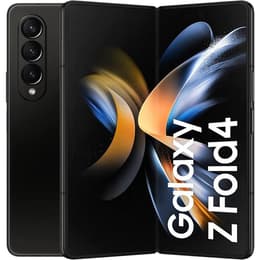
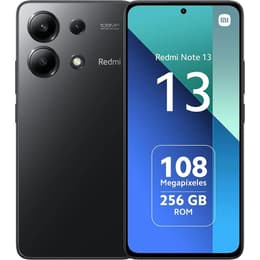
The Samsung Galaxy Z Fold4 (2022) and the Xiaomi Redmi Note 13 4G (2024) represent two distinct approaches to modern mobile technology. While the Galaxy Z Fold4 is a flagship foldable device featuring a transforming dual-screen design, the Xiaomi Redmi Note 13 4G is a conventional smartphone built for everyday utility. These devices operate on the Android platform with distinct manufacturer interfaces, and their primary differentiators lie in their form factors, hardware categories, and intended use cases.
Available Models
Colour
Storage (GB)
Scores
Durability
Comparing the Galaxy Z Fold4 and the Xiaomi Redmi Note 13 4G reveals notable differences in hardware longevity, software support timelines, and physical durability expectations.
- Software update timeline: The Galaxy Z Fold4 receives extended flagship software support from its release year, while the Redmi Note 13 4G benefits from a later launch date, giving them similar remaining windows for security and operating system updates.
- Hardware and repairability: The Galaxy Z Fold4 features complex folding hinge mechanics that require careful handling over years of use, whereas the standard candy bar design of the Redmi Note 13 4G presents a more traditional structure for long-term physical resilience.
- Expected practical lifespan: Both devices support daily tasks reliably, though users choosing a quality-assured refurbished option like the Galaxy Z Fold4 gain access to high-end processing power that remains capable across demanding future software cycles.
Year of Release
2022
2024
Compatible with latest Update
Yes
Yes
OS
Android
Android
Foldable
Yes
No
Performance
Performance capabilities and resource management vary significantly between these two models, impacting multitasking efficiency, storage capacities, and battery behavior.
- Multitasking and processing: The Galaxy Z Fold4 handles intensive applications and simultaneous multi-window workflows smoothly, whereas the Redmi Note 13 4G manages everyday apps, web browsing, and messaging efficiently without heavy gaming overhead.
- Battery behavior: The Redmi Note 13 4G provides consistent battery endurance through standard daily use, while the dual-screen configuration of the Galaxy Z Fold4 results in more varied power consumption depending on whether the main or cover screen is active.
- Storage and memory configurations: Both models offer ample internal storage variants to store local media and applications, paired with sufficient memory to keep background processes stable during regular navigation.
Screen quality
Display technology is a major focal point for both devices, offering entirely different visual experiences defined by panel types, sizing, and folding capabilities.
- Display technology and form factor: The Galaxy Z Fold4 utilizes folding organic light-emitting diode technology that expands from a standard smartphone cover into a tablet-sized inner canvas, while the Redmi Note 13 4G features a traditional flat panel with vivid colors and deep contrast.
- Brightness and outdoor visibility: Both screens reach high peak brightness levels that allow for comfortable viewing under direct sunlight, ensuring text and images remain legible outdoors.
- Refresh rate and smoothness: Both devices support elevated refresh rates for smooth scrolling through web pages, social media feeds, and user interface animations.
Resolution
1812 x 2176
1080 x 2400
Screen type
Foldable Dynamic AMOLED 2X
AMOLED
Audiovisual
Imaging hardware and multimedia output vary, catering to different preferences for photography, video recording, and audio consumption.
- Camera versatility: The Galaxy Z Fold4 includes a dedicated telephoto zoom lens alongside main and ultra-wide sensors, whereas the Redmi Note 13 4G focuses its main sensor on high-resolution everyday snapshots and standard wide-angle framing.
- Low-light and video performance: The flagship image processing on the Galaxy Z Fold4 captures detailed low-light imagery and stable video output, while the Redmi Note 13 4G handles casual daylight photography and video calls reliably.
- Audio and media output: Both models feature stereo speaker setups that deliver clear sound for hands-free calling, video playback, and casual media streaming.
Main camera
50 megapixels
108 megapixels
Front camera
4 megapixels
16 megapixels
Miscellaneous
Practical everyday features, connectivity standards, and physical handling characteristics define the ergonomic and functional differences between the two devices.
- Connectivity and ports: The Galaxy Z Fold4 supports advanced fifth-generation cellular networks and modern wireless standards, while the Redmi Note 13 4G provides standard four-generation cellular connectivity alongside traditional wired accessory options.
- Biometrics and sensors: Both devices incorporate secure unlocking mechanisms, utilizing side-mounted fingerprint sensors or facial recognition for quick access.
- Weight and handling: The Galaxy Z Fold4 is heavier and thicker due to its dual-screen folding mechanism, whereas the Redmi Note 13 4G offers a lightweight, slim profile that rests comfortably in one hand during extended use.
Weight
263 g
175 g
Screen size (in)
7.6
6.67
Network
5G
4G
SIM card
Dual Physical SIM + eSIM
Dual Physical SIM
Carrier compatibility
Unlocked
Unlocked
What the community thinks
Real-world user feedback highlights distinct community perceptions for each device. Owners of the Galaxy Z Fold4 frequently praise the expansive multitasking workspace and innovative folding utility, though some note the heavier weight and visible screen crease. Conversely, users of the Redmi Note 13 4G often commend its reliable daily battery endurance and straightforward handling, while pointing out limitations in demanding gaming scenarios and lack of advanced cellular speeds.
Users prioritizing a versatile tablet-sized workspace and high-end processing will find the Galaxy Z Fold4 well-suited to their workflow. Meanwhile, users prioritizing a lightweight traditional smartphone experience for messaging, media, and daily tasks may lean toward the Redmi Note 13 4G. Exploring a sustainable choice like a quality-assured refurbished Galaxy Z Fold4 allows consumers to access premium folding technology reliably.