

Google Pixel Fold Vs Xiaomi Redmi Note 13 Pro

Google Pixel Fold
Google Pixel Fold
Starting at

Refurbished price:454.00

Versus €1,750.29 new

See options
Xiaomi Redmi Note 13 Pro
Starting at

Refurbished price:179.00

Versus €349.00 new

See options

Ratings

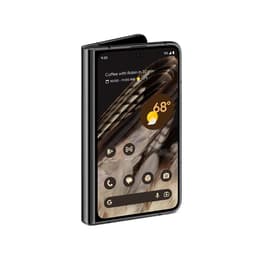
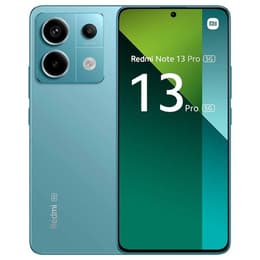
The Google Pixel Fold, released in June 2023, represents Google's entry into the foldable smartphone market, offering a unique form factor that combines a traditional smartphone experience with a larger tablet-like display. In contrast, the Xiaomi Redmi Note 13 Pro, launched in January 2024, is a conventional slab-style smartphone designed to deliver a comprehensive feature set within a more traditional design. While the Pixel Fold focuses on versatility and a premium foldable experience, the Redmi Note 13 Pro emphasizes a high-resolution camera, a vibrant display, and robust battery performance in a standard smartphone package.

Scores

Durability

When considering the practical lifespan of these devices, several factors come into play, including software support, physical resilience, and the inherent nature of their designs.

  • Software Longevity: The Google Pixel Fold, running Android, is expected to receive operating system updates until 2028, providing a longer period of software support compared to the Xiaomi Redmi Note 13 Pro, which typically offers two years of major Android updates and three years of security patches from its release. This difference means the Pixel Fold will benefit from new features and security enhancements for a more extended duration.
  • Physical Durability: The Pixel Fold features an IPX8 water resistance rating, indicating protection against continuous submersion, and utilizes Gorilla Glass Victus on its cover screen, with Google marketing its hinge as highly durable. The Redmi Note 13 Pro carries an IP54 rating, offering resistance to dust and splashes, and also incorporates Gorilla Glass Victus for its display. The foldable design of the Pixel Fold introduces a mechanical hinge and a flexible inner screen with a plastic protective layer, which can be a consideration for long-term wear compared to the rigid structure of the Redmi Note 13 Pro.
  • Expected Practical Lifespan: Users prioritizing extended software support and advanced water protection may find the Pixel Fold offers a longer practical lifespan in terms of feature relevance and resilience against water damage. However, the traditional, non-folding design of the Redmi Note 13 Pro might appeal to those seeking a device with fewer moving parts for perceived mechanical longevity.

Year of Release

2023

2023

Compatible with latest Update

Yes

Yes

OS

Android

Android

Foldable

Yes

No

Performance

The performance of a smartphone is crucial for daily operations, influencing everything from app responsiveness to multitasking capabilities and gaming experiences.

  • Processing Power: The Google Pixel Fold is equipped with a processor designed for efficient AI tasks and smooth operation across its dual-screen setup, ensuring demanding applications and multitasking run fluidly. The Xiaomi Redmi Note 13 Pro (5G variant) utilizes a processor that handles everyday tasks and moderate gaming with ease, providing a responsive user experience.
  • Multitasking and Storage: Both devices offer ample RAM, with the Pixel Fold featuring 12GB and the Redmi Note 13 Pro offering 8GB or 12GB, facilitating smooth transitions between multiple open applications. For storage, the Pixel Fold comes with 256GB or 512GB of internal storage, while the Redmi Note 13 Pro provides options of 128GB, 256GB, or 512GB. The Redmi Note 13 Pro (4G variant) also supports expandable storage via a microSD card, a feature not present on the Pixel Fold.
  • Battery Behavior: The Pixel Fold houses a 4821 mAh battery, designed to power its dual displays and advanced features. The Redmi Note 13 Pro comes with a larger 5100 mAh battery, which, combined with its single-screen design, often translates to extended usage times, with users reporting it can comfortably last a day and a half on a single charge.

Memory (GB)

12 GB

8 GB

Screen quality

The display is a primary interface for user interaction, and both devices offer distinct viewing experiences tailored to their form factors.

  • Display Technology and Clarity: The Google Pixel Fold features two OLED displays: a 5.8-inch cover screen and a 7.6-inch foldable inner screen. Both offer vibrant colors, deep blacks, and high clarity, with resolutions of 1080p (2092x1080) for the cover and 1840x2208 for the inner display. The Xiaomi Redmi Note 13 Pro boasts a single 6.67-inch AMOLED display with a 1.5K resolution (1220x2712), also delivering excellent color reproduction and contrast.
  • Brightness and Refresh Rate: Both devices offer high brightness levels, with the Pixel Fold's cover screen reaching 1550 nits peak brightness and its inner screen 1450 nits, ensuring good visibility in various lighting conditions. The Redmi Note 13 Pro matches this with an impressive 1800 nits peak brightness. Both phones also feature a 120Hz adaptive refresh rate, providing smooth scrolling and fluid animations.
  • Viewing Experience: The Pixel Fold's wider cover screen offers a more traditional smartphone aspect ratio when folded, while its unfolded inner screen provides a large canvas for productivity and media consumption. The Redmi Note 13 Pro's single, flat display offers a consistent and immersive viewing experience for everyday use, enhanced by Dolby Vision support.

Resolution

1840 x 2208

1220 x 2712

Screen type

Foldable OLED

AMOLED

Audiovisual

Photography capabilities are a significant consideration for many users, and both smartphones offer distinct camera systems.

  • Rear Camera Systems: The Google Pixel Fold features a triple-lens rear camera setup, including a 48MP main sensor with optical image stabilization (OIS), a 10.8MP ultrawide lens, and a 10.8MP telephoto lens with 5x optical zoom. This configuration is known for producing balanced images with Google's computational photography. The Xiaomi Redmi Note 13 Pro also has a triple-lens rear camera, highlighted by a 200MP main sensor with OIS, an 8MP ultrawide lens, and a 2MP macro lens.
  • Photography Performance: The Pixel Fold excels in consistent image quality across its lenses, with strong low-light performance and effective portrait mode. Its 5x optical zoom is a notable advantage for distant subjects. The Redmi Note 13 Pro's 200MP main camera captures highly detailed photos in good lighting conditions, with vibrant colors. However, its auxiliary ultrawide and macro lenses may offer less detail and dynamic range compared to the main sensor.
  • Video Recording and Front Cameras: Both devices support 4K video recording at 30fps or 60fps for their main rear cameras. The Pixel Fold has a 9.5MP camera on its cover screen and an 8MP camera on its inner screen for selfies and video calls. The Redmi Note 13 Pro features a 16MP front-facing camera that records 1080p video at 60fps.

Main camera

48 megapixels

200 megapixels

Front camera

8 megapixels

16 megapixels

Miscellaneous

Beyond core features, several practical elements contribute to the overall user experience and device utility.

  • Connectivity and Ports: Both devices support 5G connectivity for fast mobile data. The Pixel Fold includes USB-C 3.2 Gen 2 for data transfer and charging. The Redmi Note 13 Pro supports Wi-Fi 5 (802.11ac) and Bluetooth 5.2, and notably includes a 3.5mm headphone jack, which is absent on the Pixel Fold.
  • Biometric Security: The Pixel Fold features a side-mounted fingerprint sensor and face recognition for secure unlocking. The Redmi Note 13 Pro incorporates an in-screen fingerprint sensor, offering a convenient and modern biometric solution.
  • Design and Handling: The Pixel Fold, when folded, measures 139.7mm in height, 79.5mm in width, and 12.1mm in thickness, weighing 283g. Its wider aspect ratio when folded is often praised for better one-handed use compared to other foldables. The Redmi Note 13 Pro is a more compact and lighter device at 161.1mm in height, 74.95mm in width, 7.98mm in thickness, and weighing 188g.

Weight

283 g

187 g

Screen size (in)

7.6

6.67

Network

5G

5G

SIM card

Physical SIM + eSIM

Dual Physical SIM

Carrier compatibility

Unlocked

Unlocked

The Google Pixel Fold and the Xiaomi Redmi Note 13 Pro cater to different user needs and preferences within the smartphone market. User feedback for the Pixel Fold often highlights its innovative foldable design, offering a versatile large screen for productivity and media, alongside a capable camera system and a robust software experience with extended updates. Some users have noted the initial cost and the learning curve associated with foldable-optimized applications. The Redmi Note 13 Pro is frequently praised for its vibrant AMOLED display, impressive 200MP main camera, strong battery life with fast charging, and the inclusion of a 3.5mm headphone jack. Criticisms sometimes point to its less extensive software update policy and the performance of its auxiliary cameras.

Users prioritizing a cutting-edge, adaptable device for multitasking and a premium camera experience, coupled with long-term software support, may find the Google Pixel Fold well-suited to their needs. Its unique form factor is ideal for those who desire both a compact phone and a larger tablet-like display in one device. Conversely, individuals seeking a traditional smartphone with a focus on a high-resolution main camera, excellent display quality, and extended battery life, without the complexities of a foldable design, will likely lean towards the Xiaomi Redmi Note 13 Pro. Both devices offer compelling features, and choosing between them depends on whether a user values the innovative versatility of a foldable or the refined, feature-rich experience of a conventional smartphone. For those considering either device, exploring quality-assured refurbished options can provide an eco-friendly alternative.


See all articles

Our recent comparisons