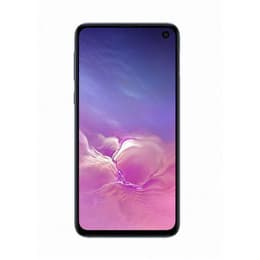



Galaxy S10e Vs Galaxy S20 FE

Galaxy S10e
Galaxy S10e
Starting at

Refurbished price:121.00

Versus €759.00 new

See options
Galaxy S20 FE
Galaxy S20 FE
Starting at

Refurbished price:129.00

Versus €779.00 new

See options

Ratings

The Samsung Galaxy S10e, released in March 2019, and the Samsung Galaxy S20 FE (Fan Edition), launched in October 2020, represent two distinct approaches within Samsung's smartphone lineup. While both devices run on the Android operating system, the S10e offers a more compact form factor, whereas the S20 FE provides a larger display and a more advanced camera system, reflecting their different target audiences and release timelines.

Scores

Durability

The practical lifespan of a smartphone is significantly influenced by its release date and subsequent software support. These two models, released about a year and a half apart, have different trajectories in terms of ongoing updates and expected longevity.

  • Release Timeline and Software Support: The Galaxy S10e, released in March 2019, received its last major Android OS upgrade with Android 12 and ceased receiving regular security updates in April 2023. In contrast, the Galaxy S20 FE, launched in October 2020, received three major Android OS updates, concluding its software update lifecycle with Android 13 and its security patches ending in October 2025. This means the S20 FE offers a longer period of official software and security support.
  • Repairability: The Galaxy S10e generally presents challenges for repair, receiving a low repairability score of 3 out of 10 from iFixit due to extensive use of adhesive and components like the charging port being soldered to the motherboard. The Galaxy S20 FE is considered moderately more repairable, with a score of 7.5 out of 10, though it still uses adhesive for components like the battery and screen.
  • Expected Practical Lifespan: For users prioritizing the latest software features and security, the Galaxy S20 FE offers a more extended period of official support. However, both devices, especially as quality-assured refurbished options, can continue to function effectively for everyday tasks beyond their official support windows, though without the newest security patches or OS features.

Year of Release

2019

2020

Compatible with latest Update

No

No

OS

Android

Android

Foldable

No

No

Performance

Performance in both devices is driven by capable processors for their respective generations, impacting how smoothly applications run and how efficiently tasks are handled.

  • Processor Capabilities and Responsiveness: The Galaxy S10e is equipped with a processor that handles general app usage and UI navigation smoothly. Users have reported that it remains fast and responsive for daily tasks even years after its release. The Galaxy S20 FE features a newer generation processor, which provides a noticeable improvement in handling demanding applications, multitasking, and gaming, offering a smoother overall experience.
  • Storage and Multitasking: Both models offer 6GB or 8GB of RAM, with the S10e typically found with 6GB/128GB or 8GB/256GB configurations, and the S20 FE commonly available with 6GB/128GB or 8GB/128GB/256GB. The S20 FE's newer processor, combined with its RAM options, generally provides more headroom for intensive multitasking and future applications. Both devices support expandable storage via a microSD card, which is a notable feature for users who require additional space for media and files.
  • Battery Behavior: The Galaxy S10e houses a 3100 mAh battery, which users have described as sufficient for a full day of moderate use, though heavy users might find themselves charging more frequently. The Galaxy S20 FE comes with a larger 4500 mAh battery, generally providing extended usage times, with many users reporting it comfortably lasts through a full day, even with features like the higher refresh rate enabled.

Memory (GB)

6 GB

6 GB

Screen quality

The display is a primary interaction point, and both the Galaxy S10e and S20 FE offer vibrant viewing experiences, though with distinct characteristics.

  • Display Technology and Clarity: The Galaxy S10e features a 5.8-inch Dynamic AMOLED display with a resolution of 1080 x 2280 pixels, providing sharp images and vibrant colors. The Galaxy S20 FE has a larger 6.5-inch Super AMOLED display with a resolution of 1080 x 2400 pixels, also delivering clear visuals and good color reproduction.
  • Brightness and Refresh Rate: Both displays offer good brightness levels for outdoor visibility. A key differentiator is the refresh rate; the S10e has a standard 60Hz refresh rate, while the S20 FE boasts a 120Hz refresh rate, resulting in noticeably smoother scrolling and more fluid animations.
  • Screen Size and Viewing Experience: The S10e's smaller 5.8-inch screen makes it a more compact device, suitable for one-handed use. The S20 FE's larger 6.5-inch display provides a more expansive viewing area, which can enhance media consumption and gaming experiences.

Resolution

1080 x 2280

1080 x 2400

Screen type

Dynamic AMOLED

Super AMOLED

Audiovisual

Both smartphones offer versatile camera systems capable of capturing a range of photos and videos, though the S20 FE introduces a telephoto lens for greater flexibility.

  • Rear Camera System: The Galaxy S10e features a dual-camera setup on the rear, consisting of a 12MP wide-angle lens with optical image stabilization (OIS) and a 16MP ultrawide lens. The Galaxy S20 FE upgrades this with a triple-camera system: a 12MP wide-angle lens with OIS, a 12MP ultrawide lens, and an 8MP telephoto lens with 3x optical zoom and OIS. This telephoto lens allows for clearer zoomed-in shots without significant loss of detail.
  • Photography Performance: Both devices perform well in good lighting conditions, producing detailed and color-accurate images. The S20 FE's larger sensor on its main camera can contribute to better low-light performance and dynamic range compared to the S10e. Users generally find the S10e's camera to be good for everyday use. The S20 FE's camera system is often praised for its overall quality and versatility.
  • Video Recording and Front Camera: Both phones are capable of recording high-resolution video. For selfies, the S10e has a 10MP front camera, while the S20 FE features a higher-resolution 32MP front camera, offering more detail for self-portraits and video calls.

Main camera

12 megapixels

12 megapixels

Front camera

10 megapixels

32 megapixels

Miscellaneous

Beyond core features, several practical elements contribute to the overall user experience, from physical design to connectivity options.

  • Connectivity and Ports: The Galaxy S10e supports 4G LTE networks and includes a traditional 3.5mm headphone jack, which is a valued feature for many users. The Galaxy S20 FE offers 5G connectivity (in its Snapdragon variant), providing faster mobile data speeds where available, but it omits the headphone jack. Both devices feature USB-C ports for charging and data transfer.
  • Build Materials and Durability: The S10e features a glass front and back (Gorilla Glass 5) with an aluminum frame, contributing to a premium feel. It also carries an IP68 rating for dust and water resistance. The S20 FE has a glass front (Gorilla Glass 3) and an aluminum frame, but utilizes a plastic back, which some users perceive as less premium, though it can offer better resistance to shattering. It also has an IP68 rating.
  • Weight, Dimensions, and Sensors: The S10e is a compact and lightweight device at 150g and dimensions of 142.2 x 69.9 x 7.9 mm, making it comfortable for one-handed use. The S20 FE is larger and heavier at 190g and 159.8 x 74.5 x 8.4 mm. Both include essential sensors like accelerometers, gyroscopes, and compasses. The S10e features a side-mounted fingerprint sensor integrated into the power button, while the S20 FE uses an in-display optical fingerprint sensor.

Weight

150 g

190 g

Screen size (in)

5.8

6.5

Network

4G

4G

SIM card

Physical SIM

Dual Physical SIM

Carrier compatibility

Unlocked

Unlocked

The Samsung Galaxy S10e and Galaxy S20 FE cater to slightly different preferences, with user feedback highlighting their respective strengths and weaknesses. Users often praise the S10e for its compact size, making it easy to handle with one hand, and its inclusion of a headphone jack. Its display is generally well-regarded for its quality. However, some users have noted concerns about its battery life, particularly on the Exynos variants, and its software support has now ended.

The Galaxy S20 FE is frequently lauded for its robust battery life, smooth 120Hz display, and the versatility of its camera system, especially the telephoto lens. The performance, particularly of the Snapdragon-equipped models, is also a common point of praise. Criticisms sometimes point to the plastic back feeling less premium and occasional inconsistencies with the in-display fingerprint sensor.

Users prioritizing a compact device that is easy to manage with one hand and includes a traditional headphone jack may find the Galaxy S10e well-suited to their needs. Conversely, those who value a larger, smoother display, longer battery life, a more versatile camera with optical zoom, and 5G connectivity will likely lean towards the Galaxy S20 FE. Both devices, available as quality-assured refurbished options, offer a sustainable choice for consumers looking to extend the life cycle of electronics.


See all articles

Our recent comparisons