

Galaxy Z Fold5 Vs OnePlus 11

Galaxy Z Fold5
Galaxy Z Fold5
Starting at

Refurbished price:591.00

Versus €1,899.99 new

See options
OnePlus 11
OnePlus 11
Starting at

Refurbished price:325.00

Versus €949.00 new

See options

Ratings

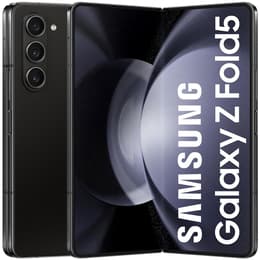
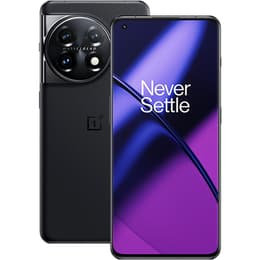
The Samsung Galaxy Z Fold5 (2023) and the OnePlus 11 (2023) are both high-end Android smartphones released in the same year, yet they cater to distinct user preferences. The Galaxy Z Fold5 stands out with its innovative foldable design, offering a large tablet-like screen experience in a pocketable form factor, while the OnePlus 11 provides a more traditional, yet refined, smartphone experience with a focus on display quality and rapid charging. Both devices run on the Android operating system, offering a range of features and customization options.

Scores

Durability

When considering the long-term usability of these devices, their release timelines and software support are key factors.

  • Software Longevity: The Galaxy Z Fold5, released in August 2023, is expected to receive Android OS updates for several years, with Samsung typically providing extensive support for its flagship devices. As of 2026, it is running Android 16 with One UI 8, indicating continued software relevance. The OnePlus 11, launched globally in February 2023, also offers a strong commitment to software longevity, with OnePlus promising at least four generations of Android OS upgrades and five years of security updates from its launch date, meaning it is also expected to be running Android 16 with OxygenOS 16 by late 2025.
  • Physical Durability: The Galaxy Z Fold5 features an Armor Aluminum frame and Corning Gorilla Glass Victus 2 on its cover screen and back panel, along with a redesigned hinge that minimizes the gap when folded. It boasts an IPX8 water resistance rating, capable of withstanding immersion in up to 1.5 meters of fresh water for 30 minutes, though it lacks official dust resistance. The OnePlus 11 utilizes Gorilla Glass Victus on the front and Gorilla Glass 5 on the back, encased in an aluminum frame. While it offers a solid build, some user reports indicate that its back glass can be susceptible to shattering under significant bending pressure.
  • Practical Lifespan: Both devices are built with high-quality materials and receive consistent software updates, suggesting a practical lifespan of several years for average users. The foldable nature of the Z Fold5 introduces a unique mechanical component (the hinge) that has been improved for durability, while the OnePlus 11 offers a more conventional, rigid design.

Year of Release

2023

2023

OS

Android

Android

Foldable

Yes

No

Performance

Both smartphones deliver robust performance suitable for demanding applications and multitasking, though their approaches to storage and battery management differ.

  • Processing Power: Both devices are equipped with a current-generation processor, enabling them to handle intensive applications, graphic-heavy games, and complex multitasking with smooth responsiveness. Users can expect quick app loading times and seamless transitions between tasks on either device.
  • Storage and RAM: The Galaxy Z Fold5 comes with 12 GB of RAM and storage options of 256 GB, 512 GB, or 1 TB, all utilizing fast UFS 4.0 technology, which ensures rapid data access and application performance. The OnePlus 11 offers configurations with 8 GB, 12 GB, or 16 GB of RAM, and storage options including 128 GB (UFS 3.1), 256 GB (UFS 4.0), and 512 GB (UFS 4.0). The base 128 GB model uses a slightly older storage technology.
  • Battery Behavior: The Galaxy Z Fold5 features a 4400 mAh battery, designed to power its dual-screen setup. Its battery life is generally considered sufficient for a full day of moderate use, with support for fast wired and wireless charging. The OnePlus 11 is equipped with a larger 5000 mAh battery, and it stands out with its exceptionally fast wired charging capabilities, allowing for quick power-ups.

Memory (GB)

12 GB

16 GB

Screen quality

The display experience is a primary differentiator, with the Galaxy Z Fold5 offering a unique foldable screen and the OnePlus 11 providing a high-quality traditional panel.

  • Display Technology and Size: The Galaxy Z Fold5 features a 7.6-inch foldable Dynamic AMOLED 2X main display and a 6.2-inch Super AMOLED cover display. The main screen provides an expansive canvas for productivity and media consumption. The OnePlus 11 sports a single 6.7-inch Super Fluid AMOLED display, offering a large and immersive viewing area.
  • Resolution and Clarity: Both devices offer high-resolution displays for sharp and detailed visuals. The Z Fold5's main screen has a resolution of 2176 x 1812 pixels, while its cover screen is 2316 x 904 pixels. The OnePlus 11 features a QHD+ resolution of 3216 x 1440 pixels, resulting in a very high pixel density.
  • Brightness and Smoothness: Both phones feature adaptive refresh rates up to 120Hz, ensuring smooth scrolling and fluid animations. The Galaxy Z Fold5's displays can reach a peak brightness of 1750 nits, providing excellent visibility even in bright outdoor conditions. The OnePlus 11 also offers a vibrant display with strong brightness and supports HDR10+ and Dolby Vision for enhanced color and contrast.

Resolution

1812 x 2176

1440 x 3216

Audiovisual

Both smartphones offer versatile camera systems, each with its own strengths in capturing photos and videos.

  • Rear Camera Systems: The Galaxy Z Fold5 features a triple rear camera setup, including a 50 MP wide-angle main sensor with optical image stabilization (OIS), a 12 MP ultrawide lens, and a 10 MP telephoto lens with 3x optical zoom and OIS. Samsung has implemented software enhancements to improve image quality, particularly in low-light conditions. The OnePlus 11 also comes with a triple rear camera system co-developed with Hasselblad, featuring a 50 MP main sensor with OIS, a 48 MP ultrawide lens, and a 32 MP telephoto lens with 2x optical zoom.
  • Photography Performance: The Z Fold5's camera system is praised for producing bright photos with rich colors, especially benefiting from software algorithms and the powerful processor for improved detail and reduced noise in various lighting. The OnePlus 11, with its Hasselblad tuning, aims for natural color reproduction and offers a range of photographic modes.
  • Video Recording and Audio: Both devices are capable of recording high-resolution video, with the Galaxy Z Fold5 supporting up to 8K at 24fps and 4K at 60fps. The OnePlus 11 also supports 8K video recording at 24fps and 4K at 30/60fps. Both phones offer stereo speakers for an immersive audio experience during media consumption.

Miscellaneous

Beyond the core features, several practical elements contribute to the overall user experience of these devices.

  • Connectivity and Ports: Both the Galaxy Z Fold5 and OnePlus 11 support 5G connectivity, Wi-Fi 6E (or Wi-Fi 7 for OnePlus 11), and Bluetooth 5.3, ensuring fast and reliable wireless connections. Both devices utilize a USB Type-C port for charging and data transfer, though the Z Fold5 uses USB 3.2 Gen 1, offering faster transfer speeds compared to the OnePlus 11's USB 2.0. Neither phone includes a traditional 3.5mm headphone jack.
  • Biometrics and Sensors: Both smartphones incorporate an in-display fingerprint sensor for secure unlocking, along with face recognition capabilities. The OnePlus 11 also features a physical alert slider, a characteristic element of the brand, allowing users to quickly switch between sound profiles.
  • Design and Handling: The Galaxy Z Fold5, with its foldable design, is heavier at 253g and thicker when folded (13.4mm) compared to the OnePlus 11, which weighs 205g and has a thickness of 8.53mm. The Z Fold5's unique form factor allows for a compact phone experience that unfolds into a larger screen, while the OnePlus 11 offers a more conventional, sleek smartphone design.

Weight

253 g

205 g

Screen size (in)

7.6

6.7

Network

5G

5G

SIM card

Dual Physical SIM + eSIM

Physical SIM

Carrier compatibility

Unlocked

Unlocked

The Samsung Galaxy Z Fold5 and OnePlus 11, both released in 2023, offer distinct propositions for smartphone users. User feedback often highlights the Z Fold5's innovative foldable display and its robust multitasking capabilities as major advantages, allowing for a tablet-like experience in a portable format. Criticisms sometimes point to its weight and the inherent considerations of a foldable device's long-term durability, despite Samsung's engineering improvements. The OnePlus 11 is frequently praised for its vibrant display, strong overall performance, and exceptionally fast wired charging, making it a compelling choice for users who prioritize a traditional, high-performance smartphone experience. Some users have noted concerns regarding its durability in extreme bend tests and the absence of wireless charging.

Users prioritizing a versatile device for productivity, media consumption, and a unique form factor that can adapt to different needs may find the Galaxy Z Fold5 well-suited to their requirements. Its large internal display and S Pen support (with a separate accessory) cater to those who benefit from an expansive screen. Conversely, users who prefer a more conventional smartphone design with a focus on a premium display, rapid charging, and consistent performance for everyday tasks and gaming will likely lean towards the OnePlus 11. Both devices represent excellent choices in the high-end Android market, and considering a quality-assured refurbished option for either model can be a sustainable choice for consumers.


See all articles

Our recent comparisons






