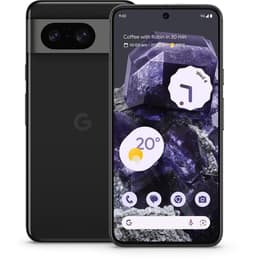


Google Pixel 8a Vs Google Pixel 9

Google Pixel 8a
Google Pixel 8a
Starting at

Refurbished price:232.00

Versus €549.00 new

See options
Google Pixel 9
Google Pixel 9
Starting at

Refurbished price:386.00

Versus €1,066.71 new

See options

Ratings

The Google Pixel 8a, released in May 2024, and the Google Pixel 9, launched in August 2024, represent distinct offerings within Google's smartphone lineup. Both devices operate on the Android platform, providing users with Google's signature software experience and long-term support. While the Pixel 8a focuses on delivering essential features and strong performance, the Pixel 9 introduces a range of premium upgrades, including a more advanced processor, enhanced camera capabilities, and a refined design.

Scores

Durability

When considering the long-term usability of a smartphone, factors like software support and physical resilience are key. Both the Pixel 8a and Pixel 9 offer substantial longevity through their update policies and build quality.

  • Software Longevity: Both the Google Pixel 8a and the Google Pixel 9 are committed to receiving seven years of operating system and security updates from their respective release dates. This means the Pixel 8a will be supported until at least May 2031, and the Pixel 9 until at least August 2031, ensuring a prolonged period of current software and security features.
  • Physical Durability: The Pixel 8a features a plastic back and an aluminum frame, with its display protected by Corning Gorilla Glass 3. The Pixel 9, on the other hand, incorporates a glass back and an aluminum frame, with both the front and back protected by the more advanced Corning Gorilla Glass Victus 2, offering enhanced resistance to drops and scratches.
  • Water and Dust Resistance: The Pixel 8a carries an IP67 rating for dust and water resistance, meaning it can withstand immersion in up to 1 meter of water for 30 minutes. The Pixel 9 steps up to an IP68 rating, providing protection against immersion in up to 1.5 meters of water for the same duration, indicating a slightly higher level of ingress protection.

Year of Release

2024

2024

Compatible with latest Update

Yes

Yes

OS

Android

Android

Foldable

No

No

Performance

The performance of a smartphone is largely determined by its internal components, influencing how smoothly applications run and how efficiently the device handles demanding tasks.

  • Processing Power: The Pixel 8a is equipped with a capable processor that delivers smooth performance for everyday applications, multitasking, and moderate gaming. The Pixel 9 features a newer generation processor, which provides improved speed, enhanced efficiency, and more advanced on-device artificial intelligence capabilities. This results in faster app loading and a more seamless experience during heavy multitasking or intensive gaming on the Pixel 9.
  • Memory for Multitasking: The Pixel 8a comes with 8GB of RAM, which is sufficient for most user needs and allows for efficient switching between multiple applications. The Pixel 9 offers 12GB of RAM, providing additional headroom for more demanding applications and enabling a smoother experience when running numerous apps simultaneously or utilizing advanced AI features.
  • Storage Options: Both devices are available with 128GB and 256GB of internal storage, offering ample space for apps, photos, and videos. The Pixel 9 also introduces an option for 512GB of storage, catering to users with larger storage requirements.
  • Battery Performance: The Pixel 8a houses a 4492 mAh battery, designed to provide a full day of typical use. The Pixel 9 includes a slightly larger 4700 mAh battery. Combined with the efficiency improvements of its newer processor, the Pixel 9 is expected to offer a longer battery life, comfortably lasting through a full day with power to spare.

Memory (GB)

8 GB

12 GB

Screen quality

The display is a primary interface for smartphone interaction, and differences in screen technology, resolution, and brightness can significantly impact the user experience.

  • Display Technology and Clarity: Both the Pixel 8a and Pixel 9 feature OLED displays, known for their deep blacks and vibrant colors. The Pixel 8a has a 6.1-inch display with a 1080 x 2400 pixel resolution, providing clear and sharp visuals. The Pixel 9 has a slightly larger 6.3-inch display with a 1080 x 2424 pixel resolution, offering a similar level of clarity but with a larger viewing area.
  • Brightness for Visibility: The Pixel 8a's display can reach a peak brightness of 2000 nits, ensuring good visibility in various lighting conditions. The Pixel 9's display offers a higher peak brightness of 2700 nits, which translates to even better readability outdoors and in bright environments.
  • Smoothness and Responsiveness: The Pixel 8a features a 120Hz refresh rate, contributing to a smooth scrolling experience and fluid animations. The Pixel 9 also has a 120Hz refresh rate, but it is a variable refresh rate (1-120Hz), allowing the display to dynamically adjust its refresh rate based on content. This dynamic adjustment not only provides a smoother visual experience when needed but also helps conserve battery power.

Resolution

1080 x 2400

1080 x 2424

Screen type

OLED

OLED

Audiovisual

The camera system is a significant differentiator for many smartphone users, impacting the quality of photos and videos captured in various scenarios.

  • Rear Camera Systems: The Pixel 8a features a dual-camera setup with a 64MP main sensor and a 13MP ultrawide lens. The Pixel 9 also has a dual-camera system, but it includes a 50MP main sensor and a 48MP ultrawide lens. The Pixel 9's ultrawide camera offers a significant upgrade in resolution and light sensitivity compared to the Pixel 8a.
  • Photography Performance: Both devices leverage Google's computational photography for strong image quality. The Pixel 9's camera system is generally more advanced, offering improved dynamic range and greater detail in photos. Its main sensor is physically larger, which can contribute to better low-light performance. The Pixel 9 also demonstrates better subject separation and a creamier background blur in portrait mode.
  • Front-Facing Camera and Video: The Pixel 8a is equipped with a 13MP front-facing camera. The Pixel 9 has a 10.5MP front camera, but it includes autofocus capabilities, which can enhance clarity for selfies and video calls. Both phones are capable of recording 4K video, with the Pixel 9's selfie camera supporting 4K at 60 frames per second.

Main camera

64 megapixels

50 megapixels

Front camera

13 megapixels

10.5 megapixels

Miscellaneous

Beyond core performance and display, several practical elements contribute to the overall user experience, from connectivity to physical design.

  • Connectivity and Ports: Both the Pixel 8a and Pixel 9 support 5G connectivity for fast mobile data. The Pixel 8a includes Wi-Fi 6E and Bluetooth 5.3, while the Pixel 9 upgrades to Wi-Fi 7 and Bluetooth 5.4, offering potentially faster and more stable wireless connections. Both devices utilize a USB-C 3.2 port for charging and data transfer and neither includes a traditional headphone jack.
  • Biometric Security and Sensors: Both smartphones feature an under-display fingerprint sensor for secure unlocking. The Pixel 9's sensor is noted for being faster and more accurate. Both devices also include standard sensors such as an accelerometer, gyroscope, and compass.
  • Design and Handling: The Pixel 8a measures 152.1 x 72.7 x 8.9 mm and weighs 188g, featuring a design with slightly rounded edges and a camera bar that extends across the back. The Pixel 9 has dimensions of 152.8 x 72.0 x 8.5 mm and weighs 198g. The Pixel 9 introduces a more refined design with flatter sides and a distinct pill-shaped camera module, which some users find to offer a more premium feel.

Weight

188 g

198 g

Screen size (in)

6.1

6.3

Network

5G

5G

SIM card

Physical SIM + eSIM

Physical SIM + eSIM

Carrier compatibility

Unlocked

Unlocked

The Google Pixel 8a and Google Pixel 9 cater to different user priorities, each offering a compelling smartphone experience within its segment. User feedback often praises the Pixel 8a for its exceptional value, delivering solid everyday performance, a capable camera system, and Google's commitment to long-term software support. However, some users note its slower charging speeds, less premium build materials, and thicker display bezels as areas where it could improve.

The Pixel 9, as the more recent flagship, generally receives acclaim for its enhanced performance, more advanced camera capabilities, a brighter and smoother display, and a more premium and durable design. Criticisms sometimes revolve around the perceived necessity of all its advanced AI features for every user, and while not a direct comparison point, the overall cost difference is a factor for many.

Users prioritizing advanced camera features, superior performance for demanding applications, a more premium build quality, and the latest display technology will find the Google Pixel 9 well-suited to their needs. Its improved durability and faster charging also contribute to a more refined experience. Conversely, users seeking a reliable smartphone that excels in core functions like photography and daily tasks, while benefiting from extended software support, may find the Google Pixel 8a to be an excellent choice. It provides a strong balance of features for those who value practicality and a more accessible option.

For those considering either device, exploring quality-assured refurbished options can provide an eco-friendly alternative, allowing access to these technologies in a sustainable way.


See all articles

Our recent comparisons


