

Compare models

Google Pixel 9a Vs Xiaomi Redmi Note 13 4G

  • 1-year minimum warranty
  • Free delivery on all orders
  • Free 30-day returns
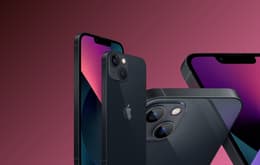
Google Pixel 9a
Starting at

Refurbished price:348.00

Versus €586.09 new

See options
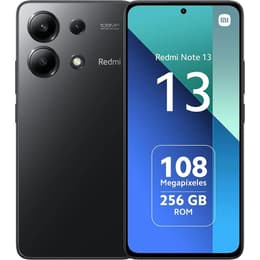
Xiaomi Redmi Note 13 4G
Starting at

Refurbished price:200.00

Versus €340.00 new

See options

Differences at a glance

The Google Pixel 9a (2025) and the Xiaomi Redmi Note 13 4G (2024) are popular mid-range smartphones designed for everyday reliability and modern connectivity. While the Google Pixel 9a runs clean Android with extended software support, the Xiaomi Redmi Note 13 4G utilizes Xiaomi's customized interface built on Android. These two devices differ significantly in their approach to processing power, software lifecycles, and regional connectivity options.

Available Models

Colour

Storage (GB)

Scores

Durability

When evaluating long-term usability and physical longevity, these two smartphones follow distinct support models. Choosing a quality-assured refurbished option provides an eco-friendly alternative that extends device life cycles further.

  • Software longevity: The Google Pixel 9a benefits from an extensive multi-year update commitment, while the Xiaomi Redmi Note 13 4G offers a standard support window typical of mid-tier devices.
  • Build durability: Both devices incorporate protective glass fronts and structural frames designed to withstand daily wear, though repair infrastructure varies by region.
  • Expected lifespan: The Google Pixel 9a maintains software relevance over a longer timeframe due to extended security patches.

Year of Release

2025

2024

Compatible with latest Update

Yes

Yes

OS

Android

Android

Foldable

No

No

Performance

Daily operation and hardware efficiency shape how each phone handles multitasking, gaming, and basic application loading. Memory and internal capacities differ across available configurations.

  • App responsiveness: The Google Pixel 9a handles demanding tasks and complex applications smoothly, whereas the Xiaomi Redmi Note 13 4G manages routine messaging and web browsing efficiently.
  • Multitasking capacity: Both models offer variants with ample memory to keep several apps open simultaneously without sudden slowdowns.
  • Battery behavior: The Google Pixel 9a incorporates a large cell that easily powers through a full day of heavy usage, matching the dependable all-day stamina delivered by the Xiaomi Redmi Note 13 4G.

Screen quality

Visual clarity and panel technology dictate how well each display performs for media consumption, reading, and outdoor visibility. Both models utilize bright OLED panels with fluid refresh rates.

  • Display sharpness: Both devices feature crisp resolutions that render text and high-definition video with sharp detail.
  • Outdoor brightness: High peak brightness levels on both screens allow for comfortable readability under direct sunlight.
  • Motion smoothness: High refresh rate support ensures fluid scrolling through menus, web pages, and supported mobile games.

Resolution

2424 x 1080

1080 x 2400

Audiovisual

Multimedia capture and media playback capabilities vary depending on sensor resolution, processing software, and audio configurations. Both phones cater to everyday photography and content viewing.

  • Photography performance: The Google Pixel 9a excels at processing balanced shots in challenging lighting conditions using advanced software, while the Xiaomi Redmi Note 13 4G utilizes a high-megapixel main sensor for detailed daylight captures.
  • Video and audio output: The Google Pixel 9a records stable, high-resolution video clips, whereas the Xiaomi Redmi Note 13 4G includes stereo speakers with multimedia enhancement features.
  • Call quality: Integrated microphones on both models ensure clear voice transmission during standard phone calls and virtual meetings.

Front camera

13 megapixels

16 megapixels

Miscellaneous

Connectivity standards, physical dimensions, and practical hardware additions determine how easily each smartphone fits into daily routines. Network compatibility and port selections differ between the two.

  • Network connectivity: The Google Pixel 9a includes full 5G support for fast cellular data, whereas the Xiaomi Redmi Note 13 4G is restricted to 4G networks depending on the specific regional model.
  • Physical handling: Both smartphones offer comfortable, balanced ergonomics that fit securely in one hand during extended use.
  • Extra hardware: The Xiaomi Redmi Note 13 4G features a traditional headphone jack and an infrared blaster, features omitted on the Google Pixel 9a.

Weight

186 g

175 g

Screen size (in)

6.3

6.67

Network

5G

4G

SIM card

Physical SIM + eSIM

Dual Physical SIM

Carrier compatibility

Unlocked

Unlocked

Connector

USB-C

USB-C

What the community thinks

User feedback from online communities highlights distinct preferences for each device based on everyday needs. Users frequently praise the Google Pixel 9a for its long-term software commitment, reliable battery endurance, and consistent photo processing capabilities. Conversely, owners of the Xiaomi Redmi Note 13 4G often commend its vibrant display quality, inclusion of traditional audio ports, and solid day-to-day utility. Common criticisms for the Google Pixel 9a sometimes involve its plain rear panel design, while users note that the Xiaomi Redmi Note 13 4G is limited by a lack of 5G connectivity.

Users prioritizing extended software support, advanced computational photography, and 5G connectivity may prefer the Google Pixel 9a. Meanwhile, users prioritizing a high-refresh-rate screen, a traditional headphone jack, and basic 4G operation may lean toward the Xiaomi Redmi Note 13 4G. Opting for a quality-assured refurbished model provides a sustainable path for acquiring either device.