

Galaxy A13 Vs Galaxy S23

Galaxy A13
Galaxy A13
Starting at

Refurbished price:97.00

Versus €249.00 new

See options
Galaxy S23
Galaxy S23
Starting at

Refurbished price:239.00

Versus €959.00 new

See options

Ratings

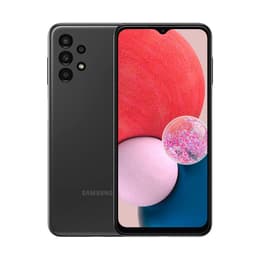
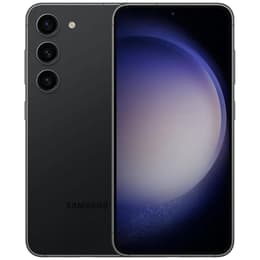
The Samsung Galaxy A13, released in March 2022, and the Samsung Galaxy S23, launched in February 2023, represent distinct segments within Samsung's smartphone lineup. While both operate on the Android platform with Samsung's One UI, they cater to different user expectations regarding performance, display quality, and camera capabilities. The Galaxy S23 offers a more advanced and refined experience across the board, building on a flagship foundation, whereas the Galaxy A13 provides essential smartphone functionalities.

Scores

Durability

The longevity of a smartphone is influenced by its initial build quality, software support, and the demands of its users over time. These two devices offer different expectations in terms of their practical lifespan.

  • Release Timeline and Software Support: The Galaxy A13, launched in early 2022, typically receives major Android operating system updates for a shorter period, with its last major OS update expected around early 2025. It continues to receive quarterly security updates. In contrast, the Galaxy S23, released in early 2023, benefits from Samsung's extended support policy, promising four generations of OS upgrades (up to Android 17) and five years of security updates, extending its support until at least 2028.
  • Build Materials and Durability: The Galaxy A13 features a plastic back and a Gorilla Glass 5 front, offering a reasonable level of protection for everyday use. The Galaxy S23, however, incorporates Gorilla Glass Victus 2 on both its front and back, coupled with an aluminum frame and an IP68 rating for dust and water resistance, suggesting a more robust construction designed to withstand more demanding conditions.
  • Practical Lifespan Expectations: User experiences with the Galaxy A13 often indicate a noticeable slowdown in performance after about a year of use, particularly with multiple applications or demanding tasks. The Galaxy S23, with its more powerful internal components and longer software support, is designed to maintain smooth performance and receive critical updates for a significantly longer duration, making it a suitable option for users seeking extended device usability.

Year of Release

2022

2023

Compatible with latest Update

No

Yes

OS

Android

Android

Foldable

No

No

Performance

The performance of a smartphone dictates its responsiveness and ability to handle various applications and tasks. The Galaxy A13 and Galaxy S23 offer different levels of processing power and memory configurations.

  • Processing Power and Responsiveness: The Galaxy A13 is equipped with an octa-core processor designed for essential daily tasks like browsing, messaging, and light app usage. Users may experience delays or stuttering when running multiple applications simultaneously or engaging with more graphically intensive content. The Galaxy S23, featuring a current-generation processor, delivers a significantly more fluid and responsive experience, handling demanding applications, complex multitasking, and graphic-intensive gaming with ease.
  • Storage and Multitasking: The Galaxy A13 comes with various RAM options (3GB to 6GB) and storage (32GB to 128GB), utilising eMMC 5.1 storage, which is suitable for basic needs but can contribute to slower app loading times. It also supports expandable storage via a microSD card. The Galaxy S23 offers 8GB of RAM and faster UFS 3.1 or UFS 4.0 internal storage (128GB or 256GB options), providing ample capacity for smooth multitasking and quicker data access.
  • Battery Performance: The Galaxy A13 houses a 5000 mAh battery, which, combined with its less demanding processor and display, generally provides extended usage on a single charge for typical daily activities. The Galaxy S23 has a 3900 mAh battery, and while smaller, its efficient processor and adaptive display refresh rate contribute to reliable all-day power for most users, with faster wired and wireless charging capabilities.

Memory (GB)

4 GB

8 GB

Screen quality

The display is a primary interface for smartphone interaction, and the quality of the screen significantly impacts the user experience for media consumption, browsing, and daily use.

  • Display Technology and Clarity: The Galaxy A13 features a PLS TFT LCD display, offering a 6.6-inch FHD+ resolution (1080x2408 pixels) for the 4G model or a 6.5-inch HD+ resolution (720x1600 pixels) for the 5G model. The Galaxy S23 boasts a 6.1-inch Dynamic AMOLED 2X display with a 2340x1080 FHD+ resolution, known for its deep blacks, vibrant colors, and excellent contrast.
  • Brightness and Refresh Rate: The Galaxy A13's display has a standard 60Hz refresh rate, which is adequate for general use but may show less fluidity during scrolling or animations. Its brightness levels are suitable for indoor viewing but can be challenging in direct sunlight. The Galaxy S23 offers an adaptive refresh rate ranging from 48Hz to 120Hz, providing smoother visuals and conserving battery when a high refresh rate isn't needed. It also achieves a peak brightness of 1750 nits, ensuring excellent visibility even in bright outdoor conditions.
  • Viewing Experience: The larger screen of the Galaxy A13 provides ample space for content, though the LCD technology and lower brightness might not offer the same visual impact as the S23. The Galaxy S23's AMOLED panel, higher pixel density, and superior brightness create a more immersive and detailed viewing experience, particularly for high-definition video and photography.

Resolution

1080 x 2408

1080 x 2340

Screen type

PLS LCD

Dynamic AMOLED 2X

Audiovisual

Camera capabilities are a significant factor for many smartphone users, influencing how they capture and share moments. The Galaxy A13 and Galaxy S23 offer different photographic and videographic experiences.

  • Rear Camera System: The Galaxy A13 (4G variant) includes a quad-camera setup with a 50MP main sensor, a 5MP ultrawide, and two 2MP sensors for macro and depth. The 5G variant has a triple camera with a 50MP main, 2MP macro, and 2MP depth sensor. The Galaxy S23 features a versatile triple-camera system, comprising a 50MP main sensor with optical image stabilization (OIS), a 12MP ultrawide lens, and a 10MP telephoto lens with 3x optical zoom and OIS.
  • Photography Performance: The Galaxy A13's 50MP main camera can capture detailed images in good lighting, but its ultrawide and macro sensors offer more limited utility and lower quality. Low-light performance is generally modest, and there is no dedicated night mode. The Galaxy S23 excels in various lighting conditions, with its main sensor and OIS delivering sharp, stable photos. Its improved Nightography features enhance low-light photography, and the telephoto lens provides clear zoomed-in shots.
  • Video Recording and Front Camera: Both devices can record video at 1080p at 30 frames per second with their main cameras, but the Galaxy A13 lacks advanced stabilization and 4K support. The Galaxy S23 offers significantly more advanced video capabilities, including 8K recording at 30fps and 4K at 60fps, along with enhanced stabilization. Its 12MP front camera with autofocus provides higher quality selfies and video calls compared to the Galaxy A13's 8MP or 5MP front camera.

Main camera

50 megapixels

50 megapixels

Front camera

8 megapixels

12 megapixels

Miscellaneous

Beyond core performance and display, several other features contribute to the overall user experience, including connectivity, physical design, and additional functionalities.

  • Connectivity and Ports: The Galaxy A13 supports 4G LTE (with a 5G variant available) and Wi-Fi 5, along with Bluetooth 5.0 and NFC. It retains a 3.5mm headphone jack and uses a USB-C 2.0 port for charging and data transfer. The Galaxy S23 offers comprehensive 5G connectivity, Wi-Fi 6E for faster wireless speeds, and Bluetooth 5.3. It features a more advanced USB-C 3.2 port but omits the traditional 3.5mm headphone jack.
  • Design and Handling: The Galaxy A13 has a larger form factor, measuring 165.1 x 76.4 x 8.8 mm and weighing 195g, with a glossy plastic back. The Galaxy S23 is more compact and lighter at 146.3 x 70.9 x 7.6 mm and 168g, featuring a premium glass and aluminum construction. This difference in size and materials results in a more pocketable and premium feel for the S23.
  • Security and Other Features: The Galaxy A13 typically includes a side-mounted fingerprint sensor for biometric authentication. The Galaxy S23 offers an ultrasonic in-display fingerprint sensor and 2D face unlock, providing convenient and secure access. Both devices support Samsung's Knox security features.

Weight

195 g

167 g

Screen size (in)

6.6

6.1

Network

4G

5G

SIM card

Dual Physical SIM

Physical SIM + eSIM

Carrier compatibility

Unlocked

Unlocked

The Samsung Galaxy A13 and Galaxy S23 cater to different user needs and expectations, reflecting their respective positions in the smartphone market. User feedback for the Galaxy A13 often highlights its suitability for basic communication and light media consumption, with praise for its large battery capacity. However, common criticisms point to significant performance slowdowns over time, particularly with multitasking and demanding applications, and a camera system that performs adequately in ideal conditions but struggles in challenging environments.

Conversely, the Galaxy S23 receives consistent praise for its powerful and smooth performance, vibrant and bright display, and a highly capable camera system that excels in various scenarios, including low light. Users appreciate its compact design and premium build quality. While specific criticisms are less prevalent, some users might note the absence of a headphone jack or expandable storage, features present in the A13.

Users prioritizing a device for essential communication, web browsing, and casual media viewing, who do not require high-end performance or advanced camera features, may find the Galaxy A13 suitable. Its larger screen and robust battery life could appeal to those seeking a straightforward and enduring device for basic tasks. On the other hand, users who demand a highly responsive experience, superior camera quality for photos and videos, a vibrant and smooth display, and a more compact, premium design will find the Galaxy S23 better suited to their needs. It is ideal for individuals who engage in mobile gaming, extensive multitasking, or require advanced photography tools.

For those considering either device, exploring quality-assured refurbished options can be a sustainable choice, offering a way to access these technologies while contributing to a more eco-friendly approach to electronics consumption.


See all articles

Our recent comparisons






