
Galaxy A16 Vs iPhone 16 Plus

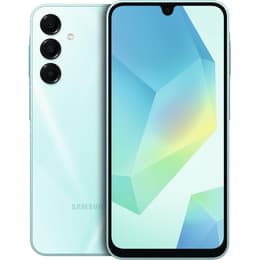
Galaxy A16
Galaxy A16
Starting at

Refurbished price:134.00

Versus €250.00 new

See options
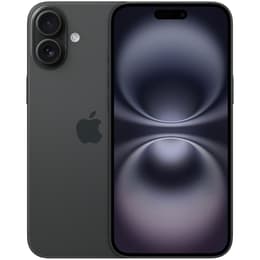
iPhone 16 Plus
iPhone 16 Plus
Starting at

Refurbished price:559.00

Versus €979.00 new

See options

Ratings

The Samsung Galaxy A16 and the Apple iPhone 16 Plus are contemporary smartphones, both released in late 2024 or early 2025, catering to different segments of the market. While the Galaxy A16 operates on Android with Samsung's One UI, the iPhone 16 Plus runs on Apple's iOS platform. These devices offer distinct user experiences, primarily differing in their core performance capabilities, camera systems, and overall ecosystem integration.

Scores

Durability

When considering the long-term usability of these devices, both offer substantial software support, though with different approaches.

  • Software Longevity: The Samsung Galaxy A16 is notable for its commitment to extended software support, promising six major Android operating system upgrades and six years of security updates, with support expected to continue until October 2030. This is a significant commitment for an Android device [3, 10, 15, 16]. The iPhone 16 Plus, running on iOS, also benefits from Apple's reputation for providing long-term software updates, typically receiving new iOS versions for five to six years from its release [9].
  • Physical Durability: The iPhone 16 Plus features a Ceramic Shield front cover and an IP68 rating, indicating robust resistance to dust and water, capable of submersion up to 6 meters for 30 minutes [7, 21, 30]. The Galaxy A16, on the other hand, comes with an IP54 rating, offering protection against splashes and dust ingress, making it suitable for everyday conditions but less resistant to full submersion [6, 15, 28].
  • Practical Lifespan: Users can expect both phones to remain functional and receive critical updates for several years. The Galaxy A16's extended Android update policy provides a clear roadmap for its software lifespan, while the iPhone 16 Plus, with its more durable build and consistent iOS updates, is also designed for prolonged use.

Year of Release

2024

2024

Foldable

No

No

Performance

The performance of a smartphone is crucial for daily tasks, app usage, and multitasking, and these two devices approach it from different standpoints.

  • System Responsiveness: The iPhone 16 Plus, powered by its advanced internal chip, delivers a highly fluid and responsive user experience. Users report that it handles demanding applications and multitasking with ease, maintaining speed and smoothness even after a year of use [14, 26, 35]. The Galaxy A16, while offering a solid improvement over its predecessor, is generally described as capable for everyday tasks but can exhibit some sluggishness or stuttering with more intensive use or heavy multitasking [1, 20, 24].
  • Storage and Multitasking: The iPhone 16 Plus is available with up to 512GB of internal storage and features 8GB of RAM, contributing to its strong multitasking capabilities [7, 18, 30]. The Galaxy A16 offers storage options up to 256GB and includes a microSD card slot for expandable storage, which can be beneficial for users with large media libraries [3, 10, 15, 16]. RAM options for the A16 range from 4GB to 8GB, influencing its ability to manage multiple applications simultaneously [3, 10, 11, 16].
  • Gaming and Demanding Apps: For mobile gaming and resource-intensive applications, the iPhone 16 Plus provides a more consistent and high-performance experience, allowing for smooth gameplay and faster processing [35]. The Galaxy A16 can run most applications, but users who frequently engage in graphically demanding games or heavy productivity tasks might notice performance limitations [20, 24].

Memory (GB)

4 GB

8 GB

Screen quality

The display is a primary interface for any smartphone, and both models offer large, vibrant screens with distinct characteristics.

  • Display Technology and Clarity: Both the iPhone 16 Plus and the Galaxy A16 feature large 6.7-inch OLED displays, known for their deep blacks and vibrant colors [5, 6, 8, 11, 15, 21, 28, 30]. The iPhone 16 Plus boasts a Super Retina XDR OLED display with a resolution of 2796 x 1290 pixels, resulting in a sharp 460 pixels per inch (ppi) [5, 7, 8, 21, 30]. The Galaxy A16 features a Super AMOLED display with a resolution of 2340 x 1080 pixels, providing clear FHD+ visuals [1, 6, 11, 15, 16, 28].
  • Brightness and Outdoor Visibility: The iPhone 16 Plus offers impressive brightness levels, reaching up to 1000 nits typical and a peak of 2000 nits for outdoor viewing, ensuring good visibility even in bright sunlight [5, 8, 21, 35]. The Galaxy A16 has a maximum brightness of 800 nits in high brightness mode, which provides good indoor viewing but may struggle more in direct sunlight [1, 25].
  • Refresh Rate and Smoothness: A key difference lies in the refresh rate. The Galaxy A16 features a 90Hz refresh rate, which contributes to smoother scrolling and a more fluid visual experience compared to standard 60Hz displays [1, 6, 11, 15, 16, 28]. The iPhone 16 Plus maintains a 60Hz refresh rate, which is standard but may feel less fluid to users accustomed to higher refresh rate screens [9, 26, 30, 35].

Resolution

1080x2340

1290 x 2796

Screen type

Super AMOLED

Super Retina XDR OLED

Audiovisual

For many users, the camera system is a deciding factor, and these phones offer different photographic strengths.

  • Rear Camera Capabilities: The iPhone 16 Plus features an advanced dual-camera system, including a 48MP Fusion main camera with optical image stabilization and a 12MP ultrawide lens with a 120-degree field of view [4, 5, 21, 30, 37]. It supports 2x optical zoom in and out, offering a 4x optical zoom range [21, 37]. The Galaxy A16 comes with a triple camera setup: a 50MP main sensor, a 5MP ultrawide camera, and a 2MP macro lens [1, 3, 10, 11, 15, 16, 23].
  • Photography Performance: The iPhone 16 Plus is praised for its superb picture quality, especially in good lighting, and its improved macro photography capabilities [14, 32, 35, 36]. It also excels in video recording, offering 4K Dolby Vision video up to 60 frames per second and Cinematic mode [5, 21]. The Galaxy A16's main camera can capture decent shots with adequate exposure and dynamic range in good lighting, but its ultrawide camera is less detailed, and low-light performance can be challenging [1, 24, 25, 27]. The A16 records video at 1080p at 30 frames per second, with some sources mentioning 4K for the 5G variant, though 1080p is more consistently reported [1, 23, 27].
  • Front Camera and Audio: The iPhone 16 Plus includes a 12MP front camera capable of 4K Dolby Vision video recording [5, 21, 30, 37]. The Galaxy A16 has a 13MP front-facing camera, which is considered an improvement over its predecessor [1, 3, 10, 11, 16, 23, 27]. For audio, the iPhone 16 Plus offers Dolby Atmos-tuned Spatial Audio [30].

Miscellaneous

Beyond the core features, several practical elements contribute to the overall user experience of these smartphones.

  • Connectivity and Ports: Both devices support 5G connectivity, ensuring access to faster mobile networks [4, 5, 17, 30, 37]. The iPhone 16 Plus features Wi-Fi 7 and Bluetooth 5.3, along with a USB-C port for charging and data transfer [4, 7, 9, 21, 30]. The Galaxy A16 also includes Bluetooth 5.3 and a USB-C 2.0 port [3, 4, 17].
  • Biometrics and User Interface: The iPhone 16 Plus relies on Face ID for secure authentication and features the Dynamic Island for interactive notifications and activities [5, 8, 9, 21]. It also introduces an Action button and a dedicated Camera Control button for quick access to functions [9, 18, 32, 36]. The Galaxy A16 typically uses a fingerprint scanner for security [3].
  • Design and Handling: The iPhone 16 Plus has dimensions of 160.9 x 77.8 x 7.8 mm and weighs 199g, featuring an aluminum design and a color-infused glass back [7, 9, 13, 21, 30]. The Galaxy A16 measures 164.4 x 77.9 x 7.9 mm and weighs 200g [3, 6, 10, 12, 16, 31]. Both are large phones, often requiring two-handed use [9].

Weight

200 g

199 g

Screen size (in)

6.7

6.7

Network

4G

5G

SIM card

Physical SIM

eSIM

Carrier compatibility

Unlocked

Unlocked

Connector

USB-C

USB-C (USB 2)

The Samsung Galaxy A16 and the iPhone 16 Plus cater to users with differing priorities, offering distinct advantages in their respective ecosystems.

Users frequently praise the iPhone 16 Plus for its exceptional battery life, often lasting well into a second day, and its powerful performance that keeps the device feeling fast and responsive over time [9, 14, 26, 35]. Its camera system is also highly regarded for producing superb photos and videos, particularly for close-ups and in good lighting conditions [14, 32, 35, 36]. However, some users note the 60Hz display as a compromise, especially when compared to other modern smartphones with higher refresh rates [9, 26, 35].

The Galaxy A16 receives commendation for its impressive software support, with a commitment to six years of updates, which is a significant benefit for long-term use [3, 10, 15, 16]. Its large, vibrant Super AMOLED display and excellent battery life, often providing two full days of usage, are also frequently highlighted as strong points [1, 16, 20, 24]. Criticisms often revolve around its performance, which, while improved, can still feel sluggish for demanding tasks, and its camera system, particularly the ultrawide and low-light capabilities, which are considered adequate but not outstanding [20, 24, 25, 27].

Users prioritizing a highly fluid and powerful experience, a robust camera system with advanced video capabilities, and a strong ecosystem with long-term support may find the iPhone 16 Plus well-suited to their needs. Conversely, users who value extended software longevity on an Android platform, a large and bright display with a slightly higher refresh rate, and excellent battery life for general use, while being mindful of performance limitations for heavy tasks, may lean towards the Galaxy A16. Both devices represent compelling options in their categories, and choosing a quality-assured refurbished option can be an eco-friendly alternative for either model.


See all articles

Our recent comparisons