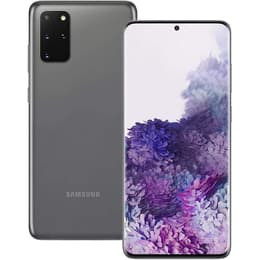
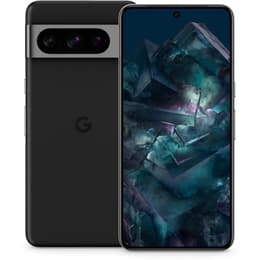


Galaxy S20+ 5G Vs Google Pixel 8 Pro

Galaxy S20+ 5G
Galaxy S20+ 5G
Starting at

Refurbished price:191.00

Versus €590.00 new

See options
Google Pixel 8 Pro
Google Pixel 8 Pro
Starting at

Refurbished price:293.00

Versus €1,099.00 new

See options

Ratings

The Samsung Galaxy S20 Plus 5G, released in early 2020, and the Google Pixel 8 Pro, launched in late 2023, represent different generations of Android flagship smartphones. While both devices offer premium experiences, the Pixel 8 Pro introduces significant advancements in software longevity, camera technology, and display capabilities, reflecting over three years of technological evolution. Both run on the Android operating system, but with distinct approaches to software experience and updates.

Scores

Durability

The practical lifespan of a smartphone is heavily influenced by its software support and physical durability.

  • Software Updates: The Galaxy S20 Plus 5G, launched with Android 10, received its last major OS update to Android 13, with only security updates continuing periodically. In contrast, the Google Pixel 8 Pro, released with Android 14, is promised an extensive seven years of OS upgrades, security updates, and Feature Drops, extending its support until 2030. This commitment provides a significantly longer period of up-to-date software and security for the Pixel 8 Pro.
  • Physical Durability: The Galaxy S20 Plus 5G features a glass front and back protected by Corning Gorilla Glass 6, encased in an aluminum frame, and boasts an IP68 rating for dust and water resistance. The Pixel 8 Pro also offers robust construction, having passed bend tests, and features a flat display with more rounded corners compared to its predecessor. While some reports indicate a low repairability score for the Pixel 8 Pro due to adhesive use and soldered components, other sources suggest Pixel phones generally offer better repairability than some competitors due to parts availability and manuals.
  • Expected Lifespan: Given its extended software support, the Pixel 8 Pro is designed for a considerably longer functional lifespan, offering users more years of current features and security. The Galaxy S20 Plus 5G, while still a capable device, has reached the end of its major OS update cycle, meaning users will need to consider this for future compatibility and security.

Year of Release

2020

2023

Compatible with latest Update

No

Yes

Foldable

No

No

Performance

Performance in daily use is a key differentiator, with both devices offering capable hardware for their respective generations.

  • Storage and RAM: Both the Galaxy S20 Plus 5G and the Pixel 8 Pro come with 12GB of RAM, ensuring smooth multitasking. Storage options for the S20 Plus 5G include 128GB, 256GB, and 512GB, with expandable storage via a microSDXC slot. The Pixel 8 Pro offers 128GB, 256GB, 512GB, and a 1TB option, though it lacks expandable storage.
  • Everyday Responsiveness: The Galaxy S20 Plus 5G, powered by its generation's leading processors, delivers a fast and responsive experience for general tasks and app usage. The Pixel 8 Pro, with its newer, custom-designed processor, handles demanding applications and multitasking smoothly, with users reporting a very quick and fluid daily experience. While some users note that the Pixel 8 Pro's raw performance might not benchmark as high as some other contemporary flagships, its software optimization ensures a responsive user interface.
  • Battery Performance: The Galaxy S20 Plus 5G features a 4500 mAh battery, providing what users describe as average battery life, which can be significantly impacted when using the 120Hz display refresh rate. The Pixel 8 Pro has a larger 5050 mAh battery, and while some users report mixed experiences, many find it offers all-day battery life, with improvements in power efficiency over previous Pixel models. It also supports faster wired and wireless charging.

Memory (GB)

8 GB

12 GB

Screen quality

The display is a primary interface, and both devices offer high-quality viewing experiences with notable differences.

  • Display Technology and Resolution: The Galaxy S20 Plus 5G features a 6.7-inch Dynamic AMOLED 2X display with a resolution of 1440x3200 pixels. The Pixel 8 Pro also has a 6.7-inch LTPO OLED display, referred to as a "Super Actua" display, with a resolution of 1344x2992 pixels. Both offer sharp and detailed visuals.
  • Refresh Rate and Smoothness: The Galaxy S20 Plus 5G supports a 120Hz refresh rate, though this is typically available at FHD resolution, reverting to 60Hz at its maximum QHD resolution. The Pixel 8 Pro features an adaptive refresh rate that can dynamically scale from 1Hz to 120Hz, providing smooth scrolling and animations while optimizing power consumption.
  • Brightness and Viewing Experience: The Galaxy S20 Plus 5G offers a vibrant display suitable for various lighting conditions. The Pixel 8 Pro, however, boasts significantly higher peak brightness, reaching up to 2400 nits in certain conditions, making it exceptionally visible even in bright outdoor environments. This enhanced brightness contributes to a more comfortable viewing experience under direct sunlight.

Resolution

1440 x 3200

1344 x 2992

Screen type

Dynamic AMOLED 2X

LTPO OLED

Audiovisual

Both smartphones are equipped with advanced camera systems, but the Pixel 8 Pro benefits from newer hardware and computational photography advancements.

  • Rear Camera Systems: The Galaxy S20 Plus 5G features a quad-camera setup including a 12MP wide, 64MP telephoto with 3x hybrid optical zoom, a 12MP ultrawide, and a 0.3MP depth sensor. The Pixel 8 Pro comes with a triple-camera system comprising a 50MP main sensor, a 48MP ultrawide with macro capabilities, and a 48MP telephoto lens offering 5x optical zoom.
  • Photography Performance: The Galaxy S20 Plus 5G delivers strong photographic results with good detail and color reproduction for its time. The Pixel 8 Pro is highly praised for its camera quality, particularly its computational photography, which excels in producing consistently good images with balanced HDR and excellent low-light performance through features like Night Sight. Its ultrawide and telephoto lenses also offer high resolution and improved detail.
  • Video and Audio: The Galaxy S20 Plus 5G is capable of recording video up to 8K resolution at 24fps, and 4K at 30/60fps. The Pixel 8 Pro records 4K video at 60fps from both its front and rear cameras, with improved video quality and stabilization. Users generally find the Pixel 8 Pro's audio recording and speaker output to be of high quality for media consumption and calls.

Main camera

12 megapixels

50 megapixels

Front camera

10 megapixels

10.5 megapixels

Miscellaneous

Beyond core features, several practical elements contribute to the overall user experience of these devices.

  • Connectivity: Both devices support 5G connectivity. The Galaxy S20 Plus 5G uses Wi-Fi 802.11 a/b/g/n/ac/ax (Wi-Fi 6), while the Pixel 8 Pro supports the newer Wi-Fi 802.11be (Wi-Fi 7) standard, offering potentially faster and more efficient wireless connections.
  • Ports and Sensors: Both smartphones feature a USB-C port for charging and data transfer, and neither includes a 3.5mm headphone jack. For security, both offer in-display fingerprint sensors and face unlock capabilities. The Pixel 8 Pro also includes a unique temperature sensor.
  • Design and Handling: The Galaxy S20 Plus 5G measures 161.9 x 73.7 x 7.8 mm and weighs 186g to 188g. The Pixel 8 Pro is slightly larger and heavier at 162.6 x 76.5 x 8.8 mm and 213g. The Pixel 8 Pro features a flat display and more rounded corners, which some users find comfortable for handling.

Weight

188 g

213 g

Screen size (in)

6.7

6.7

Network

5G

5G

SIM card

Physical SIM + eSIM

Physical SIM + eSIM

Carrier compatibility

Unlocked

Unlocked

The Samsung Galaxy S20 Plus 5G and the Google Pixel 8 Pro cater to different user needs, largely due to their release timelines and the advancements in smartphone technology over the intervening years. Users often praise the Galaxy S20 Plus 5G for its once-leading display and camera capabilities, and the inclusion of expandable storage is a notable advantage for some. However, common criticisms revolve around its average battery life, especially when utilizing the high refresh rate, and the cessation of major Android OS updates.

The Google Pixel 8 Pro receives consistent acclaim for its exceptional camera system, particularly its computational photography and AI-driven features like Call Screening, which enhance the user experience. Its long-term software support commitment is also a significant positive, ensuring the device remains current for many years. Some user concerns include mixed reports on battery life and occasional overheating, though overall performance for daily tasks is generally smooth.

Users prioritizing extended software longevity, cutting-edge camera technology, and a bright, adaptive display will find the Pixel 8 Pro well-suited to their needs. Its focus on AI-enhanced features and a clean Android experience makes it appealing for those who value smart functionalities. Conversely, individuals who prefer expandable storage and are content with a device that has completed its major software update cycle might still find the Galaxy S20 Plus 5G a capable option, especially as a quality-assured refurbished option. Choosing between these two depends on whether a user values the latest technological advancements and long-term software commitment or a still-competent device with specific hardware advantages from an earlier generation.


See all articles

Our recent comparisons