

Google Pixel 9 Vs Xiaomi 14

Google Pixel 9
Google Pixel 9
Starting at

Refurbished price:376.00

Versus €1,066.71 new

See options
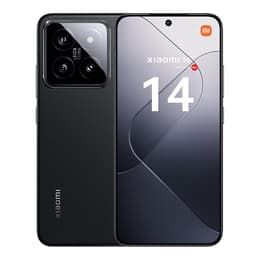
Xiaomi 14
Xiaomi 14
Starting at

Refurbished price:384.00

Versus €1,099.00 new

See options

Ratings

The Google Pixel 9, released in August 2024, and the Xiaomi 14, launched globally in February 2024, represent two distinct approaches to flagship smartphone design and functionality. While both devices offer premium experiences, they differentiate themselves through their software philosophies, camera systems, and overall user focus. The Pixel 9 emphasizes a streamlined Android experience with advanced computational photography, whereas the Xiaomi 14 focuses on raw performance and a versatile camera array co-engineered with Leica.

Scores

Durability

When considering the long-term usability of a smartphone, software support and physical resilience are key factors. Both the Google Pixel 9 and the Xiaomi 14 offer robust build quality and water resistance, but their software longevity differs.

  • Software Longevity: The Google Pixel 9 stands out with an industry-leading commitment of seven years of OS and security updates, extending its support until at least August 2031. This means users can expect to receive the latest Android versions and security patches for a significantly longer period. In contrast, the Xiaomi 14 offers four years of OS updates and five years of security updates, providing a solid but shorter support window.
  • Physical Durability: Both devices feature an IP68 rating for dust and water resistance, indicating protection against immersion in water. The Pixel 9 incorporates Corning Gorilla Glass Victus 2 on both its front and back, contributing to its resilience against drops and scratches. The Xiaomi 14 also uses a durable glass on its display, with some models featuring Xiaomi Shield Glass, and is built with an aluminum alloy frame.
  • Expected Lifespan: The Pixel 9's extended software support suggests a longer practical lifespan for users who prioritize up-to-date features and security. While both phones are built to withstand daily use, the Pixel's longer update cycle provides an advantage for those planning to keep their device for many years.

Year of Release

2024

2023

Compatible with latest Update

Yes

Yes

OS

Android

Android

Foldable

No

No

Performance

The performance of a smartphone is largely determined by its internal components, influencing how smoothly apps run, how quickly tasks are completed, and how efficiently power is managed. Both the Google Pixel 9 and the Xiaomi 14 are equipped with powerful processors designed for demanding applications.

  • Processing Power: The Google Pixel 9 is powered by Google's custom Tensor G4 processor, which is optimized for artificial intelligence and machine learning tasks, contributing to features like advanced computational photography and on-device AI capabilities. The Xiaomi 14 features the Qualcomm Snapdragon 8 Gen 3, a high-end processor known for its strong general-purpose computing and graphics performance, making it suitable for intensive gaming and multitasking.
  • Multitasking and Storage: The Pixel 9 typically comes with 12GB of RAM, ensuring smooth multitasking across various applications. Storage options for the Pixel 9 include 128GB and 256GB. The Xiaomi 14 offers a wider range of configurations, with options for 8GB, 12GB, or 16GB of RAM, and storage capacities up to 1TB, providing more flexibility for users with extensive storage needs or those who run many applications simultaneously.
  • Battery Behavior: The Pixel 9 is equipped with a 4700 mAh battery, designed to offer over 24 hours of typical use, with some real-world tests indicating over 7 hours of screen-on time on Wi-Fi. The Xiaomi 14 has a 4610 mAh battery, which also provides reliable all-day power. The Xiaomi 14 supports significantly faster charging speeds, with 90W wired charging capable of fully charging the device in about 31 minutes, and 50W wireless charging. The Pixel 9 supports fast charging up to 55% in 30 minutes with a 45W charger and also offers wireless charging and reverse wireless charging.

Memory (GB)

12 GB

16 GB

Screen quality

The display is a primary interface for any smartphone, and both the Google Pixel 9 and Xiaomi 14 offer high-quality viewing experiences with distinct characteristics.

  • Display Technology and Clarity: The Google Pixel 9 features a 6.3-inch OLED display with a resolution of 1080 x 2424 pixels, resulting in a pixel density of 422 PPI. This provides clear and vibrant visuals for everyday content. The Xiaomi 14 boasts a slightly larger 6.36-inch LTPO AMOLED display with a higher resolution of 1200 x 2670 pixels, yielding a pixel density of 460 PPI. This higher resolution and pixel density on the Xiaomi 14 can offer a marginally sharper image, particularly noticeable with fine details.
  • Brightness and Color Reproduction: The Pixel 9's display can reach up to 1800 nits in HDR content and a peak brightness of 2700 nits, ensuring good visibility even in bright outdoor conditions. The Xiaomi 14 surpasses this with a peak brightness of up to 3000 nits, providing exceptional clarity and readability under direct sunlight. Both displays offer excellent color reproduction, with the Xiaomi 14 supporting 12-bit color depth and 100% DCI-P3 color gamut for a wide range of accurate colors.
  • Refresh Rate and Smoothness: The Pixel 9 features an adaptive refresh rate that can dynamically adjust between 60Hz and 120Hz, providing smooth scrolling and responsiveness while conserving battery. The Xiaomi 14 utilizes an LTPO AMOLED panel with an adaptive refresh rate ranging from 1Hz to 120Hz, offering even greater power efficiency by scaling down the refresh rate more aggressively when static content is displayed.

Resolution

1080 x 2424

1200 x 2670

Screen type

OLED

LTPO OLED

Audiovisual

Both the Google Pixel 9 and the Xiaomi 14 are designed to deliver high-quality photographic and videographic results, though they approach imaging with different hardware and software philosophies.

  • Rear Camera Systems: The Google Pixel 9 features a dual-camera setup on the rear, consisting of a 50 MP wide main camera with a large sensor and a 48 MP ultrawide camera with autofocus and Macro Focus capabilities. Google's strength lies in its computational photography, which enhances image quality, especially in challenging lighting conditions. The Xiaomi 14 boasts a triple-camera system co-engineered with Leica, featuring three 50 MP sensors: a wide main camera with a large Light Fusion 900 sensor, an ultrawide lens, and a 3.2x optical telephoto lens. This dedicated telephoto lens provides superior optical zoom capabilities compared to the Pixel 9's digital Super Res Zoom.
  • Photography Performance: The Pixel 9 is praised for its consistent color science, excellent dynamic range, and strong low-light performance, making it a reliable point-and-shoot camera. Its ultrawide camera also supports macro photography. The Xiaomi 14, with its Leica collaboration, offers distinct color profiles and is noted for capturing detailed images with good consistency across its lenses, performing well in various lighting scenarios. Its telephoto lens is particularly effective for detailed close-ups and portraits.
  • Video Recording and Front Camera: The Pixel 9 records 4K video at up to 60fps, with optical and electronic image stabilization on its main sensor. The front camera is a 10.5 MP sensor. The Xiaomi 14 supports 8K video recording at 24fps and 4K 60fps with Dolby Vision. Its front-facing camera is a 32 MP sensor, capable of 4K 60fps video recording, offering higher resolution for selfies and video calls.

Main camera

50 megapixels

50 megapixels

Front camera

10.5 megapixels

32 megapixels

Miscellaneous

Beyond core performance and imaging, several practical elements contribute to the overall user experience of a smartphone. The Google Pixel 9 and Xiaomi 14 offer a range of connectivity, security, and design features.

  • Connectivity and Ports: Both devices support 5G connectivity for fast mobile data. The Pixel 9 includes Wi-Fi 7 and Bluetooth 5.3, along with a USB-C 3.2 port. The Xiaomi 14 also features Wi-Fi 7 and Bluetooth 5.4, and a USB-C 3.2 port, alongside additional connectivity options like NFC and an infrared blaster.
  • Security and Sensors: For biometric security, both phones incorporate an under-display fingerprint sensor. The Pixel 9 also includes Google's Titan M2 security coprocessor for enhanced data protection. Both devices offer standard sensors like accelerometers, gyroscopes, and proximity sensors.
  • Design and Handling: The Pixel 9 measures 152.8 x 72 x 8.5 mm and weighs 198g, presenting a compact form factor that is comfortable for one-handed use. It features an aluminum frame and a glass back. The Xiaomi 14 is similarly compact, with dimensions of 152.8 x 71.5 x 8.2 mm and a lighter weight of 193g, also featuring an aluminum alloy frame and a glass back, with a leather option available. Both phones offer a premium in-hand feel.

Weight

198 g

188 g

Screen size (in)

6.3

6.36

Network

5G

5G

SIM card

Physical SIM + eSIM

Dual Physical SIM

Carrier compatibility

Unlocked

Unlocked

User feedback for the Google Pixel 9 often highlights its exceptional camera performance, particularly its computational photography capabilities that consistently produce high-quality images with minimal effort. Users also appreciate its clean Android experience and the promise of long-term software support. Some common criticisms include the lack of a dedicated telephoto lens on the base model and, for some, the speaker volume.

The Xiaomi 14 receives praise for its powerful processor, vibrant and bright display, and its versatile Leica-tuned camera system, especially the inclusion of a capable telephoto lens. Users often commend its fast charging speeds. Potential concerns sometimes revolve around its software update policy being shorter than some competitors.

For users prioritizing a long-lasting software experience, a consistently excellent point-and-shoot camera, and a pure Android interface, the Google Pixel 9 is a strong contender. Its extended update commitment ensures the device remains current and secure for many years. Conversely, those who value a more comprehensive camera system with optical zoom, top-tier raw performance for gaming and demanding applications, and extremely fast charging will find the Xiaomi 14 to be a compelling choice. Both devices offer a premium smartphone experience, and choosing between them often comes down to whether one prioritizes Google's software and computational photography or Xiaomi's hardware prowess and versatile camera array. For those seeking a sustainable choice, both models are available as quality-assured refurbished options, extending their lifecycle and reducing electronic waste.
See all articles

Our recent comparisons