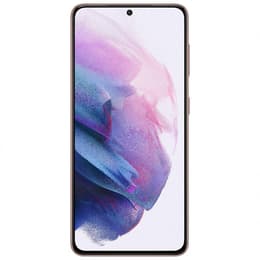
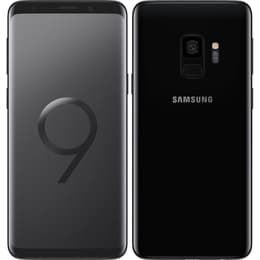


Galaxy S21 5G Vs Galaxy S9

Galaxy S21 5G
Galaxy S21 5G
Starting at

Refurbished price:161.00

Versus €1,026.00 new

See options
Galaxy S9
Galaxy S9
Starting at

Refurbished price:131.41

Versus €499.00 new

See options

Ratings

The Samsung Galaxy S21 5G, released in January 2021, and the Samsung Galaxy S9, launched in March 2018, represent different generations within Samsung's flagship smartphone series. While both devices offer a premium Android experience, the S21 5G introduces advancements in processing power, camera technology, and connectivity, reflecting several years of technological evolution. Both run on the Android operating system, though they started on different versions and have distinct update lifecycles.

Scores

Durability

When considering the practical lifespan of these devices, several factors come into play, including their release timelines, software support, and physical resilience.

  • Release Timeline and Age: The Galaxy S9 was released in March 2018, making it significantly older than the Galaxy S21 5G, which launched in January 2021. This age difference directly impacts their remaining software support and hardware relevance.
  • OS Support Duration: The Galaxy S9 launched with Android 8.0 Oreo and received updates up to Android 10. The Galaxy S21 5G launched with Android 11 and is expected to receive updates for a longer period, typically four generations of OS upgrades and five years of security updates from its release date, offering extended software longevity.
  • Physical Durability: Both models feature Gorilla Glass protection on the front and back and carry an IP68 rating for dust and water resistance. However, the Galaxy S21 5G utilizes Gorilla Glass Victus on the front, which offers enhanced drop and scratch resistance compared to the Gorilla Glass 5 found on the Galaxy S9.

Year of Release

2021

2018

Compatible with latest Update

Yes

No

OS

Android

Android

Foldable

No

No

Performance

The performance of a smartphone is largely determined by its internal components, impacting everything from app responsiveness to multitasking capabilities and battery endurance.

  • Processing Power: The Galaxy S21 5G features a significantly more advanced processor compared to the Galaxy S9. This translates to noticeably faster app loading times, smoother navigation through demanding applications, and a more fluid experience with graphics-intensive games. Users engaging in heavy multitasking or requiring quick processing for tasks like video editing will find the S21 5G more responsive.
  • RAM and Storage: The Galaxy S21 5G typically comes with 8GB of RAM, while the Galaxy S9 generally has 4GB of RAM. This difference means the S21 5G can handle more applications running simultaneously without slowdowns, providing a more seamless multitasking experience. Both devices offer various internal storage options, but the Galaxy S9 also includes a microSD card slot for expandable storage, a feature absent in the S21 5G.
  • Battery Behavior: The Galaxy S21 5G is equipped with a 4000 mAh battery, a notable increase compared to the Galaxy S9's 3000 mAh battery. In typical use, the S21 5G generally offers longer battery life, often lasting a full day for most users. The S9, due to its smaller battery and older, less efficient processor, may require more frequent charging, especially for heavy users.

Memory (GB)

8 GB

4 GB

Screen quality

The display is a primary interface for smartphone interaction, and both devices offer high-quality viewing experiences, though with distinct characteristics.

  • Display Technology and Resolution: Both phones feature Super AMOLED displays, known for vibrant colors and deep blacks. The Galaxy S9 has a 5.8-inch Quad HD+ Super AMOLED display with a resolution of 2960 x 1440 pixels, resulting in a high pixel density. The Galaxy S21 5G has a slightly larger 6.2-inch Dynamic AMOLED 2X display with a Full HD+ resolution of 2400 x 1080 pixels. While the S9 has a higher pixel count, the S21 5G's display is still very sharp for everyday viewing.
  • Refresh Rate and Brightness: A key difference is the refresh rate; the Galaxy S21 5G features an adaptive 120Hz refresh rate, providing smoother scrolling and more fluid animations compared to the Galaxy S9's standard 60Hz refresh rate. The S21 5G also offers higher peak brightness, making it more comfortable to view content outdoors or in bright conditions.
  • Viewing Experience: The S21 5G's slightly larger screen and higher refresh rate contribute to a more immersive and responsive viewing experience, particularly for media consumption and gaming. Both displays support HDR10+ for enhanced contrast and color.

Resolution

1080 x 2400

1440 x 2960

Screen type

Dynamic AMOLED 2X

Super AMOLED

Audiovisual

Camera capabilities have seen significant advancements between these two generations, offering different strengths for photography and videography.

  • Rear Camera System: The Galaxy S21 5G features a versatile triple-camera setup, including a 12MP wide-angle lens, a 64MP telephoto lens with 3x hybrid optical zoom, and a 12MP ultrawide lens. This allows for greater flexibility in capturing different perspectives. The Galaxy S9 has a single 12MP rear camera with a variable aperture (f/1.5 and f/2.4), which was innovative for its time, allowing it to adapt to various lighting conditions.
  • Photography Performance: The S21 5G generally offers improved low-light performance, better detail retention, and more advanced computational photography features due to its newer hardware and software processing. Its 64MP telephoto lens provides more detailed zoomed-in shots. The S9's variable aperture was designed to excel in challenging lighting, offering bright images in low light and sharp photos in daylight.
  • Video Recording: The Galaxy S21 5G supports up to 8K video recording at 24fps and 4K at 60fps, along with advanced stabilization features. The Galaxy S9 can record 4K video at 60fps (limited to 5 minutes) and features Super Slow-motion video at 720p and 960fps. The S21 5G also offers features like Director's View, allowing simultaneous recording from multiple cameras.

Main camera

12 megapixels

12 megapixels

Front camera

10 megapixels

8 megapixels

Miscellaneous

Beyond core performance and display, several practical features differentiate these two smartphones, influencing daily usability and connectivity.

  • Connectivity: A major distinction is network support. The Galaxy S21 5G lives up to its name by offering 5G connectivity, enabling faster download and upload speeds in supported areas, alongside Wi-Fi 6 and Bluetooth 5.0. The Galaxy S9 supports 4G LTE, Wi-Fi 5, and Bluetooth 5.0.
  • Ports and Sensors: The Galaxy S9 includes a 3.5mm headphone jack, a feature absent on the Galaxy S21 5G, which relies solely on its USB-C port for wired audio and charging. Both devices feature USB-C ports. For biometric security, both offer fingerprint sensors and face recognition. The S9 also included an iris scanner.
  • Design and Handling: The Galaxy S21 5G has dimensions of 151.7 x 71.2 x 7.9 mm and weighs 169g, offering a relatively compact and light feel for a modern smartphone. The Galaxy S9 is slightly smaller and lighter at 147.7 x 68.7 x 8.5 mm and 163g. Both feature a premium glass and metal construction.

Weight

171 g

163 g

Screen size (in)

6.2

5.8

Network

5G

4G

SIM card

Physical SIM + eSIM

Physical SIM

Carrier compatibility

Unlocked

Unlocked

Connector

USB-C

USB-C + Jack 3.5mm

Users often praise the Galaxy S21 5G for its modern performance, advanced camera system, and future-proof 5G connectivity. Its smooth 120Hz display and extended software support are frequently highlighted as significant advantages. Some users, however, might note the absence of a headphone jack and expandable storage as drawbacks. For the Galaxy S9, common praise centers on its compact size, the inclusion of a headphone jack, and its once-innovative variable aperture camera. Criticisms often revolve around its aging processor, shorter battery life compared to newer models, and the end of major software updates.

Users prioritizing cutting-edge performance, a high refresh rate display, advanced camera features, and the latest network connectivity will find the Galaxy S21 5G well-suited to their needs. It is a strong choice for those who want a device that will remain relevant for several years, especially for demanding applications and mobile gaming. Conversely, users who value a more compact form factor, the convenience of a headphone jack, and expandable storage might lean towards the Galaxy S9, provided their usage doesn't require the latest processing power or extensive software support. Choosing a quality-assured refurbished option for either device can offer an eco-friendly alternative, extending the life of these products and providing a sustainable choice for consumers.


See all articles

Our recent comparisons