

Google Pixel 8 Vs iPhone 15 Pro

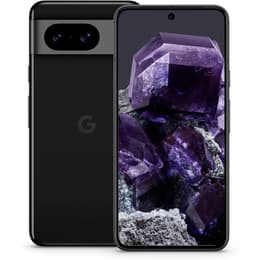
Google Pixel 8
Google Pixel 8
Starting at

Refurbished price:235.00

Versus €999.00 new

See options
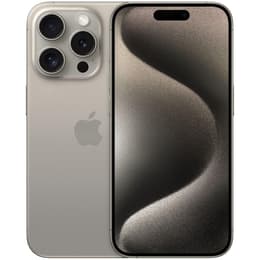
iPhone 15 Pro
iPhone 15 Pro
Starting at

Refurbished price:510.00

Versus €1,165.38 new

See options

Ratings

The Google Pixel 8 (2023) and the iPhone 15 Pro (2023) are contemporary flagship smartphones, each offering a distinct user experience rooted in their respective operating systems. While the Pixel 8 emphasizes advanced computational photography and artificial intelligence features, the iPhone 15 Pro focuses on robust performance, a premium build, and a versatile camera system. Both devices aim to provide a high-end mobile experience, but they cater to different priorities in terms of software integration and hardware design.

Scores

Durability

When considering the long-term usability of these devices, their release timelines and software support policies are key factors. Both phones were released in late 2023, with the iPhone 15 Pro becoming available in September and the Google Pixel 8 in October.

  • Software Longevity: The Google Pixel 8 offers an extended commitment of seven years of OS upgrades, security updates, and regular Feature Drops, ensuring support until 2030. The iPhone 15 Pro is guaranteed a minimum of five years of major software updates, consistent with UK regulations, extending to at least 2028.
  • Repairability: Both devices demonstrate moderate repairability. The Google Pixel 8 has received repairability scores ranging from 5.5/10 to 7/10, with screen replacement being relatively straightforward, though battery replacement can be challenging due to adhesives. The iPhone 15 Pro also scores around 7/10 for repairability, with improvements in back glass replacement, but battery replacement still typically requires display removal. Apple's part pairing can also lead to warnings or non-functional components if non-genuine parts are used.
  • Practical Lifespan: While the Pixel 8 offers a longer stated software support period, the iPhone 15 Pro's hardware is often noted for its ability to maintain performance over several years. Users prioritizing the absolute latest software features for the longest duration might lean towards the Pixel 8, while those valuing consistent performance and a robust ecosystem over many years may find the iPhone 15 Pro a suitable option.

Year of Release

2023

2023

Compatible with latest Update

Yes

Yes

OS

Android

iOS

Foldable

No

No

Performance

The performance of a smartphone is crucial for daily tasks, from app usage to demanding multimedia applications. Both the Google Pixel 8 and the iPhone 15 Pro are equipped with powerful internal components designed for smooth operation.

  • System Responsiveness: The iPhone 15 Pro features a highly capable processor that enables fluid navigation, rapid app loading, and efficient multitasking, even with graphically intensive applications and games. The Google Pixel 8 also provides a responsive experience, handling demanding apps and multitasking smoothly, supported by its current-generation processor and AI-focused capabilities.
  • Battery Behavior: The Google Pixel 8 typically offers a full day of use for most users, with around 8-10 hours of screen-on time for mixed usage, though heavy users might see 6-8 hours and may require a midday charge. Its adaptive battery features help optimize power consumption. The iPhone 15 Pro, with its 3274 mAh battery, offers comparable battery life to its predecessor, providing up to 23 hours of video playback on a single charge.
  • Storage and Memory: The Google Pixel 8 comes with 8GB of RAM and storage options of 128GB or 256GB. The iPhone 15 Pro also includes 8GB of RAM and offers a wider range of storage configurations, including 128GB, 256GB, 512GB, and 1TB, providing more choices for users with extensive storage needs.

Memory (GB)

8 GB

8 GB

Screen quality

The display is a primary interface for smartphone interaction, and both devices offer high-quality viewing experiences with distinct characteristics.

  • Display Technology and Clarity: The Google Pixel 8 features a 6.2-inch OLED display with a Full HD+ resolution of 2400x1080 pixels, resulting in a pixel density of 428 ppi. The iPhone 15 Pro sports a 6.1-inch Super Retina XDR OLED display with a higher resolution of 2556x1179 pixels and a pixel density of 460 ppi, offering slightly sharper visuals. Both OLED panels deliver deep blacks and vibrant colors.
  • Brightness and Refresh Rate: The Pixel 8's display offers up to 1400 nits for HDR content and a peak outdoor brightness of 2000 nits, with a variable refresh rate between 60Hz and 120Hz. The iPhone 15 Pro's display also reaches 1000 nits typical brightness, 1600 nits for HDR, and a peak outdoor brightness of 2000 nits, but it features ProMotion technology for adaptive refresh rates up to 120Hz, providing smoother scrolling and more fluid animations.
  • Screen Features: The iPhone 15 Pro includes Apple's Dynamic Island, which integrates alerts and background activities into a dynamic notification area, and an Always-On display feature. The Pixel 8 offers a clear and bright display suitable for various lighting conditions.

Resolution

1080 x 2400

1179 x 2556

Screen type

OLED

LTPO Super Retina XDR OLED

Audiovisual

Both the Google Pixel 8 and the iPhone 15 Pro are recognized for their advanced camera capabilities, each with a unique approach to image processing and feature sets.

  • Camera System Configuration: The Google Pixel 8 features a dual-camera setup with a 50MP main sensor and an ultrawide lens, complemented by a 10.5MP ultrawide front camera. The iPhone 15 Pro boasts a more comprehensive triple-camera system, including a 48MP main camera, a 12MP ultrawide camera, and a 12MP 3x telephoto lens, along with a 12MP TrueDepth front camera.
  • Photography Performance: The Pixel 8 leverages Google's computational photography for enhanced image quality, particularly in challenging lighting conditions, and offers upgraded cameras for better low-light performance. The iPhone 15 Pro's main camera now defaults to 24MP images, providing more detail, and offers improved low-light performance and better portrait outlines. Its ultrawide camera also supports macro photography.
  • Video Recording and Audio: Both devices offer high-quality video recording. The iPhone 15 Pro supports 4K video recording at up to 60 frames per second, Cinematic mode, and introduces Log video recording for professional workflows. While specific microphone and speaker quality details vary, both are designed to deliver clear audio for calls and media consumption.

Main camera

50 megapixels

48 megapixels

Front camera

10.5 megapixels

12 megapixels

Miscellaneous

Beyond core performance and display, several practical elements contribute to the overall user experience and device utility.

  • Connectivity Options: Both smartphones support 5G cellular networks, ensuring fast mobile data speeds. The iPhone 15 Pro features Wi-Fi 6E for faster wireless speeds and lower latency on compatible networks, along with Bluetooth 5.3 and Thread networking technology. The Pixel 8 also supports modern Wi-Fi standards and Bluetooth.
  • Ports and Sensors: A significant change for the iPhone 15 Pro is the adoption of a USB-C port, which supports USB 3.2 Gen 2x1 transfer speeds (up to 10 Gbit/s) for faster data transfer. The Google Pixel 8 also uses a USB-C port. For security, the iPhone 15 Pro relies on Face ID and includes a LiDAR scanner. The Pixel 8 features an in-display optical fingerprint scanner. The iPhone 15 Pro also introduces a customizable Action Button, replacing the traditional mute switch.
  • Build and Dimensions: The iPhone 15 Pro features a lightweight yet strong grade 5 titanium frame and a Ceramic Shield front cover, measuring 146.6 x 70.6 x 8.25 mm and weighing 187 grams. The Google Pixel 8 has dimensions of 150.5 x 70.8 x 8.9 mm and also weighs 187 grams, with a Corning Gorilla Glass Victus front.

Weight

187 g

171 g

Screen size (in)

6,2

6.1

Network

5G

5G

SIM card

Physical SIM + eSIM

eSIM

Carrier compatibility

Unlocked

Unlocked

Connector

USB-C

USB-C (USB 3)

User sentiment for both the Google Pixel 8 and the iPhone 15 Pro generally highlights their strengths in different areas. The Pixel 8 is often praised for its advanced AI capabilities, computational photography, and Google's commitment to extended software support. Some users, however, have noted that its battery life, while good, may not be exceptional for very heavy usage. The iPhone 15 Pro receives acclaim for its premium titanium design, powerful performance, and versatile camera system, particularly its new 24MP default photo output and USB-C connectivity. Criticisms sometimes point to the continued reliance on part pairing for repairs, which can complicate independent servicing.

Users prioritizing a long software support window, cutting-edge AI features, and a distinctive Android experience will find the Google Pixel 8 well-suited to their needs. Its camera system, driven by Google's software, offers a unique photographic style. Conversely, users who value a robust and consistent ecosystem, a powerful processor for demanding tasks, a versatile camera with a dedicated telephoto lens, and a premium build will likely lean towards the iPhone 15 Pro. Its adoption of USB-C and the customizable Action Button also offer practical benefits.

For those considering either device, exploring quality-assured refurbished options can provide an eco-friendly alternative, allowing access to these advanced technologies while making a sustainable choice.


See all articles

Our recent comparisons