

Galaxy A14 5G Vs Xiaomi Redmi Note 13 Pro

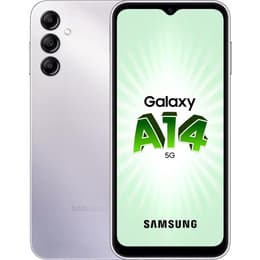
Galaxy A14 5G
Galaxy A14 5G
Starting at

Refurbished price:102.00

Versus €289.00 new

See options
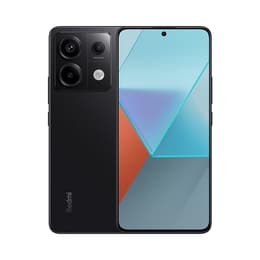
Xiaomi Redmi Note 13 Pro
Starting at

Refurbished price:179.00

Versus €349.00 new

See options

Ratings

The Samsung Galaxy A14 5G, released in January 2023, and the Xiaomi Redmi Note 13 Pro 5G, launched in September 2023, are both smartphones designed to offer a balanced experience for everyday users. While both devices operate on the Android platform, they present distinct approaches to display technology, camera capabilities, and overall performance. This comparison will explore their practical differences to help users determine which device aligns best with their needs.

Scores

Durability

When considering the long-term usability of a smartphone, factors like software support and physical resilience are key. The Galaxy A14 5G and Redmi Note 13 Pro 5G offer different timelines for updates and varying levels of protection.

  • Software Longevity: The Samsung Galaxy A14 5G launched with Android 13 and is expected to receive two major OS upgrades, extending its software support until Android 15, around 2025. It also benefits from four years of security updates, projected until 2027. The Xiaomi Redmi Note 13 Pro 5G also launched with Android 13 (with MIUI 14) and its update policy typically offers a similar duration for major OS updates, though specific long-term commitments can vary by region and model.
  • Physical Durability: The Redmi Note 13 Pro 5G features Corning Gorilla Glass Victus for enhanced screen protection, offering a higher level of resistance against drops and scratches. It also includes an IP54 rating, indicating a degree of protection against dust and splashes. In contrast, the Galaxy A14 5G utilizes a PLS LCD display without specified Gorilla Glass protection and has a plastic chassis, lacking an official IP rating for water and dust resistance.
  • Expected Lifespan: Users can anticipate a practical lifespan of several years for both devices, with the Galaxy A14 5G offering consistent security patches for a notable period. The Redmi Note 13 Pro 5G's more robust screen protection and splash resistance may contribute to its physical longevity in daily use.

Year of Release

2023

2023

Compatible with latest Update

Yes

Yes

OS

Android

Android

Foldable

No

No

Performance

The performance of a smartphone impacts how smoothly applications run, how quickly tasks are completed, and the overall responsiveness of the user interface. Both devices are equipped to handle daily operations, but with different underlying hardware.

  • Processing Power: The Samsung Galaxy A14 5G is powered by a processor that provides solid performance for everyday tasks such as browsing, social media, and light multitasking. Users generally find it capable for routine use, though some report occasional stutters or slower animations when navigating the interface or opening demanding applications. The Xiaomi Redmi Note 13 Pro 5G features a more capable current-generation processor, which allows for smoother handling of more intensive applications, faster app loading times, and a more fluid experience during multitasking and casual gaming.
  • Memory and Storage: The Galaxy A14 5G typically comes with 4GB or 6GB of RAM and 64GB or 128GB of internal storage, with the option to expand storage using a microSD card. The Redmi Note 13 Pro 5G offers higher configurations, often starting with 8GB or 12GB of RAM and 128GB, 256GB, or 512GB of internal storage, which contributes to its enhanced multitasking capabilities. The 5G version of the Redmi Note 13 Pro does not typically offer expandable storage.
  • Battery Behavior: Both phones are equipped with large 5000mAh or 5100mAh batteries, providing ample power for a full day of moderate to heavy use. The Galaxy A14 5G generally offers excellent battery endurance, with many users reporting up to two days on a single charge with typical usage. The Redmi Note 13 Pro 5G also delivers strong battery life, often lasting a day and a half for many users, and features significantly faster 67W wired charging, allowing for quicker recharges compared to the Galaxy A14 5G's 15W charging.

Memory (GB)

4 GB

8 GB

Screen quality

The display is a primary interface for smartphone interaction, and both devices offer different visual experiences tailored to their respective designs.

  • Display Technology and Clarity: The Samsung Galaxy A14 5G features a 6.6-inch PLS LCD display with a Full HD+ resolution (1080x2408 pixels) and a 90Hz refresh rate. This provides a clear and reasonably smooth viewing experience for general content. The Xiaomi Redmi Note 13 Pro 5G boasts a 6.67-inch AMOLED display with a higher 1.5K resolution (2712x1220 pixels) and a 120Hz refresh rate. This results in more vibrant colors, deeper blacks, and noticeably smoother scrolling and animations.
  • Brightness and Outdoor Visibility: The Redmi Note 13 Pro 5G offers significantly higher peak brightness levels, reaching up to 1800 nits, which greatly enhances visibility in bright outdoor conditions and improves HDR content viewing. The Galaxy A14 5G's LCD panel, while adequate indoors, can be challenging to view under direct sunlight due to its lower brightness output.
  • Viewing Experience: The AMOLED technology of the Redmi Note 13 Pro 5G, combined with its higher resolution and refresh rate, provides a more immersive and premium visual experience, particularly for media consumption and gaming. It also supports Dolby Vision. The Galaxy A14 5G's display is functional and sharp for its class, but does not offer the same level of contrast or fluidity.

Resolution

1080 x 2408

1220 x 2712

Screen type

PLS LCD

AMOLED

Audiovisual

Camera systems are a significant differentiator, with both phones offering multi-lens setups designed for various photographic scenarios.

  • Rear Camera System: The Samsung Galaxy A14 5G includes a triple rear camera setup with a 50MP main sensor, a 2MP macro lens, and a 2MP depth sensor. It notably lacks an ultrawide camera. The Xiaomi Redmi Note 13 Pro 5G features a more versatile triple camera system, highlighted by a 200MP main sensor with Optical Image Stabilization (OIS), an 8MP ultrawide camera, and a 2MP macro lens.
  • Photography Performance: The Galaxy A14 5G's 50MP main camera performs well in good lighting conditions, capturing decent details and vibrant colors, though it struggles in low-light environments. The Redmi Note 13 Pro 5G's 200MP main camera excels in capturing highly detailed images with good dynamic range in various lighting, including decent low-light performance with its night mode. The ultrawide and macro lenses are functional, but the main sensor is the standout.
  • Video Recording and Audio: For video, the Galaxy A14 5G is limited to 1080p at 30 frames per second for both front and rear cameras, without advanced features like 4K recording or OIS. The Redmi Note 13 Pro 5G offers 4K video recording at 30fps with its rear camera and 1080p at 60fps for the front camera, providing more flexibility for video content creation. Both devices offer standard microphone quality for calls and recording, and the Redmi Note 13 Pro 5G features stereo speakers for a more immersive audio experience compared to the Galaxy A14 5G's mono speaker.

Main camera

50 megapixels

200 megapixels

Front camera

13 megapixels

16 megapixels

Miscellaneous

Beyond core specifications, several practical features contribute to the daily user experience and overall utility of a smartphone.

  • Connectivity and Ports: Both the Galaxy A14 5G and Redmi Note 13 Pro 5G support 5G connectivity, ensuring access to faster mobile networks. The Galaxy A14 5G supports Wi-Fi 5 and Bluetooth 5.2, while the Redmi Note 13 Pro 5G steps up to Wi-Fi 6, offering potentially faster and more stable wireless connections. Both devices include a USB-C port for charging and data transfer, and notably, both retain the 3.5mm headphone jack, a feature appreciated by many users. The Redmi Note 13 Pro 5G also includes an IR blaster, allowing it to function as a universal remote control.
  • Biometric Security: The Galaxy A14 5G features a side-mounted fingerprint sensor for secure unlocking. The Redmi Note 13 Pro 5G integrates an in-screen fingerprint sensor, offering a more modern and often quicker unlocking experience. Both also support AI Face Unlock.
  • Design and Handling: The Galaxy A14 5G has a plastic polycarbonate back and frame, contributing to its robust feel but without an official IP rating. It measures 167.7 x 78 x 9.1mm and weighs 202g. The Redmi Note 13 Pro 5G, with its Gorilla Glass Victus front and IP54 rating, offers a more premium feel and better protection against environmental elements. It is slightly more compact and lighter at 161.1 x 74.95 x 7.98mm and 188g.

Weight

201 g

187 g

Screen size (in)

6.6

6.67

Network

5G

5G

SIM card

Dual Physical SIM

Dual Physical SIM

Carrier compatibility

Unlocked

Unlocked

The Samsung Galaxy A14 5G and Xiaomi Redmi Note 13 Pro 5G cater to different user priorities, each excelling in specific areas. User feedback for the Galaxy A14 5G often praises its exceptional battery life, consistent software update policy for its segment, and reliable main camera performance in well-lit conditions. Criticisms frequently point to its LCD display's outdoor visibility, the absence of an ultrawide camera, and occasional performance lags with demanding applications.

Conversely, the Redmi Note 13 Pro 5G receives acclaim for its vibrant AMOLED display with a high refresh rate, its powerful 200MP main camera, and rapid charging capabilities. Users appreciate its smooth performance for most tasks and its more premium build quality. Some common concerns include the performance of its auxiliary cameras (ultrawide and macro) and potential software quirks with HyperOS updates.

Users prioritizing extended battery life, a dependable main camera for everyday shots, and a strong commitment to security updates may find the Samsung Galaxy A14 5G well-suited to their needs. It offers a practical and straightforward smartphone experience. For those who value a superior visual experience with a high-resolution AMOLED display, faster performance for more demanding apps, quicker charging, and a more versatile main camera system, the Xiaomi Redmi Note 13 Pro 5G presents a compelling option. Its enhanced durability features also add to its appeal for users seeking a more robust device.

Both models are available as quality-assured refurbished options, providing an eco-friendly alternative for consumers looking to make a sustainable choice while still enjoying modern smartphone features.


See all articles

Our recent comparisons