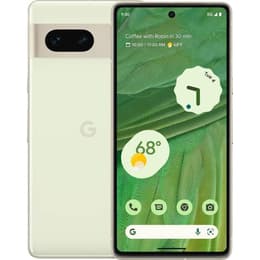


Google Pixel 7 Vs iPhone 15

Google Pixel 7
Google Pixel 7
Starting at

Refurbished price:164.99

Versus €729.00 new

See options
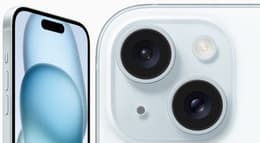
iPhone 15
iPhone 15
Starting at

Refurbished price:399.00

Versus €879.00 new

See options

Ratings

The Google Pixel 7, released in October 2022, and the iPhone 15, launched in September 2023, represent distinct approaches to the modern smartphone experience. While the Pixel 7 operates on Google's Android platform, the iPhone 15 runs on Apple's iOS, offering users different ecosystems and interface philosophies. Key differentiators between these two devices include their camera processing, display refresh rates, and overall design aesthetics, catering to varied user preferences.

Scores

Durability

When considering the long-term usability of a smartphone, factors like software support, physical resilience, and ease of repair are important. The Pixel 7 and iPhone 15 offer different longevity profiles.

  • Software Support: The Google Pixel 7, released in October 2022, is guaranteed to receive five years of OS and security updates, extending until at least October 2027. This means it will receive major Android OS updates up to Android 16. The iPhone 15, launched in September 2023, has a publicly committed minimum of five years of software support, with updates and security patches expected until at least September 2028. Apple has historically provided support beyond its stated minimums.
  • Physical Durability: Both devices feature an IP68 rating for dust and water resistance, indicating protection against immersion in water. The Pixel 7 utilizes Corning Gorilla Glass Victus for its display, while the iPhone 15 incorporates Ceramic Shield on its front, designed for enhanced drop performance. The iPhone 15 also features a color-infused glass back and an aluminum design.
  • Repairability: The Google Pixel 7 has a repairability score around 6.5-7 out of 10, with some challenges noted for battery removal and a soldered USB-C port. The iPhone 15 initially received a lower repairability score, but this was later promoted to 7 out of 10 due to software improvements that make parts calibration more accessible for repairs.

Year of Release

2022

2023

Compatible with latest Update

Yes

Yes

OS

Android

iOS

Foldable

No

No

Performance

The performance of a smartphone impacts daily tasks, from app usage to demanding multimedia editing. Both the Pixel 7 and iPhone 15 deliver capable performance, though with different underlying architectures.

  • System Responsiveness: The Google Pixel 7 is powered by a processor designed by Google, which focuses on optimizing AI and machine learning tasks directly on the device, contributing to smooth operation and efficient handling of everyday applications. The iPhone 15 features a powerful processor that was previously used in Apple's Pro models, providing robust performance for demanding applications, multitasking, and graphically intensive games.
  • Multitasking and Storage: The Pixel 7 comes with 8GB of RAM, which supports efficient multitasking and keeps multiple applications running in the background without significant slowdowns. It offers storage options of 128GB and 256GB. The iPhone 15 is equipped with 6GB of RAM and provides more storage flexibility with options for 128GB, 256GB, and 512GB, catering to users with larger storage needs.
  • Battery Behavior: The Pixel 7 houses a 4355 mAh battery, designed to provide a full day of typical use, with support for 20W wired fast charging. The iPhone 15 has a 3349 mAh battery, also supporting 20W wired fast charging and adding MagSafe wireless charging capabilities. Real-world battery life can vary significantly based on usage patterns and software optimization.

Memory (GB)

8 GB

6 GB

Screen quality

The display is a primary interface for any smartphone, and both devices offer vibrant viewing experiences with distinct characteristics.

  • Display Technology and Clarity: The Google Pixel 7 features a 6.3-inch AMOLED display with a resolution of 1080 x 2400 pixels, resulting in a pixel density of approximately 416 pixels per inch. This provides clear and detailed visuals for general use. The iPhone 15 sports a 6.1-inch Super Retina XDR OLED display with a higher resolution of 2556 x 1179 pixels, yielding a pixel density of about 460 pixels per inch, offering slightly sharper text and images.
  • Brightness and Refresh Rate: The Pixel 7's display offers a 90Hz refresh rate, providing a smoother scrolling experience and more fluid animations compared to standard 60Hz screens. It reaches a peak brightness of 1400 nits for HDR content and 1000 nits in high brightness mode. The iPhone 15 maintains a standard 60Hz refresh rate but boasts higher brightness levels, with a typical maximum of 1000 nits, a peak HDR brightness of 1600 nits, and an impressive peak outdoor brightness of 2000 nits, enhancing visibility in bright environments.
  • Viewing Experience: The Pixel 7's slightly larger screen size offers a more expansive canvas for media consumption and productivity. The iPhone 15's display, while smaller, benefits from its higher peak brightness, which can be advantageous for outdoor viewing and HDR content. Both displays offer vibrant colors and deep blacks characteristic of OLED technology.

Resolution

1080 x 2400

1179 x 2556

Screen type

AMOLED

Super Retina XDR OLED

Audiovisual

Photography and videography capabilities are often a deciding factor for smartphone users, and both the Pixel 7 and iPhone 15 excel in capturing moments, albeit with different strengths.

  • Rear Camera System: The Google Pixel 7 features a dual-camera setup with a 50MP main sensor and a 12MP ultrawide lens. Its camera system is renowned for its computational photography, delivering consistent image quality and advanced features like Magic Eraser and Photo Unblur. The iPhone 15 also comes with a dual-camera system, featuring a 48MP main sensor and a 12MP ultrawide camera. The main camera benefits from pixel binning technology, allowing for detailed 24MP photos by default and offering 2x telephoto-like zoom capabilities.
  • Low-Light and Video Performance: Both devices offer strong low-light performance, with the Pixel 7 leveraging its software algorithms for bright and detailed night shots. The iPhone 15 also performs well in challenging lighting conditions, and its video recording capabilities are highly regarded for their stability and cinematic quality, supporting 4K video recording at up to 60 frames per second.
  • Front Camera and Audio: For selfies and video calls, the Pixel 7 includes a 10.8MP ultrawide front camera. The iPhone 15 features a 12MP front camera with autofocus. Both phones provide quality microphone performance for calls and recordings, and their stereo speakers offer a good audio experience for media consumption.

Main camera

50 megapixels

48 megapixels

Front camera

10.8 megapixels

12 megapixels

Miscellaneous

Beyond core features, several practical elements contribute to the overall user experience and daily convenience of these smartphones.

  • Connectivity and Ports: Both the Google Pixel 7 and iPhone 15 support 5G cellular connectivity and Wi-Fi 6 for fast wireless internet. The Pixel 7 uses a USB-C port for charging and data transfer. The iPhone 15 marks a significant change by adopting a USB-C port, moving away from its proprietary Lightning connector, though its data transfer speeds are limited to USB 2.0 standards. Both devices support Bluetooth for wireless accessories, with the iPhone 15 featuring Bluetooth 5.3.
  • Biometrics and Navigation: The Pixel 7 incorporates an under-display optical fingerprint scanner for secure unlocking. The iPhone 15 relies on Face ID, Apple's facial recognition system, for secure authentication. Both phones include essential sensors like accelerometers, gyroscopes, and ambient light sensors for various functionalities and navigation.
  • Design and Handling: The Pixel 7 measures 155.6 x 73.2 x 8.7 mm and weighs 197 grams. The iPhone 15 is slightly more compact and lighter, with dimensions of 147.6 x 71.6 x 7.8 mm and a weight of 171 grams. The iPhone 15 features a Dynamic Island, a pill-shaped cutout that dynamically displays alerts and background activities, integrating hardware and software.

Weight

197 g

171 g

Screen size (in)

6.3

6.1

Network

5G

5G

SIM card

Physical SIM + eSIM

eSIM

Carrier compatibility

Unlocked

Unlocked

Connector

USB-C + Jack 3.5mm

USB-C (USB 2)

The Google Pixel 7 and iPhone 15 each offer compelling features, catering to different user priorities and preferences. User feedback for the Pixel 7 often praises its exceptional camera capabilities, particularly its computational photography features that enhance everyday photos and offer unique editing tools. Many users also appreciate the clean Android experience and timely software updates. Some common criticisms have included its 90Hz display refresh rate not matching the 120Hz found on some competitors, and occasional reports regarding battery life under heavy usage.

The iPhone 15 is frequently lauded for its robust performance, the integration of the Dynamic Island for interactive notifications, and its reliable camera system that delivers consistent results. The switch to USB-C has also been a welcome change for many. However, some users have noted the 60Hz refresh rate as a point of comparison to other modern smartphones, and initial reports of overheating were addressed with software updates.

Users prioritizing advanced computational photography, a pure Android experience, and a slightly larger display may find the Google Pixel 7 well-suited to their needs. Its focus on AI-driven features and software enhancements provides a distinct user journey. Conversely, individuals who value a compact design, the iOS ecosystem, a brighter display for outdoor visibility, and a strong emphasis on video capabilities might lean towards the iPhone 15. Its consistent performance and long-term software support make it a reliable choice.

Both devices represent quality-assured options in the smartphone market. For those considering a more sustainable choice, exploring refurbished versions of either the Google Pixel 7 or iPhone 15 can offer an eco-friendly alternative without compromising on functionality.

See all articles

Our recent comparisons







