

Google Pixel Fold Vs iPhone 12 Pro

Google Pixel Fold
Google Pixel Fold
Starting at

Refurbished price:454.00

Versus €1,750.29 new

See options
iPhone 12 Pro
iPhone 12 Pro
Starting at

Refurbished price:214.00

Versus €1,039.00 new

See options

Ratings

The Google Pixel Fold, released in June 2023, represents Google's entry into the foldable smartphone market, offering a unique dual-screen experience powered by Android. In contrast, the iPhone 12 Pro, launched in October 2020, is a traditional slab-style smartphone running Apple's iOS. These devices cater to different user preferences, primarily distinguished by their form factor and operating system, alongside variations in their camera systems and display technologies.

Scores

Durability

The expected practical lifespan of a smartphone is influenced by its release timeline, software support, and physical durability features. These two devices, released years apart, offer different longevity prospects.

  • Release Timeline: The iPhone 12 Pro was released in October 2020, making it an older device compared to the Google Pixel Fold, which launched in June 2023. This difference in release year directly impacts their remaining software support. [1, 4, 13]
  • OS Support Duration: The Google Pixel Fold is set to receive five years of OS and security updates from its release, extending support until at least June 2028. The iPhone 12 Pro, being an Apple device, typically receives 5-6 years of major iOS updates, with its current iOS version being 26.4 as of March 2026. [1, 10, 18, 24, 28, 29]
  • Physical Durability: The iPhone 12 Pro features a Ceramic Shield front cover and an IP68 rating for water and dust resistance, offering robust protection for a traditional smartphone. The Pixel Fold, while also boasting an IPX8 water resistance rating and a durable hinge, introduces a foldable screen, which inherently presents different considerations for long-term physical resilience compared to a solid display. [1, 2, 4, 9, 13, 15, 38]

Year of Release

2023

2020

Compatible with latest Update

Yes

Yes

OS

Android

iOS

Foldable

Yes

No

Performance

Performance in daily use, from app handling to multitasking, is a key differentiator, influenced by the underlying hardware and software optimization.

  • Processor Capabilities: The Google Pixel Fold is equipped with a current-generation processor designed by Google, which handles demanding applications and multitasking smoothly. The iPhone 12 Pro features a processor from 2020, which still delivers responsive performance for everyday tasks and many intensive applications, though it is an older generation. [3, 5, 8, 9, 17]
  • Multitasking and Responsiveness: The Pixel Fold's larger internal display is designed for enhanced multitasking, allowing users to run multiple applications side-by-side. Its 12GB of RAM supports this capability, ensuring smooth transitions and app management. The iPhone 12 Pro, with 6GB of RAM, offers efficient multitasking within the iOS environment, though its single, smaller screen limits the scope of simultaneous app viewing. [3, 4, 5, 11, 17]
  • Storage Options: Both devices offer ample storage configurations to suit various user needs. The Pixel Fold is available with 256GB or 512GB of internal storage. The iPhone 12 Pro provides options for 128GB, 256GB, or 512GB of storage. [3, 4, 5, 11, 14, 17]

Memory (GB)

12 GB

6 GB

Screen quality

The visual experience is heavily shaped by the display technology, resolution, and unique form factors of these two devices.

  • Display Technology and Form Factor: The Google Pixel Fold features two OLED displays: a 5.8-inch cover screen and a 7.6-inch foldable inner screen. Both offer vibrant colors and deep blacks, with the inner screen providing an expansive tablet-like experience when unfolded. The iPhone 12 Pro has a single 6.1-inch Super Retina XDR OLED display, known for its high contrast and color accuracy. [1, 2, 3, 4, 6, 7, 9, 11, 17, 23, 27, 31, 39]
  • Resolution and Clarity: The Pixel Fold's cover display has a resolution of 2092x1080 pixels (408 ppi), and its inner display is 2208x1840 pixels (380 ppi). The iPhone 12 Pro offers a resolution of 2532x1170 pixels (460 ppi). All displays provide sharp and clear visuals for typical viewing distances. [1, 2, 3, 4, 6, 7, 11, 17, 23, 27, 31, 39]
  • Brightness and Refresh Rate: Both Pixel Fold displays and the iPhone 12 Pro display support HDR content, with the Pixel Fold reaching up to 1550 nits peak brightness on its cover screen and 1450 nits on its inner screen, while the iPhone 12 Pro reaches 1200 nits peak brightness. The Pixel Fold's displays feature a 120Hz refresh rate for smoother scrolling and animations, whereas the iPhone 12 Pro has a standard 60Hz refresh rate. [1, 2, 3, 4, 7, 9, 17, 23, 27, 39]

Resolution

1840 x 2208

1170 x 2532

Screen type

Foldable OLED

Super Retina XDR OLED

Audiovisual

Both devices offer advanced camera systems, but their configurations and computational photography approaches differ, impacting photographic outcomes.

  • Camera System Configuration: The Google Pixel Fold features a triple rear camera setup with a 48MP main sensor, a 10.8MP ultrawide lens, and a 10.8MP telephoto lens offering 5x optical zoom. It also has a 9.5MP front camera on the cover and an 8MP inner front camera. The iPhone 12 Pro has a triple 12MP rear camera system, including wide, ultrawide, and a telephoto lens with 2x optical zoom, alongside a 12MP front camera. [1, 3, 4, 5, 6, 9, 11, 13, 15, 16, 22, 26, 35, 39]
  • Photography Performance: The Pixel Fold is praised for its natural colors, good detail, and strong low-light performance, benefiting from Google's computational photography. Its 5x optical zoom is a notable advantage for distant subjects. The iPhone 12 Pro also excels in low-light conditions, detail, and natural white balance, with its LiDAR scanner aiding in faster autofocus and improved Night mode portraits. [3, 5, 15, 16, 19, 22, 26, 32, 35]
  • Video Recording: Both devices are capable of recording 4K video at up to 60 frames per second. The iPhone 12 Pro stands out with its ability to record in Dolby Vision HDR, offering enhanced dynamic range and color in videos. The Pixel Fold also offers good video quality with stable footage. [1, 3, 5, 6, 9, 15, 22, 32, 35]

Main camera

48 megapixels

12 megapixels

Front camera

8 megapixels

12 megapixels

Miscellaneous

Beyond core performance and display, practical elements like connectivity, physical design, and security features contribute to the overall user experience.

  • Connectivity and Ports: Both devices support 5G connectivity for fast mobile data. The Google Pixel Fold includes Wi-Fi 6E, Bluetooth 5.2, NFC, and a USB-C port for charging and data transfer. The iPhone 12 Pro features Wi-Fi 6, Bluetooth 5.0, NFC, and utilizes Apple's proprietary Lightning port. [1, 11, 13, 17, 39, 41]
  • Biometric Security: The Pixel Fold incorporates a fingerprint reader for secure unlocking and authentication. The iPhone 12 Pro relies on Face ID, Apple's 3D facial recognition system, for biometric security. [13, 17, 39]
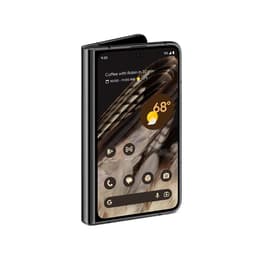
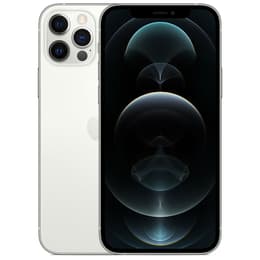
  • Dimensions, Weight, and Build: The Pixel Fold, when folded, measures approximately 139.7 x 79.5 x 12.1 mm and weighs 283 grams, feeling like two thin phones stacked. When unfolded, it becomes a larger, thinner device. The iPhone 12 Pro is a more compact and lighter device, measuring 146.7 x 71.5 x 7.4 mm and weighing 189 grams, featuring a stainless steel frame and glass back. [1, 2, 4, 11, 13, 14, 17, 31, 39, 41]

Weight

283 g

187 g

Screen size (in)

7.6

6.1

Network

5G

5G

SIM card

Physical SIM + eSIM

Physical SIM + eSIM

Carrier compatibility

Unlocked

Unlocked

Connector

USB-C

Lightning

User feedback for the Google Pixel Fold often highlights its innovative foldable design and versatile dual-screen functionality as major advantages, particularly for multitasking and media consumption. Users appreciate its strong camera performance, benefiting from Google's computational photography. However, some common criticisms include its weight and thickness when folded, the visible crease on the inner display, and concerns about the long-term durability of the foldable screen. [3, 4, 15, 20, 23, 39]

For the iPhone 12 Pro, users frequently praise its robust build quality, consistent performance, and the reliability of the iOS ecosystem. Its camera system, including the LiDAR scanner for improved low-light focus, received positive remarks for delivering high-quality photos and videos. Common points of consideration for users include its 60Hz display refresh rate, which is lower than many newer devices, and its proprietary Lightning port. [1, 5, 7, 9, 19, 22, 26]

Users prioritizing a large, adaptable screen for productivity and media, coupled with a strong camera system and the Android ecosystem, may find the Google Pixel Fold well-suited to their needs. Its unique form factor offers a distinct experience for those seeking innovation. Conversely, users who value a more traditional, compact smartphone design, consistent performance within the Apple ecosystem, and a proven track record of durability will likely lean towards the iPhone 12 Pro. Both devices are available as quality-assured refurbished options, providing an eco-friendly alternative for consumers.


See all articles

Our recent comparisons