

Galaxy S21 5G Vs Google Pixel 7

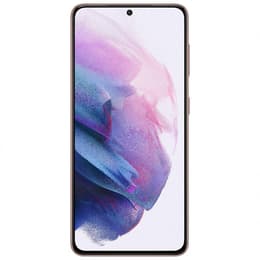
Galaxy S21 5G
Galaxy S21 5G
Starting at

Refurbished price:161.00

Versus €1,026.00 new

See options
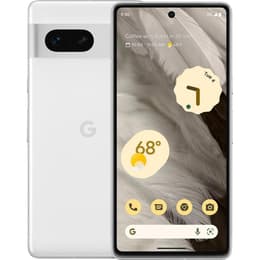
Google Pixel 7
Google Pixel 7
Starting at

Refurbished price:160.00

Versus €756.00 new

See options

Ratings

The Samsung Galaxy S21 5G, released in January 2021, and the Google Pixel 7, launched in October 2022, are both Android smartphones that offer distinct approaches to mobile technology. While the Galaxy S21 5G emphasizes a versatile camera system and a high refresh rate display, the Pixel 7 focuses on advanced computational photography and a custom-designed processor optimized for artificial intelligence. Both devices run on the Android operating system, providing users with a wide ecosystem of applications and services.

Scores

Durability

When considering the longevity of these devices, their release timelines and software support policies are key factors.

  • Release Timeline: The Samsung Galaxy S21 5G was introduced in January 2021, making it an earlier model compared to the Google Pixel 7, which arrived in October 2022. This difference in release date inherently means the Pixel 7 benefits from a later starting point for software support.
  • OS Support Duration: The Google Pixel 7 is guaranteed to receive five years of OS and security updates from its release date, extending its support until Android 18 and security updates until October 2027. The Samsung Galaxy S21 5G typically receives four major Android OS updates and five years of security updates, which means its software support window will close sooner than the Pixel 7's.
  • Repairability: The Galaxy S21 5G has been noted for a repairability score around 7.5 out of 10 by some, indicating it is relatively easy to disassemble, though battery removal can be challenging due to strong adhesive. Another assessment gave it a 4 out of 10, citing a fragile screen and a difficult-to-remove battery. Information regarding the Pixel 7's specific repairability score was not readily available, but Pixel phones are generally considered moderately repairable.

Year of Release

2021

2022

Compatible with latest Update

Yes

Yes

OS

Android

Android

Foldable

No

No

Performance

The performance of a smartphone is largely determined by its internal components and how they handle daily tasks and demanding applications.

  • Processor Capabilities: The Samsung Galaxy S21 5G is powered by a high-end processor from its release year, enabling smooth operation for everyday use and capable handling of multitasking and gaming. The Google Pixel 7 features a custom-designed processor that prioritizes machine learning and artificial intelligence tasks, contributing to a fluid user experience and efficient handling of AI-driven features. While benchmark scores for the Pixel 7 may sometimes appear lower than some competitors, its real-world performance is often described as smooth and fast.
  • Storage and RAM: Both devices offer similar configurations, typically with 8GB of RAM and storage options of 128GB or 256GB. This amount of RAM supports efficient multitasking, allowing users to switch between applications without significant slowdowns.
  • Battery Behavior: The Galaxy S21 5G is equipped with a 4000 mAh battery. The Pixel 7 has a slightly larger 4355 mAh battery. User experiences with the Pixel 7's battery life are varied, with some reporting it lasts through a full day of moderate use, while others find it requires more frequent charging, particularly with heavy usage.

Memory (GB)

8 GB

8 GB

Screen quality

The display is a primary interface for smartphone interaction, and both devices offer vibrant viewing experiences with some key differences.

  • Display Technology and Resolution: The Samsung Galaxy S21 5G features a 6.2-inch Dynamic AMOLED 2X display, offering rich colors and deep blacks with a Full HD+ resolution of 1080 x 2400 pixels. The Google Pixel 7 comes with a 6.3-inch AMOLED display, also providing a Full HD+ resolution of 1080 x 2400 pixels, ensuring clear and detailed visuals.
  • Refresh Rate and Smoothness: The Galaxy S21 5G boasts a 120Hz refresh rate, which contributes to very smooth scrolling and a responsive feel during navigation and gaming. The Pixel 7 offers a 90Hz refresh rate, which is noticeably smoother than a standard 60Hz display, providing a good balance between fluidity and battery efficiency.
  • Brightness Levels: For outdoor visibility, the Galaxy S21 5G can reach a peak brightness of 1300 nits. The Pixel 7 offers a slightly higher peak brightness of 1400 nits, with typical brightness around 1000 nits, which can be beneficial in bright sunlight.

Resolution

1080 x 2400

1080 x 2400

Screen type

Dynamic AMOLED 2X

AMOLED

Audiovisual

Both smartphones offer capable camera systems, but they approach photography with different hardware and software philosophies.

  • Camera System Configuration: The Samsung Galaxy S21 5G features a versatile triple-lens rear camera setup, including a 12MP wide-angle lens, a 64MP telephoto lens with 3x hybrid optical zoom, and a 12MP ultrawide lens. The Google Pixel 7 employs a dual-lens rear camera system, consisting of a 50MP main sensor and a 12MP ultrawide lens. The Pixel 7 does not have a dedicated telephoto lens, relying on its high-resolution main sensor and computational photography for zoomed shots.
  • Photography Performance: The Galaxy S21 5G is known for capturing detailed photos with its 64MP telephoto lens and offers 8K video recording. The Pixel 7 excels in computational photography, leveraging its custom processor for features like Photo Unblur and Cinematic Blur, and generally produces strong results in various lighting conditions, including low light.
  • Front Camera: For selfies and video calls, the Galaxy S21 5G has a 10MP front-facing camera. The Pixel 7 features a 10.8MP ultrawide front camera, capable of 4K video recording.

Main camera

12 megapixels

50 megapixels

Front camera

10 megapixels

10.8 megapixels

Miscellaneous

Beyond the core features, several practical elements contribute to the overall user experience and daily usability of these devices.

  • Connectivity: Both phones support 5G connectivity. The Galaxy S21 5G includes Wi-Fi 6 and Bluetooth 5.0. The Pixel 7 offers more advanced connectivity with Wi-Fi 6E and Bluetooth 5.2, providing potentially faster and more stable wireless connections.
  • Ports and Sensors: Both devices utilize a USB-C port for charging and data transfer and notably lack a traditional 3.5mm headphone jack. For security, both feature an under-display fingerprint scanner. The Pixel 7 also integrates a Titan M2 security chip for enhanced data protection.
  • Physical Design: The Galaxy S21 5G measures 151.7 x 71.2 x 7.9 mm and weighs between 169-171g. It features a glass front with Gorilla Glass Victus, an aluminum frame, and a plastic back on some models. The Pixel 7 is slightly larger and heavier at 155.6 x 73.2 x 8.7 mm and 197g. It has a glass front and back, both protected by Gorilla Glass Victus, and an aluminum frame. Both devices carry an IP68 rating for dust and water resistance.

Weight

171 g

197 g

Screen size (in)

6.2

6.3

Network

5G

5G

SIM card

Physical SIM + eSIM

Physical SIM + eSIM

Carrier compatibility

Unlocked

Unlocked

The Samsung Galaxy S21 5G and Google Pixel 7 each present a compelling package, catering to slightly different user priorities. Users often praise the Galaxy S21 5G for its vibrant display with a high refresh rate and its versatile camera system, particularly the inclusion of a dedicated telephoto lens. Some common criticisms for the S21 5G have revolved around its battery life for heavy users and the plastic back on some models, which some perceive as less premium.

The Google Pixel 7 frequently receives acclaim for its exceptional computational photography capabilities, delivering consistent and high-quality images, especially in challenging conditions. Its custom processor, optimized for AI, also contributes to a smooth and intelligent user experience. However, some users have expressed mixed opinions on the Pixel 7's battery longevity, with experiences varying based on usage patterns. The 90Hz refresh rate, while good, is also a point of comparison for those accustomed to 120Hz displays.

Users prioritizing a highly fluid display experience and a dedicated telephoto camera for optical zoom may find the Samsung Galaxy S21 5G well-suited to their needs. Conversely, individuals who value cutting-edge computational photography, a clean Android experience with prompt updates, and advanced AI features will likely lean towards the Google Pixel 7. Both devices offer a robust smartphone experience, and for those considering a quality-assured refurbished option, both models are available, providing an eco-friendly alternative to purchasing new.


See all articles

Our recent comparisons