
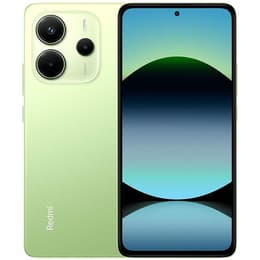


Google Pixel 7 Vs Xiaomi Redmi Note 14 4G

Google Pixel 7
Google Pixel 7
Starting at

Refurbished price:160.00

Versus €756.00 new

See options
Xiaomi Redmi Note 14 4G
Starting at

Refurbished price:155.00

Versus €259.00 new

See options

Ratings

The Google Pixel 7, released in October 2022, and the Xiaomi Redmi Note 14 4G, launched in early 2025, represent distinct approaches to the Android smartphone experience. While both devices operate on the Android platform, the Pixel 7 emphasizes advanced computational photography and a streamlined software experience, whereas the Redmi Note 14 4G focuses on a large display, extended battery life, and a comprehensive software support policy. These differences cater to varying user priorities within the Android ecosystem.

Scores

Durability

The expected lifespan and software support differ between these two devices, influencing their long-term usability.

  • Release Timeline and OS Support: The Google Pixel 7, released in October 2022, shipped with Android 13 and is guaranteed to receive five years of OS and security updates from its release date, extending its support until Android 18. The Xiaomi Redmi Note 14 4G, launched in January 2025, comes with Android 14 and HyperOS, and is set to receive four major Android OS upgrades and six years of security updates, extending its support until March 2031.
  • Software Longevity: The Redmi Note 14 4G offers a longer official software support period, potentially making it a more future-proof option for users who prioritize extended updates. However, some users of the Redmi Note 14 4G have reported delays in receiving these updates.
  • Repairability and Practical Lifespan: Both devices are designed for a practical lifespan that extends beyond their initial purchase, with refurbished options providing an eco-friendly alternative for continued use. The Pixel 7 has faced some user reports of physical durability concerns, such as issues with volume rockers.

Year of Release

2022

2025

OS

Android

Android

Foldable

No

No

Performance

Performance characteristics vary, impacting how each device handles daily tasks and demanding applications.

  • Processor Capabilities: The Google Pixel 7 is powered by a processor designed for efficient AI and machine learning tasks, contributing to smooth navigation, quick app launches, and advanced photo processing. The Xiaomi Redmi Note 14 4G features a processor that provides reliable performance for everyday use and moderate gaming.
  • Multitasking and Responsiveness: The Pixel 7, with its optimized software and integrated hardware, generally offers a highly responsive user experience, handling multiple applications simultaneously without significant slowdowns. The Redmi Note 14 4G, while capable for most tasks, may exhibit occasional stutters during heavy usage or intensive gaming, particularly with its base RAM configuration.
  • Storage and Battery Behavior: Both devices offer 128GB or 256GB storage options. The Pixel 7 has a 4355 mAh battery, with user feedback indicating decent but not exceptional battery life, sometimes accompanied by heating during intensive use. The Redmi Note 14 4G features a larger 5110 mAh or 5500 mAh battery, and users frequently praise its excellent battery life, ensuring extended usage between charges.

Memory (GB)

8 GB

6 GB

Screen quality

The display technologies and visual experiences offered by these smartphones present distinct advantages.

  • Display Technology and Resolution: Both the Google Pixel 7 and the Xiaomi Redmi Note 14 4G feature AMOLED displays, providing deep blacks and vibrant colors. The Pixel 7 has a 6.3-inch display with a 2400x1080 resolution, while the Redmi Note 14 4G offers a larger 6.67-inch display with the same 2400x1080 resolution, resulting in a slightly lower pixel density but a more expansive viewing area.
  • Refresh Rate and Brightness: The Pixel 7 features a 90Hz refresh rate for smooth scrolling and animations. The Redmi Note 14 4G elevates this with a 120Hz refresh rate, offering an even smoother visual experience, and boasts a higher peak brightness of 2100 nits, which can improve visibility in bright outdoor conditions compared to the Pixel 7.
  • Screen Protection: The Pixel 7 uses Corning Gorilla Glass Victus for enhanced durability against drops and scratches. The Redmi Note 14 4G is protected by Corning Gorilla Glass 5.

Resolution

1080 x 2400

1080x2400

Screen type

AMOLED

AMOLED

Audiovisual

Camera capabilities and audio experiences are key differentiators for media consumption and creation.

  • Camera System: The Google Pixel 7 features a dual-camera setup with a 50MP main sensor and a 12MP ultrawide lens, known for its advanced computational photography that produces detailed and color-accurate images, especially in various lighting conditions. The Xiaomi Redmi Note 14 4G typically includes a 108MP main sensor, often accompanied by 2MP macro and 2MP depth sensors. User feedback suggests that while the main camera on the Redmi Note 14 4G can capture good photos for its segment, the auxiliary lenses may not offer significant practical utility.
  • Photography Performance: The Pixel 7 excels in computational photography, delivering consistent image quality across different scenarios, including low-light environments. Users praise its ability to capture high-quality images with minimal effort. The Redmi Note 14 4G's main camera performs well in good lighting, but its overall camera performance, particularly in challenging conditions or with its secondary lenses, is considered average by some users.
  • Video and Audio: Both devices offer video recording capabilities. The Pixel 7 provides robust video features, benefiting from its powerful processor for stabilization and clarity. The Redmi Note 14 4G typically records up to 1080p at 60fps with its main camera, and some users note that its dynamic range in video can be a limitation. Both phones generally include stereo speakers for an immersive audio experience.

Miscellaneous

Beyond core features, several practical elements contribute to the overall user experience.

  • Connectivity and Ports: The Google Pixel 7 supports 5G connectivity, offering faster mobile data speeds where available. The Xiaomi Redmi Note 14 4G is limited to 4G connectivity, which might be a consideration for users in areas with widespread 5G infrastructure. The Pixel 7 uses a USB-C port and lacks a headphone jack. The Redmi Note 14 4G also features a USB-C port but includes a 3.5mm headphone jack, which can be beneficial for users with wired audio accessories.
  • Sensors and Biometrics: The Pixel 7 incorporates an under-display optical fingerprint scanner, though some users have reported it can be slow or inconsistent. The Redmi Note 14 4G typically features a side-mounted fingerprint sensor. Both devices offer face recognition for unlocking. The Redmi Note 14 4G also includes an infrared (IR) blaster, allowing it to function as a universal remote control.
  • Build and Handling: The Pixel 7 has an IP68 rating for dust and water resistance, indicating a high level of protection. The Redmi Note 14 4G has an IP64 rating, offering protection against splashes and dust. The Pixel 7 weighs 197g, while the Redmi Note 14 4G is slightly heavier at 196.5g, despite its larger screen. The Redmi Note 14 4G often features a plastic back, which some users note may not feel as premium as glass or metal.

Weight

197 g

196 g

Screen size (in)

6.3

6.67

Network

5G

4G

SIM card

Physical SIM + eSIM

Physical SIM + eSIM

Carrier compatibility

Unlocked

Unlocked

The Google Pixel 7 and the Xiaomi Redmi Note 14 4G cater to different user preferences, each with its own set of strengths and considerations.

Users frequently praise the Pixel 7 for its exceptional camera performance, driven by advanced computational photography, and its clean, optimized Android experience. Common criticisms include its battery life, which some users find to be merely adequate, and occasional reports of connectivity and fingerprint sensor inconsistencies. The Pixel 7 is well-suited for individuals who prioritize a premium camera, timely software updates, and a pure Android interface.

The Redmi Note 14 4G is often lauded for its vibrant, large 120Hz AMOLED display, impressive battery life, and the inclusion of practical features like a 3.5mm headphone jack and an IR blaster. However, some users express concerns about the utility of its secondary camera lenses, the absence of 5G connectivity, and occasional software update delays despite a long-term support policy. This device aligns well with users seeking a large, smooth display, extended battery endurance, and a feature-rich experience without necessarily needing the latest network speeds or a flagship-tier camera system.

Ultimately, users prioritizing a top-tier camera and a streamlined software experience with consistent updates may find the Google Pixel 7 more appealing. Conversely, those who value a large, high-refresh-rate display, superior battery longevity, and practical features, and are content with 4G connectivity, might lean towards the Xiaomi Redmi Note 14 4G. Both devices offer compelling options, and considering quality-assured refurbished options can provide a sustainable choice for either model.

See all articles

Our recent comparisons