

Google Pixel 6A Vs Xiaomi 12T

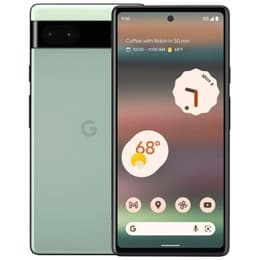
Google Pixel 6A
Google Pixel 6A
Starting at

Refurbished price:143.00

Versus €459.00 new

See options
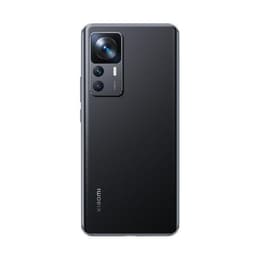
Xiaomi 12T
Xiaomi 12T
Starting at

Refurbished price:138.00

Versus €649.00 new

See options

Ratings

The Google Pixel 6a, released in July 2022, and the Xiaomi 12T, launched in October 2022, are both Android smartphones that offer distinct approaches to mobile technology. While the Pixel 6a emphasizes a streamlined software experience and computational photography, the Xiaomi 12T focuses on a high-refresh-rate display and rapid charging capabilities.

Scores

Durability

When considering the long-term usability of these devices, their release timelines and software support policies are key factors.

  • Software Longevity: The Google Pixel 6a was initially promised three years of OS updates and five years of security updates. However, Google has extended this, and the Pixel 6a is now expected to receive OS and security updates until at least July 2027. The Xiaomi 12T is set to receive three major Android OS updates and four years of security updates, with Android 15 being its final major OS version.
  • Repairability: The Pixel 6a has a decent repairability score, with its battery being relatively easy to replace. Google has also partnered with iFixit to provide official repair parts. The Xiaomi 12T does not have a widely published repairability score, but Xiaomi has offered a free screen repair for six months and one free out-of-warranty repair within the first 12 months of purchase for the 12T series.
  • Practical Lifespan: Both devices offer several years of software support, contributing to a practical lifespan where they remain secure and compatible with modern applications. The Pixel 6a's extended update timeline provides a slight edge in terms of future-proofing.

Year of Release

2022

2022

Compatible with latest Update

Yes

Yes

OS

Android

Android

Foldable

No

No

Performance

Both smartphones deliver capable performance for daily tasks, though they approach it with different hardware configurations.

  • Everyday Responsiveness: The Google Pixel 6a handles demanding apps and multitasking smoothly thanks to its efficient processor, providing a fluid user experience. The Xiaomi 12T also offers fast and smooth performance, capable of handling demanding applications and multitasking without significant slowdowns.
  • Gaming and Heavy Use: For gaming, the Pixel 6a performs well with most titles at medium to high graphics settings, though some users have noted inconsistent performance with demanding games. The Xiaomi 12T is noted for its strong performance in benchmarks and stability during gaming sessions, even with graphically intensive titles.
  • Storage and RAM: The Pixel 6a comes with 6GB of RAM and 128GB of internal storage. The Xiaomi 12T offers 8GB of RAM and is available with either 128GB or 256GB of internal storage, providing more options for users who require additional space.

Memory (GB)

6 GB

8 GB

Screen quality

The visual experience on these devices differs primarily in display technology and refresh rate.

  • Display Technology and Resolution: The Google Pixel 6a features a 6.1-inch OLED display with a resolution of 1080 x 2400 pixels, offering deep blacks and good contrast. The Xiaomi 12T boasts a larger 6.67-inch AMOLED display with a higher resolution of 1220 x 2712 pixels, resulting in a sharper image.
  • Refresh Rate and Smoothness: A key difference is the refresh rate; the Pixel 6a has a standard 60Hz refresh rate. In contrast, the Xiaomi 12T features a 120Hz refresh rate, which provides a noticeably smoother scrolling and animation experience.
  • Brightness and Outdoor Visibility: The Pixel 6a's display brightness is adequate but some users find it not bright enough for comfortable outdoor use in direct sunlight. The Xiaomi 12T offers higher peak brightness, making it easier to view content outdoors, even in sunny conditions.

Resolution

1080 x 2400

1220 x 2712

Screen type

OLED

AMOLED

Audiovisual

Both smartphones offer capable camera systems, with distinct strengths in photography and video recording.

  • Rear Camera System: The Google Pixel 6a features a dual-camera setup with a 12.2 MP main lens and a 12 MP ultrawide lens. It is highly praised for its computational photography, producing detailed images with accurate colors and excellent HDR processing, even in challenging lighting. The Xiaomi 12T comes with a triple-camera system, including a 108 MP main sensor, an 8 MP ultrawide, and a 2 MP macro lens. Its main camera captures vibrant and detailed photos with good dynamic range.
  • Low-Light and Video Performance: The Pixel 6a performs well in low-light conditions, delivering reliable shots. It can record 4K video at 30 or 60 frames per second. The Xiaomi 12T's main camera also performs well in low light with its dedicated night mode, and it can record video at up to 4K@30fps.
  • Front Camera and Audio: The Pixel 6a has an 8 MP front-facing camera, capable of shooting 1080p video. The Xiaomi 12T features a 20 MP front camera, which also records 1080p video. Both phones offer stereo speakers, with the Pixel 6a's speakers noted for clear, voluminous sound, and the Xiaomi 12T's for crisp, punchy audio.

Main camera

12.2 megapixels

108 megapixels

Front camera

8 megapixels

20 megapixels

Miscellaneous

Beyond core performance, several practical elements contribute to the overall user experience of these devices.

  • Connectivity and Ports: Both devices support 5G connectivity and feature USB-C ports for charging and data transfer. The Pixel 6a supports Wi-Fi 6E and Bluetooth 5.2, while the Xiaomi 12T supports Wi-Fi 6 and Bluetooth 5.3.
  • Biometric Security: Both smartphones incorporate under-display fingerprint sensors for secure unlocking. The Pixel 6a does not offer face unlock.
  • Design and Build: The Pixel 6a features a Gorilla Glass 3 front, a plastic back, and an aluminum frame, with an IP67 rating for dust and water resistance. It weighs 178g. The Xiaomi 12T has a Gorilla Glass 5 front, a glass back, and a plastic frame, with an IP53 rating for splash resistance. It is slightly heavier at 202g.

Weight

178 g

220 g

Screen size (in)

6.1

6.67

Network

5G

5G

SIM card

Physical SIM + eSIM

Dual Physical SIM

Carrier compatibility

Unlocked

Unlocked

Connector

USB-C

USB-C

User feedback for the Google Pixel 6a often highlights its exceptional camera performance and the clean, intuitive Android experience as major strengths. Many users appreciate its compact size and the consistent software updates provided by Google. Common criticisms include the 60Hz display, which some find less fluid compared to competitors, and occasional reports of the device warming up during heavy use.

The Xiaomi 12T is frequently praised for its vibrant 120Hz AMOLED display, rapid 120W charging capabilities, and strong overall performance for its segment. Users also commend its high-resolution main camera. Conversely, some users have noted that the ultrawide and macro cameras are less impressive, and there have been occasional mentions of software quirks or inconsistent update delivery.

Users prioritizing a consistent, long-supported software experience and a highly capable camera for still photography may find the Google Pixel 6a well-suited to their needs. Its extended software support timeline also makes it a compelling choice for those seeking longevity. Conversely, users who prioritize a smoother display experience, faster charging, and a larger screen for media consumption or gaming might lean towards the Xiaomi 12T. Both devices offer a robust smartphone experience, and considering a quality-assured refurbished option can be a sustainable choice for either model.


See all articles

Our recent comparisons