

Google Pixel 6A Vs Google Pixel Fold

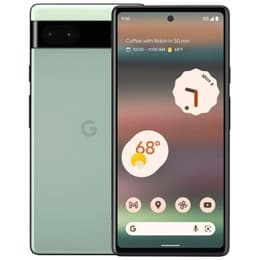
Google Pixel 6A
Google Pixel 6A
Starting at

Refurbished price:144.00

Versus €459.00 new

See options
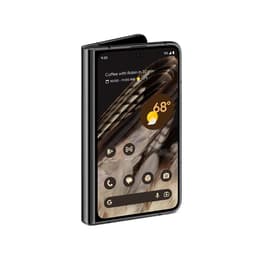
Google Pixel Fold
Google Pixel Fold
Starting at

Refurbished price:454.00

Versus €1,750.29 new

See options

Ratings

The Google Pixel 6A, released in July 2022, is a traditional smartphone offering a compact design and a focus on core Pixel experiences. In contrast, the Google Pixel Fold, launched in June 2023, introduces a foldable form factor, transforming from a standard smartphone into a larger tablet-like display. These devices cater to different user preferences, with the Pixel 6A emphasizing portability and essential features, while the Pixel Fold prioritizes an expansive screen experience and multitasking capabilities, both running on the Android operating system.

Scores

Durability

The longevity of a smartphone is significantly influenced by its software support and physical resilience. Both the Pixel 6A and Pixel Fold benefit from Google's commitment to software updates, though their release timelines affect their remaining support periods.

  • Software Support: The Pixel 6A, released in July 2022, is set to receive Android OS updates until at least July 2025 and security updates until at least July 2027. Google has recently extended its policy, providing five years of OS and security updates from the release date for devices including the Pixel 6A. The Pixel Fold, launched in June 2023, also benefits from this extended policy, receiving five years of OS and security updates, meaning support will continue until at least 2028.
  • Physical Durability: The Pixel 6A features Corning Gorilla Glass 3 for screen protection and an IP67 rating for dust and water resistance. It has demonstrated good physical durability in tests, with a plastic back panel and an aluminum frame. The Pixel Fold, as a foldable device, incorporates a plastic protective layer on its internal display and Gorilla Glass Victus on its cover screen, along with an IPX8 water resistance rating. While foldables inherently present unique durability considerations due to their moving parts, the Pixel Fold features a sturdy hinge.
  • Repairability: The Pixel 6A received a repairability score of 7 out of 10, indicating it is relatively easier to repair, particularly concerning battery replacement, compared to some other Pixel models. Information on the Pixel Fold's specific repairability score is less prominent, though the complexity of foldable designs can sometimes present challenges for repairs.

Year of Release

2022

2023

Compatible with latest Update

Yes

Yes

OS

Android

Android

Foldable

No

Yes

Performance

Performance in both devices is driven by Google's custom-designed processors, offering distinct experiences tailored to their form factors and intended use cases.

  • Processing Power: The Pixel 6A is equipped with the Google Tensor processor, which enables smooth handling of demanding applications and efficient multitasking. The Pixel Fold features the newer Google Tensor G2 processor, providing enhanced performance for more intensive tasks, including advanced image processing and supporting its dual-screen functionality.
  • Memory and Storage: The Pixel 6A comes with 6GB of RAM and 128GB of non-expandable internal storage. The Pixel Fold offers a more robust 12GB of RAM and storage options of 256GB or 512GB, which is beneficial for users who require more space for applications and media, and for seamless transitions between multiple open applications.
  • Battery Performance: The Pixel 6A houses a 4410 mAh battery, generally providing a full day of use for many users, and up to a day and a half with regular usage. The Pixel Fold has a larger 4821 mAh battery, designed to power its dual displays and more powerful components, offering good battery life for a foldable device. The Pixel 6A supports 18W wired charging, while the Pixel Fold supports 30W wired charging and includes wireless charging capabilities.

Memory (GB)

6 GB

12 GB

Screen quality

The display experience is a primary differentiator between these two Pixel devices, with the Pixel Fold offering a unique dual-screen setup.

  • Display Technology and Size: The Pixel 6A features a 6.1-inch OLED display, providing deep blacks and vibrant colors suitable for everyday content consumption. The Pixel Fold offers a dual-screen experience: a 5.8-inch OLED cover display for standard smartphone use and a larger 7.6-inch foldable OLED internal display that expands the viewing area significantly.
  • Resolution and Clarity: The Pixel 6A's 2400 x 1080 (FHD+) resolution results in a pixel density of 429 PPI, ensuring sharp text and images. The Pixel Fold's cover display has a resolution of 2092 x 1080, and its internal display offers 2208 x 1840 pixels, both delivering clear visuals across their respective sizes.
  • Refresh Rate and Brightness: The Pixel 6A has a standard 60Hz refresh rate. The Pixel Fold's cover and internal displays both feature a 120Hz refresh rate, contributing to smoother scrolling and more fluid animations. The Pixel 6A has a peak brightness of 800 nits. The Pixel Fold's cover display can reach up to 1550 nits peak brightness, and its internal display up to 1450 nits, offering excellent visibility in various lighting conditions.

Resolution

1080 x 2400

1840 x 2208

Screen type

OLED

Foldable OLED

Audiovisual

Both Pixel devices leverage Google's renowned computational photography, but they feature different camera hardware configurations.

  • Rear Camera Systems: The Pixel 6A includes a dual-camera setup with a 12.2MP main sensor (f/1.7 with OIS) and a 12MP ultrawide sensor (f/2.2 with a 114° field of view). The Pixel Fold features a more versatile triple-camera system on the rear, comprising a 48MP main sensor (f/1.7 with OIS), a 10.8MP ultrawide sensor (f/2.2), and a 10.8MP telephoto lens (f/3.05) capable of 5x optical zoom.
  • Photography Performance: The Pixel 6A is praised for its excellent photo quality, especially for a device in its category, with strong detail, accurate exposure, and good low-light performance thanks to features like Night Sight. The Pixel Fold also delivers impressive image quality, benefiting from Google's processing, and its telephoto lens provides greater flexibility for zoomed shots.
  • Front Cameras and Video: The Pixel 6A has an 8MP front camera. The Pixel Fold has two front-facing cameras: a 9.5MP camera on the cover display and an 8MP camera above the internal display. Both devices can record video at up to 4K resolution at 60 frames per second, with good stabilization.

Main camera

12.2 megapixels

48 megapixels

Front camera

8 megapixels

8 megapixels

Miscellaneous

Beyond core specifications, several practical elements contribute to the overall user experience and differentiate these two Pixel phones.

  • Connectivity and Ports: Both devices support 5G connectivity, including mmWave and Sub-6GHz bands for the Pixel 6A, and feature modern Wi-Fi standards (Wi-Fi 6E for 6A, Wi-Fi 802.11 ax for Fold) and Bluetooth 5.2. The Pixel 6A uses a USB-C 3.1 port, while the Pixel Fold features a USB-C 3.2 Gen 2 port. The Pixel 6A notably lacks a 3.5mm headphone jack.
  • Biometric Security: The Pixel 6A incorporates an in-display fingerprint sensor for secure unlocking. The Pixel Fold utilizes a side-mounted fingerprint sensor and also supports face recognition.
  • Design and Handling: The Pixel 6A is a more compact and lighter device, weighing 178g with dimensions of 152.2 x 71.8 x 8.9 mm, making it comfortable for one-handed use. The Pixel Fold, due to its foldable nature, is heavier at 283g and has significantly different dimensions: 139.7 x 79.5 x 12.1 mm when folded, and 139.7 x 158.7 x 5.8 mm when unfolded. Its wider cover display aims to provide a more usable experience when closed compared to some other foldables.
  • Build Materials: The Pixel 6A features a plastic back panel and an aluminum frame, with Gorilla Glass 3 protecting the display. The Pixel Fold uses Gorilla Glass Victus for its cover screen and a plastic protective layer for its internal folding display.

Weight

178 g

283 g

Screen size (in)

6.1

7.6

Network

5G

5G

SIM card

Physical SIM + eSIM

Physical SIM + eSIM

Carrier compatibility

Unlocked

Unlocked

Connector

USB-C

USB-C

User feedback for the Google Pixel 6A often highlights its strong camera performance, reliable software experience, and compact size as key advantages. Many users appreciate its ability to deliver a premium Pixel photography experience without the higher cost of flagship models. Common criticisms sometimes point to its 60Hz display and the absence of wireless charging as areas where it falls short compared to more expensive phones. Overall, the Pixel 6A is frequently praised for offering a balanced and capable smartphone experience for its category.

The Google Pixel Fold, on the other hand, is often lauded for its innovative foldable design, providing a large internal screen for enhanced productivity and media consumption. Users frequently commend its camera system, which includes a telephoto lens, and the usability of its wider cover display. Some common concerns revolve around its weight and the optimization of certain apps for the foldable screen. Despite these points, the Pixel Fold is generally seen as a strong entry into the foldable market, offering a distinct user experience.

Users prioritizing a traditional, compact smartphone with excellent camera capabilities and long-term software support may find the Pixel 6A well-suited to their needs. Its robust durability and ease of repair also make it a practical choice. Conversely, individuals seeking a versatile device that can transform from a standard phone into a larger screen for multitasking, content creation, or immersive media will likely lean towards the Pixel Fold. Its advanced processor, higher RAM, and comprehensive camera system cater to more demanding usage scenarios. Both devices offer the opportunity to explore quality-assured refurbished options, providing a sustainable choice for consumers.


See all articles

Our recent comparisons