

Compare models

Galaxy Z Fold7 Vs Google Pixel 9

  • 1-year minimum warranty
  • Free delivery on all orders
  • Free 30-day returns
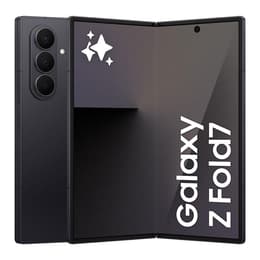
Galaxy Z Fold7
Starting at

Refurbished price:923.00

Versus €2,236.37 new

See options
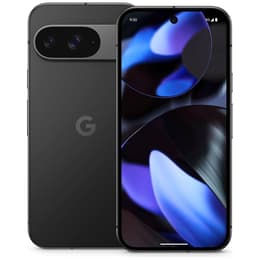
Google Pixel 9
Starting at

Refurbished price:420.00

Versus €1,066.71 new

See options

Differences at a glance

The Samsung Galaxy Z Fold 7 (2025) and the Google Pixel 9 (2024) represent two distinct visions of modern smartphone design, contrasting a book-style folding screen device with a traditional candy bar flagship. While the Galaxy Z Fold 7 provides an expansive dual-screen workspace that transforms into a tablet-sized canvas, the Google Pixel 9 focuses on a streamlined, pocket-friendly form factor backed by integrated artificial intelligence tools. Running on Android operating systems with manufacturer interfaces, both models target users seeking modern computing experiences but approach daily usability through entirely different physical formats.

Available Models

Colour

Storage (GB)

Scores

Durability

Both devices are engineered for long-term daily usage, though their physical construction introduces unique longevity considerations for daily carriers.

  • Software support lifecycle: The Galaxy Z Fold 7 benefits from a prolonged update commitment extending across multiple years of system upgrades, whereas the Google Pixel 9 offers a comparable multi-year software maintenance window aligned with its release year.
  • Physical durability: The Google Pixel 9 features a rigid unibody frame and standardized glass protection suited to conventional drops, while the Galaxy Z Fold 7 utilizes a complex folding hinge mechanism that requires careful handling despite modern reinforcement improvements.
  • Repairability expectations: Traditional slab smartphones like the Pixel 9 generally present simpler pathways for component maintenance, whereas foldable structures like the Z Fold 7 involve specialized internal layers that can complicate service procedures.

Year of Release

2025

2024

Compatible with latest Update

Yes

Yes

OS

Android

Android

Foldable

Yes

No

Performance

Underneath their exteriors, both smartphones manage demanding apps, routine multitasking, and background processes efficiently through their respective hardware configurations.

  • Multitasking and memory: The Galaxy Z Fold 7 includes generous RAM configurations designed to support simultaneous multi-window layouts, while the Pixel 9 handles daily split-screen tasks and background app switching smoothly with its optimized memory allocation.
  • Battery behavior: The Pixel 9 delivers reliable power distribution that comfortably lasts through a full day of standard use, whereas the Z Fold 7 balances energy across two separate displays, meaning heavy utilization of the large inner screen requires more frequent replenishment.
  • System responsiveness: Both devices load heavy applications rapidly and maintain fluid transition speeds, ensuring seamless navigation whether browsing the web, streaming media, or playing graphics-intensive games.

Screen quality

Display technology constitutes one of the primary distinctions between these two choices, altering how media and documents are consumed.

  • Display versatility: The Galaxy Z Fold 7 offers a compact outer screen alongside an expansive 8-inch foldable interior panel that opens up workspace dimensions, whereas the Pixel 9 utilizes a single, vibrant 6.3-inch OLED panel optimized for single-handed navigation.
  • Outdoor visibility: Both models incorporate high peak brightness parameters that maintain clear legibility and color accuracy under direct sunlight or bright outdoor environments.
  • Visual smoothness: Dynamic refresh rate technology scales up to 120Hz on both devices, providing fluid scrolling through web pages and smooth animation rendering during motion-heavy tasks.

Resolution

1968x2184

1080 x 2424

Audiovisual

Imaging hardware and computational software work in tandem to capture detailed photographs and stable video recordings across both product lines.

  • Sensor capabilities: The Galaxy Z Fold 7 employs a high-resolution main sensor alongside versatile secondary lenses, while the Pixel 9 relies on its dual-camera setup paired with advanced computational photography algorithms to balance exposure and color.
  • Low-light performance: Both units process nighttime and dimly lit scenes effectively, reducing digital noise and preserving shadow detail without requiring manual intervention.
  • Media consumption and audio: Stereo speaker output delivers clear dialogue and balanced sound profiles for movies and calls, supported by sensitive microphone arrays that isolate voice input effectively during recordings.

Miscellaneous

Practical daily usability elements, physical dimensions, and connectivity standards shape how each device fits into travel and work routines.

  • Handling and footprint: The Pixel 9 provides a traditional, lightweight profile weighing 198 grams, whereas the Z Fold 7 presents a slimmer folded profile that opens into a heavier 215-gram tablet form factor.
  • Connectivity and ports: Both smartphones support modern 5G cellular networks, rapid Wi-Fi standards, Bluetooth accessory pairing, and USB-C cable interfaces for data transfer and charging.
  • Biometric security: Fast authentication is handled via responsive fingerprint sensors integrated into the hardware layout, alongside secure facial recognition options.

Weight

215 g

198 g

Screen size (in)

8.0

6.3

Network

5G

5G

SIM card

Dual Physical SIM + eSIM

Physical SIM + eSIM

Carrier compatibility

Unlocked

Unlocked

Connector

USB-C (USB 3)

USB-C

What the community thinks

Community discussions and user feedback indicate that buyers appreciate the Google Pixel 9 for its comfortable single-handed ergonomics, reliable daily battery execution, and intuitive software features. Conversely, users frequently praise the Galaxy Z Fold 7 for transforming productivity on the go through its expansive tablet-sized workspace, though some community members note that foldable maintenance requires mindful handling.

Users prioritizing a pocket-friendly device with straightforward ergonomics and dependable everyday operation may prefer the Google Pixel 9. Meanwhile, users prioritizing maximum screen real estate for multitasking, document editing, and immersive media consumption will lean toward the Galaxy Z Fold 7. Evaluating these core physical layouts helps determine which device matches specific daily workflows. For shoppers interested in a sustainable choice, a quality-assured refurbished option provides an eco-friendly alternative to purchasing newly manufactured hardware.