

Galaxy S23 Vs Google Pixel 9

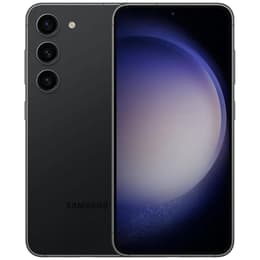
Galaxy S23
Galaxy S23
Starting at

Refurbished price:240.00

Versus €959.00 new

See options
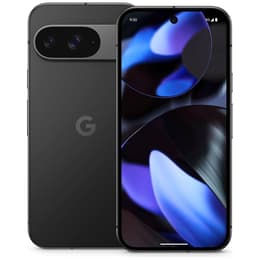
Google Pixel 9
Google Pixel 9
Starting at

Refurbished price:376.00

Versus €1,066.71 new

See options

Ratings

The Samsung Galaxy S23, released in February 2023, and the Google Pixel 9, launched in August 2024, are both prominent Android smartphones. While the Galaxy S23 offers a refined user experience with a focus on hardware versatility, the Pixel 9 emphasizes a clean, AI-driven software approach with Google's latest innovations. Both devices run on the Android operating system, but they cater to slightly different user preferences through their distinct design philosophies and feature sets.

Scores

Durability

When considering the long-term usability of these devices, their release timelines and software support policies are key differentiators.

  • Release Timeline and Software Support: The Google Pixel 9, being a newer device from August 2024, benefits from Google's extended update policy, promising seven years of major Android OS updates and security patches. This means it will receive software support until at least August 2031. [1, 6, 11, 16, 24, 35] In contrast, the Samsung Galaxy S23, released in February 2023, typically receives four major OS updates and five years of security updates, with support expected to conclude around 2028. [12, 17, 20, 25, 29]
  • Practical Lifespan: Both phones are constructed with durable materials, including Gorilla Glass Victus 2 on the front and back, and aluminum frames, offering good resistance to everyday wear and tear. [4, 7, 10, 24] The Pixel 9's significantly longer software support means it will remain current with the latest Android features and security for a more extended period, potentially extending its practical lifespan for users who prioritize up-to-date software. [1, 6, 11, 16, 24, 35]
  • Repairability: The Samsung Galaxy S23 series generally offers moderate repairability, with some components like the battery designed for easier replacement due to pull tabs. [4, 9, 13] The Google Pixel 9 has a provisional repairability score of 5 out of 10 from iFixit, noting that while Google provides parts and guides, the battery is secured with strong adhesive, making removal challenging. [18, 26]

Year of Release

2023

2024

Compatible with latest Update

Yes

Yes

OS

Android

Android

Foldable

No

No

Performance

Both smartphones are designed to handle daily tasks efficiently, though their underlying architectures contribute to different performance characteristics.

  • Everyday Responsiveness: The Galaxy S23, powered by an optimized current-generation processor, delivers consistently smooth performance across applications, from web browsing and social media to more demanding games. [5, 19, 31, 34] The Pixel 9, featuring Google's current-generation Tensor processor, also provides a fluid user experience for daily tasks and multitasking, with user reviews noting smooth performance despite some benchmarks showing weaker results compared to rivals. [3, 7, 15, 24, 35]
  • Multitasking and Storage: The Pixel 9 typically comes with 12GB of RAM, offering ample capacity for running multiple applications simultaneously and switching between them without noticeable slowdowns. [3, 21, 24, 27] The Galaxy S23 is equipped with 8GB of RAM, which is sufficient for most users' multitasking needs. [5, 27, 28] Both devices offer storage options starting from 128GB, with higher capacities available. [3, 5, 21, 24, 27, 28, 34]
  • Battery Behavior: The Pixel 9 features a larger 4700 mAh battery, and user experiences indicate a significant improvement in battery life, often lasting a full day or more even with heavy use. [15, 21, 24, 27, 32, 35] The Galaxy S23 has a 3900 mAh battery, providing good battery life for moderate users, though heavy usage might require more frequent charging. [5, 27, 33]

Memory (GB)

8 GB

12 GB

Screen quality

The visual experience on both devices is excellent, with each offering distinct display technologies and characteristics.

  • Display Technology and Clarity: The Samsung Galaxy S23 features a 6.1-inch Dynamic AMOLED 2X display, known for its vibrant colors, deep blacks, and high contrast, providing a sharp viewing experience with a resolution of 2340x1080 pixels. [5, 19, 22, 34, 36] The Google Pixel 9 utilizes a 6.3-inch OLED panel, referred to as an Actua display, which also delivers excellent color accuracy and contrast at a 2400x1080 pixel resolution. [10, 21, 22, 24]
  • Brightness and Smoothness: The Galaxy S23 offers a peak brightness of up to 1750 nits, ensuring good visibility even in bright outdoor conditions. [19, 36] The Pixel 9's display can reach even higher peak brightness levels, up to 2700 nits, making it highly visible in direct sunlight. [24] Both devices feature an adaptive refresh rate of up to 120Hz, providing smooth scrolling and responsive interactions, with the S23 adapting between 48-120Hz and the Pixel 9 between 60-120Hz. [10, 19, 21, 24, 34, 36]
  • Screen Size and Protection: The Pixel 9 offers a slightly larger screen at 6.3 inches compared to the S23's 6.1 inches, which can impact the overall viewing experience for media consumption or productivity. [22, 24, 27] Both displays are protected by Corning Gorilla Glass Victus 2, offering enhanced durability against scratches and drops. [4, 10, 21, 24]

Resolution

1080 x 2340

1080 x 2424

Screen type

Dynamic AMOLED 2X

OLED

Audiovisual

Both the Galaxy S23 and Pixel 9 offer high-quality camera systems, each with its own strengths in image processing and features.

  • Camera System Versatility: The Samsung Galaxy S23 features a versatile triple-camera setup on the rear, including a 50MP main sensor, a 12MP ultrawide lens, and a 10MP telephoto lens with 3x optical zoom. [22, 28, 34] This configuration provides flexibility for various shooting scenarios, from wide landscapes to distant subjects. The Google Pixel 9, on the other hand, comes with a dual-camera system, comprising a 50MP main sensor and a 48MP ultrawide lens with a 123-degree field of view, but it lacks a dedicated telephoto lens. [10, 15, 21, 22, 24, 32, 37]
  • Photography Performance: The Pixel 9 is known for its computational photography, consistently delivering sharp, well-exposed, and detailed images, particularly excelling in point-and-shoot scenarios and low-light conditions with its Night Sight feature. [15, 23, 32, 35, 37] The Galaxy S23 also produces high-quality photos with vibrant colors and good detail, and its dedicated telephoto lens offers superior optical zoom capabilities. [14, 28, 31, 33] User reviews suggest the S23's night mode is also very effective. [33]
  • Video and Front Camera: For video recording, the Galaxy S23 can capture up to 8K resolution at 30 frames per second, offering high-fidelity video. [28] The Pixel 9 records 4K video at up to 60 frames per second. [10] Both phones offer good video stabilization. [14, 31] The Pixel 9 features a 10.5MP front camera with autofocus, which can be beneficial for clear selfies and video calls. [10, 21, 24, 37] The Galaxy S23 has a 12MP front camera, but without autofocus. [22, 34]

Main camera

50 megapixels

50 megapixels

Front camera

12 megapixels

10.5 megapixels

Miscellaneous

Beyond their core functionalities, several practical elements differentiate these two smartphones in daily use.

  • Connectivity and Ports: Both devices support 5G connectivity for fast mobile data and include modern Wi-Fi standards. The Google Pixel 9 supports the newer Wi-Fi 7 standard, offering potential future-proofing for faster wireless networking, while the Samsung Galaxy S23 supports Wi-Fi 6E. [10, 22, 34] Both phones feature a USB-C port for charging and data transfer. [10]
  • Biometric Security and Sensors: The Galaxy S23 utilizes an ultrasonic in-display fingerprint sensor, which is generally regarded for its speed and reliability. [22, 33] The Pixel 9 typically employs an optical in-display fingerprint sensor, which is also secure and responsive. [22, 37] Both devices include essential sensors like accelerometers, gyroscopes, and proximity sensors. [10, 34]
  • Design and Handling: The Galaxy S23 is a more compact device, measuring 146.3 x 70.9 x 7.6 mm and weighing 168g, making it easier for one-handed use. [27] The Pixel 9 is slightly larger and heavier at 152.8 x 72.0 x 8.5 mm and 198g. [10, 21, 27] Both phones feature an IP68 rating for dust and water resistance, providing protection against environmental elements. [4, 10, 21] The Pixel 9's frame is made from 100% recycled aluminum, aligning with sustainability efforts. [7, 24]

Weight

167 g

198 g

Screen size (in)

6.1

6.3

Network

5G

5G

SIM card

Physical SIM + eSIM

Physical SIM + eSIM

Carrier compatibility

Unlocked

Unlocked

The Samsung Galaxy S23 and Google Pixel 9 each present compelling options within the Android smartphone market, appealing to different user priorities. User sentiment for the Galaxy S23 often praises its consistent performance, versatile camera system with a dedicated telephoto lens, and compact design. [31, 33, 40] Some common criticisms might include its battery life for very heavy users compared to larger phones, and its software update policy being shorter than some competitors. [33, 40]

The Google Pixel 9 receives acclaim for its exceptional computational photography, significantly improved battery life compared to previous Pixel generations, and its commitment to seven years of software updates. [15, 23, 32, 35, 37] Some users might note the absence of a dedicated telephoto lens on the base model as a limitation, and some benchmark results might not match the highest-performing rivals, though real-world performance remains smooth. [15, 35, 37]

Users prioritizing a compact form factor, a dedicated telephoto camera for optical zoom, and a highly refined, feature-rich software experience may find the Samsung Galaxy S23 well-suited to their needs. Conversely, users who value the longest possible software support, a clean, AI-enhanced Android experience, and a camera system that excels in point-and-shoot photography, particularly in challenging conditions, may lean toward the Google Pixel 9. Both devices are available as quality-assured refurbished options, offering an eco-friendly alternative for consumers.


See all articles

Our recent comparisons