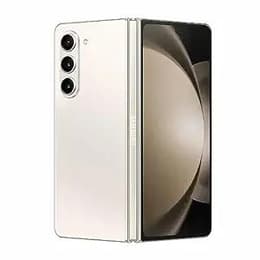
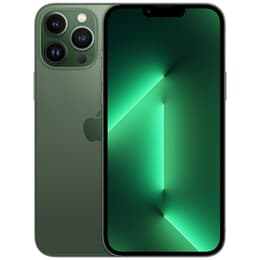


Galaxy Z Fold5 Vs iPhone 13 Pro

Galaxy Z Fold5
Galaxy Z Fold5
Starting at

Refurbished price:568.00

Versus €1,899.00 new

See options
iPhone 13 Pro
iPhone 13 Pro
Starting at

Refurbished price:313.00

Versus €1,149.00 new

See options

Ratings

The Samsung Galaxy Z Fold5, released in August 2023, and the iPhone 13 Pro, launched in September 2021, represent distinct approaches to high-end smartphone design. While the Galaxy Z Fold5 offers a unique foldable form factor that transforms from a traditional smartphone into a larger tablet-like display, the iPhone 13 Pro maintains a conventional slate design with a focus on refined performance and camera capabilities. These devices operate on different ecosystems, with the Z Fold5 running Android and the iPhone 13 Pro powered by iOS, influencing their user experience and software integration.

Scores

Durability

When considering the long-term usability of these devices, their release timelines and software support are key factors.

  • Release Timeline: The iPhone 13 Pro was released in September 2021 and was discontinued in September 2022, making it an older model in the market. The Galaxy Z Fold5, released in August 2023, is a more recent device.
  • OS Support: Apple typically provides iOS updates for 5-6 years, suggesting the iPhone 13 Pro will receive updates for a few more years from its release. The Galaxy Z Fold5, being a newer Android device, is expected to receive several years of major Android OS and security updates, potentially extending its practical software lifespan further into the future compared to the iPhone 13 Pro.
  • Repairability: The iPhone 13 Pro received a repairability score of 5 out of 10 from iFixit, with challenges noted for third-party repairs due to software limitations and varied screw types. Foldable phones like the Galaxy Z Fold5 are inherently more complex due to their intricate hinge mechanisms and dual-screen design, which can present unique challenges for repair.

Year of Release

2023

2021

Compatible with latest Update

Yes

Yes

OS

Android

iOS

Foldable

Yes

No

Performance

Both devices offer robust performance for demanding tasks, though their underlying architectures differ.

  • Processor Capabilities: The Galaxy Z Fold5 is equipped with a current-generation processor designed for high performance, allowing it to handle intensive applications, complex multitasking across its multiple screens, and graphic-heavy gaming smoothly. The iPhone 13 Pro features a powerful chip that delivers responsive performance for everyday use, demanding apps, and gaming, ensuring a fluid user experience.
  • Multitasking and Responsiveness: With 12 GB of RAM, the Galaxy Z Fold5 is well-suited for extensive multitasking, especially when utilizing its large inner display for multiple applications simultaneously. The iPhone 13 Pro, with 6 GB of RAM, provides efficient multitasking within the iOS environment, known for its optimized resource management.
  • Battery Behavior: The Galaxy Z Fold5, despite its dual-screen setup, generally offers good battery life, with many users reporting it can last a full day of moderate to heavy use, sometimes extending to a day and a half. The iPhone 13 Pro also delivers impressive battery endurance, with users frequently noting it comfortably lasts through a full day, even with intensive usage.

Memory (GB)

12 GB

6 GB

Screen quality

The display experience on these two smartphones presents a fundamental difference in form and function.

  • Display Technology and Size: The Galaxy Z Fold5 features a unique foldable design with a 7.6-inch Dynamic AMOLED 2X main display and a 6.2-inch Dynamic AMOLED 2X cover display, both offering vibrant colors and deep blacks. The iPhone 13 Pro has a 6.1-inch Super Retina XDR OLED display, known for its excellent color accuracy and contrast.
  • Resolution and Clarity: The Z Fold5's main display has a resolution of 2176 x 1812 pixels, providing a sharp viewing experience on its larger canvas, while its cover screen offers 904 x 2316 pixels. The iPhone 13 Pro's display boasts a 2532 x 1170 pixel resolution at 460 pixels per inch, resulting in very clear and detailed visuals.
  • Refresh Rate and Brightness: Both devices feature adaptive refresh rates up to 120Hz, providing smooth scrolling and fluid animations. The Z Fold5's displays offer high brightness levels suitable for outdoor visibility. The iPhone 13 Pro's display reaches up to 1000 nits typical brightness and 1200 nits peak for HDR content, ensuring excellent visibility even in bright conditions.

Resolution

1812 x 2176

1170 x 2532

Screen type

Foldable Dynamic AMOLED 2X

Super Retina XDR OLED

Audiovisual

Both smartphones offer advanced camera systems designed to capture high-quality photos and videos, though with some differences in their configurations and capabilities.

  • Rear Camera Systems: The Galaxy Z Fold5 features a versatile triple-camera setup including a 50 MP wide lens, a 12 MP ultrawide lens, and a 10 MP telephoto lens with 3x optical zoom. The iPhone 13 Pro also has a triple 12 MP camera system, comprising a wide, ultrawide, and a telephoto lens with 3x optical zoom, along with a LiDAR scanner for enhanced depth sensing.
  • Photography Performance: The Z Fold5 delivers good color reproduction and detail in well-lit conditions, with its main camera performing well in low light. The iPhone 13 Pro is praised for its excellent image quality, particularly its low-light performance, improved ultrawide shots, and a dedicated macro mode for close-up photography.
  • Video Recording and Front Cameras: The Z Fold5 can record video up to 8K resolution at 30 frames per second and 4K at 60 frames per second, and includes a 10 MP cover screen selfie camera and a 4 MP under-display camera for video calls. The iPhone 13 Pro offers Cinematic mode for video with shallow depth of field, HDR video recording with Dolby Vision up to 4K at 60 frames per second, and a 12 MP TrueDepth front camera.

Main camera

50 megapixels

12 megapixels

Front camera

4 megapixels

12 megapixels

Miscellaneous

Beyond core performance, several practical elements contribute to the overall user experience of these devices.

  • Connectivity and Ports: Both devices support 5G connectivity for fast mobile data speeds. The Galaxy Z Fold5 utilizes a USB-C port for charging and data transfer, and supports Wi-Fi 6E and Bluetooth 5.3. The iPhone 13 Pro features a Lightning port and supports Wi-Fi 6 and Bluetooth 5.0.
  • Biometric Security: The Z Fold5 incorporates a side-mounted fingerprint sensor for secure unlocking and authentication. The iPhone 13 Pro relies on Face ID, Apple's facial recognition system, for biometric security.
  • Build Materials and Handling: The Galaxy Z Fold5 has a refined, lighter design compared to its predecessors, with a re-engineered hinge that allows it to fold flat. The iPhone 13 Pro features a Ceramic Shield front cover and a surgical-grade stainless steel band, offering a durable and premium feel. The Z Fold5 is heavier at 253 grams compared to the iPhone 13 Pro's 204 grams.

Weight

253 g

203 g

Screen size (in)

7.6

6.1

Network

5G

5G

SIM card

Physical SIM + eSIM

Physical SIM + eSIM

Carrier compatibility

Unlocked

Unlocked

Connector

USB-C

Lightning

User sentiment for the Galaxy Z Fold5 often highlights its innovative foldable design, which provides a versatile experience for multitasking and media consumption. Users appreciate the larger screen real estate for productivity and entertainment, and the improved hinge design is a common praise point. Some criticisms revolve around its camera system, which, while capable, may not always match the absolute top-tier performance of some traditional flagship phones, and its overall bulk when folded.

The iPhone 13 Pro is frequently lauded for its exceptional camera capabilities, particularly its low-light performance and the introduction of features like Cinematic mode and macro photography. Its display quality and significantly improved battery life compared to previous iPhone models also receive consistent positive feedback. A recurring concern for the iPhone 13 Pro, however, is its repairability, with some third-party repairs being complicated by software restrictions.

Users prioritizing a large, adaptable screen for productivity, content creation, or immersive media viewing may find the Galaxy Z Fold5 well-suited to their needs. Its unique form factor offers a distinct advantage for those who desire both a phone and a tablet experience in one device. Conversely, users who value a highly refined traditional smartphone experience with a strong emphasis on camera performance, consistent software updates, and a robust ecosystem might lean towards the iPhone 13 Pro. Both devices offer compelling features, and choosing between them often comes down to whether a foldable design or a traditional, highly polished smartphone experience aligns better with individual preferences. For those considering either of these powerful devices, exploring quality-assured refurbished options can be an eco-friendly alternative.


See all articles

Our recent comparisons






