

Compare models
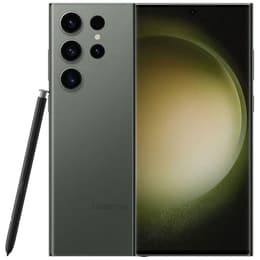
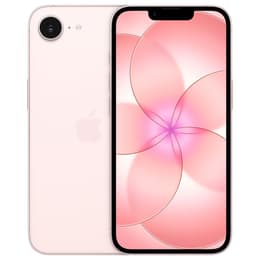
Galaxy S23 Ultra Vs iPhone 17e
- 1-year minimum warranty
- Free delivery on all orders
- Free 30-day returns
Differences at a glance
The Samsung Galaxy S23 Ultra (2023) and the Apple iPhone 17e (2026) represent two distinct approaches to high-end mobile technology, balancing expansive productivity tools with streamlined everyday efficiency. While the Galaxy S23 Ultra operates on Android with an emphasis on versatile multi-lens photography and integrated stylus navigation, the iPhone 17e runs on iOS, prioritizing streamlined performance, software longevity, and a compact hand-held layout. These core operating system differences and hardware layouts shape distinct user experiences across both devices.
Available Models
Colour
Storage
Scores
Durability
When evaluating structural longevity and software support, both devices offer robust frameworks designed to endure years of daily use, though their release timelines and update cadences differ significantly.
- Software support lifecycle: The iPhone 17e benefits from an extended software update window due to its newer release year, whereas the Galaxy S23 Ultra relies on a structured multi-year operating system update commitment from its launch timeline.
- Repairability and build endurance: Both models incorporate high-strength glass and certified dust and water resistance ratings, though variations in internal component modularity influence local repair turnaround times.
- Expected practical lifespan: Users can anticipate several years of reliable operation from either device, with hardware endurance remaining high under normal daily conditions.
Year of Release
2023
2026
OS
Android
iOS
Foldable
No
No
Performance
Handling demanding tasks, multitasking routines, and everyday application loading relies on advanced internal processors and ample memory configurations tailored to each ecosystem.
- App responsiveness and multitasking: Both models handle heavy workloads, demanding applications, and rapid switching between multiple open programs smoothly without noticeable stutter.
- Battery behavior: The Galaxy S23 Ultra features a larger physical capacity to sustain its expansive screen, while the iPhone 17e leverages processor energy efficiency to maintain reliable power throughout a standard day of mixed usage.
- Storage configurations: Generous internal storage tiers accommodate large media libraries, extensive application collections, and offline file storage without requiring external expansion cards.
Screen quality
Visual immersion and panel clarity differ notably in physical dimensions and technology implementation, catering to contrasting user viewing preferences.
- Display technology: The Galaxy S23 Ultra utilizes an expansive curved AMOLED panel known for deep contrast and vibrant color reproduction, while the iPhone 17e employs a flat OLED Super Retina screen optimized for sharp everyday text rendering.
- Outdoor legibility: High peak brightness capabilities on both screens ensure content remains clearly visible when used under direct sunlight or bright ambient lighting.
- Refresh rate smoothness: Fluid motion handling supports seamless scrolling through web pages and smooth animation transitions during regular system navigation.
Resolution
1440 x 3088
2532 x 1170
Audiovisual
Capturing memories and recording video involve divergent multi-lens arrays and software processing pipelines tailored to distinct creative styles.
- Photography versatility: The Galaxy S23 Ultra provides a versatile multi-lens system including dedicated long-range telephoto options for distant subjects, whereas the iPhone 17e focuses on a streamlined single-lens high-resolution setup for balanced everyday snapshots.
- Video recording capability: Both devices deliver stable, high-resolution video footage complete with advanced stabilization features to minimize hand shake during movement.
- Audio and media output: Built-in stereo speaker systems provide clear sound dispersion for hands-free calls, casual video viewing, and media playback.
Front camera
12 megapixels
12 megapixels
Miscellaneous
Physical handling, connectivity standards, and daily convenience features define the tactile and practical aspects of interacting with each device.
- Build and dimensions: The Galaxy S23 Ultra offers a larger, heavier footprint designed for two-handed productivity, while the iPhone 17e features a lighter, more compact body suited for single-handed use.
- Connectivity and ports: Modern 5G capabilities, fast wireless standards, and reversible charging ports ensure rapid data transfers and flexible accessory compatibility.
- Authentication sensors: Secure biometric entry is handled via responsive facial recognition on the Apple device and an integrated in-screen fingerprint scanner on the Samsung model.
Weight
233 g
169 g
Screen size (in)
6.8
6.1
Network
5G
5G
SIM card
Dual Physical SIM + eSIM
eSIM
Carrier compatibility
Unlocked
Unlocked
Connector
USB-C
USB-C (USB 2)
What the community thinks
Community discussions and user feedback indicate that the Galaxy S23 Ultra receives consistent praise for its expansive display canvas, integrated productivity stylus, and versatile multi-lens zoom capabilities, though some users note its large physical footprint can feel heavy during prolonged single-handed use. Conversely, users frequently highlight the iPhone 17e for its streamlined operating system, reliable battery efficiency, and comfortable pocketable form factor, while pointing out that its simplified camera array lacks optical zoom versatility.
Users prioritizing expansive screen space, multi-lens photography versatility, and pen-based note-taking will find the Galaxy S23 Ultra well-suited to their workflow. Meanwhile, users prioritizing a compact, lightweight layout, simplified software integration, and long-term operating system updates may lean toward the iPhone 17e. Choosing a quality-assured refurbished option provides an eco-friendly way to access either of these capable devices while supporting sustainable technology consumption.









