

Galaxy Z Fold4 Vs Xiaomi 14

Galaxy Z Fold4
Galaxy Z Fold4
Starting at

Refurbished price:470.00

Versus €1,799.00 new

See options
Xiaomi 14
Xiaomi 14
Starting at

Refurbished price:384.00

Versus €1,099.00 new

See options

Ratings

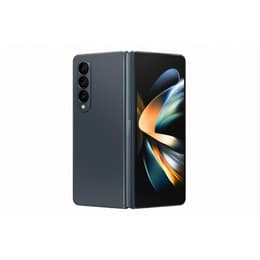
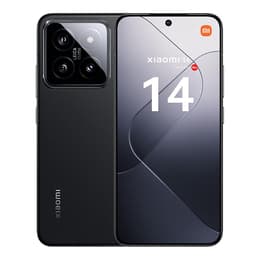
The Samsung Galaxy Z Fold4, released in August 2022, and the Xiaomi 14, launched globally in early 2024, represent distinct approaches to modern smartphone design. The Z Fold4 offers a unique foldable form factor that transforms from a traditional smartphone into a larger tablet-like display, while the Xiaomi 14 presents a compact, high-performance traditional smartphone experience. Both devices operate on the Android platform, but they cater to different user preferences regarding screen utility and overall portability.

Scores

Durability

When considering the long-term usability of these devices, their release timelines and software support policies are key factors.

  • Release Timeline: The Samsung Galaxy Z Fold4 was released in August 2022, making it an older model compared to the Xiaomi 14, which saw its global launch in early 2024. This difference in release dates means the Xiaomi 14 benefits from more recent hardware and a longer potential support window from its launch.
  • Software Longevity: Samsung has committed to providing four major Android OS updates and five years of security updates for the Galaxy Z Fold4. The Xiaomi 14 also offers a similar commitment with four years of OS updates and five years of security updates. This indicates both devices are designed for extended software support, though the Xiaomi 14, being newer, will receive these updates for a longer duration into the future.
  • Durability Features: The Galaxy Z Fold4 features an Armor Aluminum frame and an IPX8 water resistance rating, indicating protection against submersion in water. The Xiaomi 14 boasts an IP68 rating for both water and dust resistance, along with Gorilla Glass Victus 2 for screen protection. The foldable nature of the Z Fold4 introduces a mechanical hinge, which is a point of consideration for long-term durability, though Samsung has refined its design with a flatter hinge.

Year of Release

2022

2023

Compatible with latest Update

Yes

Yes

OS

Android

Android

Foldable

Yes

No

Performance

Both smartphones are equipped with powerful internal components designed for demanding tasks, though they feature different generations of processors.

  • Processing Power: The Galaxy Z Fold4 is powered by a processor from the Snapdragon 8+ Gen 1 series. This allows it to handle demanding applications, multitasking, and graphically intensive games smoothly. The Xiaomi 14, being a newer device, incorporates a more recent processor from the Snapdragon 8 Gen 3 series. This newer generation processor provides enhanced performance and efficiency, contributing to a very responsive user experience across various applications and gaming scenarios.
  • Multitasking and Storage: The Galaxy Z Fold4 comes with 12GB of RAM, which facilitates efficient multitasking across its large foldable display. Storage options range from 256GB to 1TB, without expandable storage. The Xiaomi 14 offers configurations with 8GB, 12GB, or 16GB of RAM, providing ample capacity for running multiple applications simultaneously. It also provides fast UFS 4.0 storage options up to 1TB.
  • Battery Behavior: The Galaxy Z Fold4 is equipped with a 4400 mAh battery. Its battery life is generally considered respectable, especially given the power requirements of its dual-screen setup. The Xiaomi 14 features a 4610 mAh battery. Users report that its battery can last through a full day of typical usage, and sometimes even longer for lighter use, benefiting from efficient power management and fast charging capabilities.

Memory (GB)

12 GB

16 GB

Screen quality

The display experience is a primary differentiator between these two devices, with one offering a unique foldable design and the other a high-quality traditional panel.

  • Display Technology and Size: The Samsung Galaxy Z Fold4 features two Dynamic AMOLED 2X displays: a 6.2-inch cover screen and a large 7.6-inch main foldable screen when unfolded. This allows for a versatile experience, functioning as a compact smartphone or a small tablet. The Xiaomi 14 features a single 6.36-inch LTPO OLED display. This traditional form factor offers a more conventional handheld experience.
  • Resolution and Clarity: The Z Fold4's main display has a resolution of 2176 x 1812 pixels, while its cover screen is 2316 x 904 pixels. The Xiaomi 14 offers a sharp 2670 x 1200 pixel resolution on its display, resulting in a pixel density of approximately 460 ppi. Both devices provide clear and vibrant visuals.
  • Brightness and Refresh Rate: Both phones offer adaptive refresh rates for smooth scrolling and responsiveness. The Z Fold4's main display adapts from 1Hz to 120Hz, and its cover screen from 48Hz to 120Hz. The Xiaomi 14's LTPO OLED panel also features an adaptive refresh rate from 1Hz to 120Hz, optimizing for both smoothness and power efficiency. The Xiaomi 14 boasts a high peak brightness of 3000 nits, ensuring excellent visibility even in bright outdoor conditions. The Z Fold4 also offers strong brightness, with an ultra-bright outdoor mode for visibility in direct sunlight.

Resolution

1812 x 2176

1200 x 2670

Screen type

Foldable Dynamic AMOLED 2X

LTPO OLED

Audiovisual

Both smartphones offer advanced camera systems, but they differ in their configurations and photographic philosophies.

  • Rear Camera Systems: The Samsung Galaxy Z Fold4 features a triple rear camera setup, including a 50MP wide-angle lens with optical image stabilization (OIS), a 12MP ultrawide lens, and a 10MP telephoto lens with 3x optical zoom. This system is noted for producing detailed and vibrant images, with improvements in low-light performance compared to its predecessor. The Xiaomi 14 also comes with a triple 50MP rear camera system, co-engineered with Leica. This includes a 50MP main sensor with OIS and a wide aperture, a 50MP ultrawide lens, and a 50MP telephoto lens offering 3.2x optical zoom. This system is praised for its dynamic range, color accuracy, and strong performance in various lighting conditions.
  • Front and Specialty Cameras: The Z Fold4 has a 10MP camera on its cover display and a 4MP under-display camera on the main screen, primarily for video calls. The Xiaomi 14 features a 32MP front-facing camera capable of capturing sharp selfies and high-quality video calls.
  • Video Recording: Both devices are capable of recording video at up to 8K resolution at 24 frames per second. The Xiaomi 14's front camera can also record in 4K at 60 frames per second.
  • Audio Experience: Both phones are equipped with stereo speakers for an immersive media consumption experience. The Xiaomi 14 also incorporates a 4-microphone array for clear audio capture.

Main camera

50 megapixels

50 megapixels

Front camera

4 megapixels

32 megapixels

Miscellaneous

Beyond core performance and display, several practical features contribute to the overall user experience of these smartphones.

  • Connectivity and Ports: Both devices support 5G connectivity for fast mobile data speeds. The Galaxy Z Fold4 supports Wi-Fi 6E and Bluetooth 5.2, while the Xiaomi 14 supports the newer Wi-Fi 7 (market dependent) and Bluetooth 5.4. Both utilize a USB-C port for charging and data transfer, with the Z Fold4 featuring USB-C 3.2 and the Xiaomi 14 featuring USB-C 3.2 Gen1. Neither device includes a traditional 3.5mm headphone jack.
  • Biometrics and Sensors: The Galaxy Z Fold4 features a side-mounted capacitive fingerprint sensor. It also includes a range of sensors such as an accelerometer, barometer, gyroscope, geomagnetic sensor, Hall sensor, light sensor, and proximity sensor. The Xiaomi 14 incorporates an under-display optical fingerprint sensor. Its sensor suite includes an accelerometer, gyroscope, compass, color spectrum sensor, proximity sensor, and an IR blaster.
  • Physical Design and Handling: The Galaxy Z Fold4, when folded, measures 155.1 x 67.1 x 14.2-15.8 mm and weighs 263g. Its unfolded dimensions are 155.1 x 130.1 x 6.3 mm. This makes it thicker and heavier than traditional smartphones, but offers the benefit of a larger screen when unfolded. The Xiaomi 14 is a more compact device, measuring 152.8 x 71.5 x 8.2 mm and weighing 188g. Its flat glass rear and aluminum frame contribute to a robust feel.

Weight

263 g

188 g

Screen size (in)

7.6

6.36

Network

5G

5G

SIM card

Dual Physical SIM + eSIM

Dual Physical SIM

Carrier compatibility

Unlocked

Unlocked

The Samsung Galaxy Z Fold4 and Xiaomi 14 cater to distinct user needs, each excelling in different areas. User feedback for the Galaxy Z Fold4 often praises its innovative foldable design, which provides a large, immersive display for productivity and media consumption. Its robust multitasking features and S Pen support are frequently highlighted as significant advantages for users who require a versatile device that can function as both a phone and a tablet. Criticisms sometimes point to its thickness and weight when folded, the visible crease on the main display, and the relatively lower quality of the under-display camera.

The Xiaomi 14, on the other hand, receives considerable acclaim for its powerful performance, vibrant and bright display, and particularly its advanced camera system co-engineered with Leica. Users appreciate its compact form factor, which offers flagship-level specifications in a more traditional and pocketable design. Some minor concerns have been noted regarding its glossy back attracting fingerprints and subjective preferences for its camera's color processing.

Users prioritizing a large, adaptable screen for productivity, media, and a unique form factor may find the Samsung Galaxy Z Fold4 well-suited to their needs. Its ability to transform from a standard smartphone to a tablet offers unparalleled versatility for certain workflows. Conversely, users who value a high-performance, compact smartphone with an exceptional camera system and a brilliant, traditional display will likely lean towards the Xiaomi 14. It delivers a premium experience in a more conventional design, making it ideal for those who prefer a smaller device without compromising on power or photographic capabilities.

For those considering either of these devices, exploring quality-assured refurbished options can provide an eco-friendly alternative, extending the life cycle of these advanced smartphones.

See all articles

Our recent comparisons