

Galaxy A25 Vs Galaxy S21 FE 5G

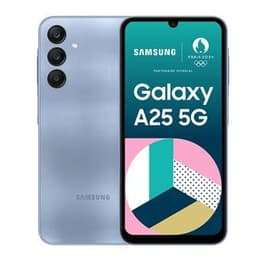
Galaxy A25
Galaxy A25
Starting at

Refurbished price:156.00

Versus €319.11 new

See options
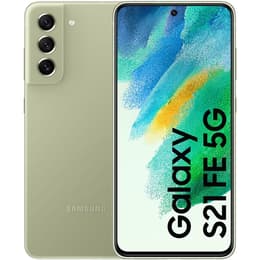
Galaxy S21 FE 5G
Galaxy S21 FE 5G
Starting at

Refurbished price:159.00

Versus €829.91 new

See options

Ratings

The Samsung Galaxy A25 and the Samsung Galaxy S21 FE 5G are both Android smartphones from Samsung, but they target different user expectations and were released at different times. The Galaxy A25, launched in late 2023, is positioned as a capable mid-range device, while the Galaxy S21 FE 5G, released in early 2022, was designed as a more accessible version of Samsung's flagship S21 series. Key differences lie in their processing power, camera systems, and build materials, influencing their overall performance and user experience.

Scores

Durability

When considering the practical lifespan of these devices, several factors come into play, including their release timelines, software support, and physical durability.

  • Release Timeline and Software Support: The Galaxy A25 was released in December 2023, running Android 14 out of the box. Samsung has committed to providing four years of major OS updates and five years of security updates for the A25. In contrast, the Galaxy S21 FE 5G, launched in January 2022 with Android 12, is nearing the end of its major OS update cycle, typically receiving four years of OS updates and five years of security updates from its release date. This means the A25 will receive software support for a longer duration from the current date.
  • Durability and Build: The Galaxy A25 features a glass front, often Gorilla Glass 5, with a plastic back and frame, and carries an IP67 rating for dust and water resistance. The Galaxy S21 FE 5G boasts a Gorilla Glass Victus front, an aluminum frame, and a plastic back, coupled with a higher IP68 rating for enhanced dust and water protection. The S21 FE's construction, with its aluminum frame and superior glass, generally offers a more robust feel and better protection against drops and submersion.
  • Repairability: The Galaxy S21 FE 5G has a repairability score of 7.5 out of 10, indicating it is relatively easy to repair, though the battery is tightly glued. Information on the specific repairability score for the Galaxy A25 is less widely available, but its plastic back generally suggests a more straightforward disassembly process compared to glass-backed phones.

Year of Release

2023

2022

Compatible with latest Update

Yes

Yes

OS

Android

Android

Foldable

No

No

Performance

The performance of a smartphone is largely dictated by its internal components, impacting everything from app loading to multitasking and gaming.

  • Processing Power: The Galaxy A25 is equipped with Samsung's Exynos 1280 processor. This chipset handles everyday tasks smoothly, including browsing, social media, and streaming. For more demanding applications or graphically intensive games, users might experience some limitations, with occasional stuttering in high-fidelity games if settings are not adjusted. The Galaxy S21 FE 5G, depending on the region, features either the Qualcomm Snapdragon 888 or the Exynos 2100, both of which were flagship-tier processors at its release. These processors deliver a more responsive and fluid experience across demanding apps and games, with better thermal management for sustained performance.
  • Multitasking and Responsiveness: Both devices offer configurations with 6GB or 8GB of RAM. The Galaxy A25, with its Exynos 1280, can handle typical multitasking, but some users have noted occasional sluggishness when switching between multiple heavy applications. The Galaxy S21 FE 5G, with its more powerful processor, generally provides a more seamless and quicker response when navigating the interface, launching apps, and managing several tasks simultaneously.
  • Storage Options: Both models come with 128GB or 256GB of internal storage. A notable difference is that the Galaxy A25 includes a microSD card slot, allowing for storage expansion up to 1TB. The Galaxy S21 FE 5G does not offer expandable storage, meaning users are limited to the internal capacity chosen at purchase.

Memory (GB)

6 GB

6 GB

Screen quality

The display is a primary interface for smartphone interaction, and both devices offer vibrant viewing experiences with some key distinctions.

  • Display Technology and Resolution: The Galaxy A25 features a 6.5-inch Super AMOLED display with a resolution of 2340 x 1080 pixels (FHD+). The Galaxy S21 FE 5G comes with a 6.4-inch Dynamic AMOLED 2X display, offering a similar 2400 x 1080 pixels (FHD+) resolution. Both technologies provide deep blacks and vibrant colors, characteristic of AMOLED panels.
  • Brightness and Refresh Rate: Both phones support a 120Hz refresh rate for smoother scrolling and animations. The Galaxy A25 can reach a peak brightness of 1000 nits, making it generally bright enough for outdoor use. The Galaxy S21 FE 5G also offers a bright display, though its 120Hz refresh rate is not adaptive, meaning users must manually switch between 60Hz and 120Hz to conserve battery life.
  • Viewing Experience: The slightly larger screen of the A25 provides a marginally more expansive viewing area. However, the S21 FE's Dynamic AMOLED 2X panel, combined with its higher pixel density due to a slightly smaller screen size at similar resolution, can offer a marginally sharper image, though this difference may not be noticeable to all users.

Resolution

1080x2340

1080 x 2340

Screen type

Super AMOLED

Dynamic AMOLED 2X

Audiovisual

The camera systems on both the Galaxy A25 and Galaxy S21 FE 5G are designed to capture a range of moments, each with its own strengths and capabilities.

  • Rear Camera System: The Galaxy A25 features a triple-camera setup with a 50MP main sensor (f/1.8) with optical image stabilization (OIS), an 8MP ultrawide lens (f/2.2), and a 2MP macro lens (f/2.4). It performs well in good lighting conditions, producing detailed and colorful images, though low-light performance can be average. The Galaxy S21 FE 5G also has a triple-camera array, consisting of a 12MP main sensor (f/1.8) with OIS, a 12MP ultrawide lens (f/2.2), and an 8MP telephoto lens (f/2.4) with 3x optical zoom. The S21 FE's telephoto lens provides greater versatility for zooming without significant loss of detail.
  • Front Camera and Video Recording: For selfies, the Galaxy A25 has a 13MP front-facing camera (f/2.2). The Galaxy S21 FE 5G offers a higher resolution 32MP front camera (f/2.2), which can capture more detailed selfies, especially in good lighting. In terms of video, the A25 can record 4K video at 30 frames per second (fps) with its rear camera, and 1080p at 30fps with its front camera. The S21 FE 5G supports 4K video recording at 60fps on both its front and rear cameras, offering smoother video capture.
  • Low-Light Performance: While the A25's main camera performs adequately in low light, the S21 FE generally offers better low-light performance, particularly with its front camera, producing clearer images in dim conditions.

Main camera

50 megapixels

12 megapixels

Front camera

13 megapixels

32 megapixels

Miscellaneous

Beyond core specifications, several practical elements contribute to the overall user experience of a smartphone.

  • Connectivity and Ports: Both devices support 5G connectivity. The Galaxy A25 includes a 3.5mm headphone jack and a USB-C port, along with Wi-Fi 5 (802.11ac) and Bluetooth 5.3. The Galaxy S21 FE 5G, while also featuring a USB-C port, omits the 3.5mm headphone jack and supports Wi-Fi 6 and Bluetooth 5.0. The presence of a headphone jack on the A25 offers convenience for users with wired audio accessories.
  • Biometrics and Sensors: The Galaxy A25 integrates a fingerprint sensor into its power key on the side of the device. The Galaxy S21 FE 5G features an optical fingerprint sensor embedded within the display, along with face unlock capabilities. Both methods provide secure access to the device.
  • Dimensions and Build Materials: The Galaxy A25 measures 161 x 76.5 x 8.3 mm and weighs 197 grams, featuring a plastic back and frame. The Galaxy S21 FE 5G is slightly more compact and lighter at 155.7 x 74.5 x 7.9 mm and 177 grams, with an aluminum frame and a plastic back. The S21 FE's design, with its aluminum frame, can offer a more premium in-hand feel compared to the A25's all-plastic construction.

Weight

197 g

177 g

Screen size (in)

6.5

6.4

Network

5G

5G

SIM card

Physical SIM

Physical SIM

Carrier compatibility

Unlocked

Unlocked

Connector

USB-C

USB-C

The Samsung Galaxy A25 and Galaxy S21 FE 5G cater to different user priorities, reflecting their respective market positions and release timelines. Users often praise the Galaxy A25 for its long battery life, vibrant AMOLED display with a 120Hz refresh rate, and Samsung's commitment to extended software updates, which is notable for its segment. Criticisms sometimes point to its mid-range processing power, which can lead to occasional performance lags with demanding tasks, and its average low-light camera performance.

The Galaxy S21 FE 5G is frequently lauded for its powerful, near-flagship performance, versatile camera system with a telephoto lens, and its more premium build quality with an IP68 rating. However, some users have noted its battery life can be inconsistent, especially with the 120Hz refresh rate enabled, and its software support window is closing sooner than the A25's.

Users prioritizing extended software longevity, a larger battery capacity, and the convenience of a 3.5mm headphone jack and expandable storage may find the Galaxy A25 better suited to their needs. It represents a solid choice for everyday use and media consumption. Conversely, those who value higher processing power for gaming and demanding applications, a more advanced camera system with optical zoom, wireless charging, and a more robust build with a higher water resistance rating, might lean towards the Galaxy S21 FE 5G. This device offers a more premium experience for users who engage in more intensive smartphone activities.

Both models are available as quality-assured refurbished options, providing an eco-friendly alternative for consumers looking to make informed and sustainable choices.


See all articles

Our recent comparisons