

Galaxy Z Fold4 Vs iPhone 13 mini

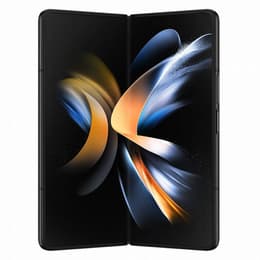
Galaxy Z Fold4
Galaxy Z Fold4
Starting at

Refurbished price:433.00

Versus €1,889.00 new

See options
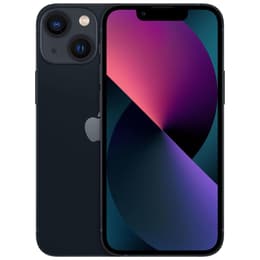
iPhone 13 mini
iPhone 13 mini
Starting at

Refurbished price:228.00

Versus €829.00 new

See options

Ratings

The Samsung Galaxy Z Fold4, released in August 2022, represents a significant step in foldable smartphone technology, offering a large, adaptable screen experience. In contrast, the iPhone 13 Mini, launched in September 2021, focuses on delivering a premium smartphone experience in a compact form factor. These devices cater to distinct user preferences, with the Z Fold4 emphasizing screen real estate and multitasking capabilities, while the iPhone 13 Mini prioritizes portability and one-handed use. Both operate on their respective advanced mobile operating systems, Android with Samsung's One UI for the Z Fold4, and iOS for the iPhone 13 Mini.

Scores

Durability

When considering the long-term usability of a device, factors like software support and physical resilience are key. The Galaxy Z Fold4 and iPhone 13 Mini offer different approaches to durability and longevity.

  • Release Timeline: The iPhone 13 Mini was released in September 2021, while the Galaxy Z Fold4 followed in August 2022 [2, 3]. This difference in launch dates means the Z Fold4 generally benefits from a slightly longer period of anticipated software updates.
  • Software Longevity: The iPhone 13 Mini launched with iOS 15 and is upgradeable to iOS 17.2, with Apple typically providing 5-6 years of major OS updates [31]. The Galaxy Z Fold4, starting with Android 12L, has already received updates to Android 16 with One UI 8, indicating a commitment to ongoing software support [2].
  • Physical Durability: The iPhone 13 Mini features a Ceramic Shield front cover and an IP68 rating for water resistance, allowing submersion up to 6 meters for 30 minutes [11, 18]. The Galaxy Z Fold4 utilizes Gorilla Glass Victus+ on its outer display and back, with an IPX8 water resistance rating, meaning it can withstand submersion in up to 1.5 meters of freshwater for 30 minutes, though it lacks dust resistance [2, 38]. Its inner foldable display uses 'Ultra-Thin Glass' with protective PET layers, and the hinge mechanism has been redesigned for improved resilience [2, 35, 37].

Year of Release

2022

2021

Compatible with latest Update

Yes

Yes

OS

Android

iOS

Foldable

Yes

No

Performance

The performance of a smartphone is crucial for daily tasks, from casual browsing to demanding applications. Both the Galaxy Z Fold4 and the iPhone 13 Mini are equipped with capable internal components designed for smooth operation.

  • Processor Capabilities: The Galaxy Z Fold4 is powered by a current-generation processor, which offers improved power efficiency and faster CPU and GPU speeds compared to its predecessor, enabling smooth handling of demanding apps and multitasking [5]. The iPhone 13 Mini features Apple's A15 Bionic chip, known for its super-fast performance and power efficiency, ensuring a responsive user experience across various applications [32].
  • Multitasking and Responsiveness: With 12 GB of RAM, the Galaxy Z Fold4 is well-suited for extensive multitasking, allowing users to run multiple applications simultaneously on its large display without significant slowdowns [2, 5]. The iPhone 13 Mini, while having 4 GB of RAM, is optimized by iOS to provide fluid transitions and efficient app management, offering a consistently responsive experience for its intended use cases [31].
  • Storage Options: The Galaxy Z Fold4 offers storage configurations of 256 GB, 512 GB, and up to 1 TB, providing ample space for a wide range of files and applications [2, 5]. The iPhone 13 Mini comes with 128 GB, 256 GB, and 512 GB storage options, catering to users with varying storage needs [1, 18]. Neither device supports expandable storage via microSD cards [2].
  • Battery Behavior: The Galaxy Z Fold4 is equipped with a 4400 mAh dual-cell battery, supporting 25W wired fast charging and 15W wireless charging, along with reverse wireless charging [2, 5]. The iPhone 13 Mini has a 2406 mAh battery, which provides up to 17 hours of video playback and supports wireless charging, offering a full day of use for many users [18, 31].

Memory (GB)

12 GB

4 GB

Screen quality

The display is a primary interface for any smartphone, and the Galaxy Z Fold4 and iPhone 13 Mini offer distinct visual experiences tailored to their form factors.

  • Display Technology and Size: The Galaxy Z Fold4 features a unique dual-screen setup: a 7.6-inch Foldable Dynamic AMOLED 2X main display and a 6.2-inch Dynamic AMOLED 2X cover display [8, 10]. Both screens offer vibrant colors and deep blacks. The iPhone 13 Mini sports a 5.4-inch Super Retina XDR OLED display, known for its clarity and color accuracy in a compact size [1, 3].
  • Resolution and Clarity: The Z Fold4's main display has a resolution of 2176 x 1812 pixels, while its cover screen is 2316 x 904 pixels [8]. The iPhone 13 Mini offers a 2340 x 1080 pixel resolution, resulting in a high pixel density for sharp images and text [1].
  • Brightness and Refresh Rate: Both devices feature displays with high peak brightness, reaching up to 1200 nits for HDR content on the iPhone 13 Mini and 1200 nits on the Z Fold4's main display, ensuring good visibility in various lighting conditions [1, 24]. The Z Fold4's displays boast an adaptive 120Hz refresh rate for smooth scrolling and animations [8]. The iPhone 13 Mini has a standard 60Hz refresh rate [3].

Resolution

1812 x 2176

1080 x 2340

Screen type

Foldable Dynamic AMOLED 2X

Super Retina XDR OLED

Audiovisual

Photography and videography capabilities are key considerations for many smartphone users, and both devices offer advanced camera systems designed to capture high-quality content.

  • Rear Camera Systems: The Galaxy Z Fold4 features a versatile triple-camera setup on the rear, including a 50 MP wide-angle lens with optical image stabilization (OIS), a 12 MP ultra-wide lens, and a 10 MP telephoto lens with 3x optical zoom and OIS [2, 8, 26]. The iPhone 13 Mini comes with a dual 12 MP camera system, comprising a main wide-angle lens with sensor-shift OIS and an ultra-wide lens [1, 25].
  • Photography Performance: The Z Fold4's larger main sensor contributes to improved low-light performance and detailed shots [19]. The iPhone 13 Mini excels in everyday photography with its computational photography features like Smart HDR 4 and Night mode, producing consistent and vibrant images [1, 18].
  • Video Recording Quality: The Galaxy Z Fold4 can record video at up to 8K resolution at 24 frames per second, and 4K at 60 frames per second [8]. The iPhone 13 Mini offers HDR video recording with Dolby Vision up to 4K at 60 frames per second, and features Cinematic mode for a shallow depth of field effect in videos [1, 25].
  • Front Cameras and Audio: The Z Fold4 includes a 10 MP cover camera and a 4 MP under-display camera on the main screen [8]. The iPhone 13 Mini has a 12 MP TrueDepth front camera [1]. Both devices offer quality microphone performance for calls and recordings, and stereo speakers for media consumption [3, 30].

Main camera

50 megapixels

12 megapixels

Front camera

4 megapixels

12 megapixels

Miscellaneous

Beyond core features, several practical elements contribute to the overall user experience and differentiate these two devices.

  • Connectivity: Both smartphones support 5G connectivity for fast mobile data speeds. The Galaxy Z Fold4 features Wi-Fi 6E and Bluetooth 5.2, along with NFC and Ultra Wideband (UWB) capabilities [5, 30, 38]. The iPhone 13 Mini supports Wi-Fi 6 and Bluetooth 5.0, also including NFC [11, 31].
  • Ports and Biometrics: The Galaxy Z Fold4 uses a USB-C 3.2 port for charging and data transfer, and incorporates a side-mounted fingerprint scanner for security [6, 30]. The iPhone 13 Mini utilizes Apple's Lightning connector and relies on Face ID for secure facial recognition [12, 21]. Neither device includes a 3.5mm headphone jack [28].
  • Physical Characteristics: The Galaxy Z Fold4, when folded, measures 155.1 x 67.1 x 14.2-15.8 mm and weighs 263 g, offering a substantial feel due to its foldable design [2, 30]. The iPhone 13 Mini is significantly smaller and lighter at 131.5 x 64.2 x 7.65 mm and 141 g, making it highly portable and suitable for one-handed operation [7, 9].
  • Build Materials: The Z Fold4 combines an aluminum 'Armor Frame' with Gorilla Glass Victus+ on its exterior and a specialized Ultra-Thin Glass for its foldable display [2, 30]. The iPhone 13 Mini features an aluminum case with a Ceramic Shield front cover for enhanced durability [12, 18].

Weight

263 g

140 g

Screen size (in)

7.6

5.4

Network

5G

5G

SIM card

Dual Physical SIM + eSIM

Physical SIM + eSIM

Carrier compatibility

Unlocked

Unlocked

The Samsung Galaxy Z Fold4 and iPhone 13 Mini cater to distinct user needs, offering compelling experiences within their respective categories. Users frequently praise the Galaxy Z Fold4 for its expansive main display, which enhances multitasking and media consumption, effectively blending smartphone and tablet functionalities. Its improved hinge design and wider cover screen are often highlighted as practical advancements over previous foldable generations [23, 30]. However, some users note its continued bulkiness and the visible crease on the inner display as areas for potential improvement [30].

Conversely, the iPhone 13 Mini receives consistent acclaim for its compact size and comfortable one-handed usability, with many users appreciating its ability to deliver a powerful smartphone experience in a pocket-friendly form factor [36]. Its performance and camera capabilities are generally well-regarded for a device of its size. A common sentiment among its users is a desire for Apple to continue offering such a compact option, despite its discontinuation [3, 36].

Users prioritizing a large, adaptable screen for productivity, media, and a tablet-like experience may find the Galaxy Z Fold4 well-suited to their needs. Its robust multitasking features and advanced camera system make it a strong contender for those who want a versatile device. On the other hand, users who value extreme portability, comfortable one-handed use, and a streamlined, powerful smartphone experience will likely lean towards the iPhone 13 Mini. Its compact design does not compromise on core performance or camera quality.

For those considering either of these devices, exploring quality-assured refurbished options can provide an eco-friendly alternative, offering access to these advanced technologies while supporting sustainable consumption.
See all articles

Our recent comparisons