

Galaxy S21 Ultra 5G Vs iPhone SE (2022)

Galaxy S21 Ultra 5G
Galaxy S21 Ultra 5G
Starting at

Refurbished price:243.00

Versus €1,297.00 new

See options
iPhone SE (2022)
iPhone SE (2022)
Starting at

Refurbished price:131.00

Versus €549.00 new

See options

Ratings

The Samsung Galaxy S21 Ultra 5G, released in January 2021, and the Apple iPhone SE (2022), launched in March 2022, represent distinct approaches to smartphone design and functionality. While both offer 5G connectivity and robust performance, they cater to different user preferences through their contrasting form factors, display technologies, and camera systems. The Galaxy S21 Ultra operates on the Android platform, offering extensive customization, whereas the iPhone SE runs on Apple's iOS, known for its streamlined user experience.

Scores

Durability

When considering the longevity of these devices, several factors come into play, including software support, physical durability, and ease of repair.

  • Release Timeline and OS Support: The Galaxy S21 Ultra 5G, released in early 2021, typically receives around four years of major Android operating system updates and five years of security updates from Samsung. The iPhone SE (2022), launched a year later, is expected to receive iOS updates for approximately five to seven years from its release, potentially extending its software lifespan further into the future.
  • Physical Durability: The Galaxy S21 Ultra features Gorilla Glass Victus on both its front and back, paired with an aluminum frame, offering a high level of scratch and drop resistance. It also boasts an IP68 rating for dust and water resistance. The iPhone SE (2022) uses glass on its front and back, similar to the iPhone 13's back glass, and an aluminum frame, along with an IP67 rating for dust and water resistance.
  • Repairability: The Galaxy S21 Ultra received a low repairability score, often rated around 3 out of 10, primarily due to the extensive use of strong adhesive for components like the battery, display, and rear panel, making disassembly challenging. In contrast, the iPhone SE (2022) is considered moderately repairable, with some common components like the screen and battery being relatively easier to access, though adhesive is still present. However, replacing certain parts on the iPhone SE with non-Apple components can lead to warnings or loss of functionality.

Year of Release

2021

2022

Compatible with latest Update

Yes

Yes

OS

Android

iOS

Foldable

No

No

Performance

Both devices offer capable performance for daily tasks, but they differ in their underlying architecture and how they handle demanding applications.

  • Processor Capabilities: The iPhone SE (2022) is equipped with a current-generation processor that allows it to handle demanding apps and multitasking smoothly, providing a highly responsive user experience. The Galaxy S21 Ultra 5G also features a powerful processor designed to manage complex tasks, high-end gaming, and intensive multitasking with ease.
  • Multitasking and Storage: The Galaxy S21 Ultra 5G comes with substantial memory options, typically 12GB or 16GB, which contributes to its ability to keep many applications open simultaneously without slowdowns. The iPhone SE (2022) includes 4GB of memory, which is optimized by its operating system for efficient multitasking. Both devices offer various internal storage configurations, ranging from 64GB to 256GB for the iPhone SE (2022) and 128GB to 512GB for the Galaxy S21 Ultra 5G.
  • Battery Behavior: The Galaxy S21 Ultra 5G houses a larger 5000 mAh battery, generally providing extended usage, often lasting a full day or more for many users. Its adaptive refresh rate display also helps optimize power consumption. The iPhone SE (2022) has a smaller battery capacity, which typically translates to average battery life, sufficient for a day of moderate use, though heavy usage or consistent 5G connectivity can lead to more frequent charging.

Memory (GB)

12 GB

4 GB

Screen quality

The visual experience on these two smartphones presents a significant contrast, primarily due to differences in display technology, size, and refresh rates.

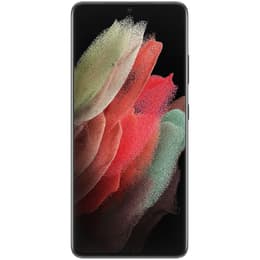
  • Display Technology and Clarity: The Galaxy S21 Ultra 5G features a 6.8-inch Dynamic AMOLED 2X display, known for its deep blacks, vibrant colors, and high contrast. Its resolution of 3200 x 1440 pixels results in a very sharp image with a pixel density of 515 PPI. The iPhone SE (2022) utilizes a 4.7-inch Retina IPS LCD, which offers good color accuracy and viewing angles, but with a lower resolution of 1334 x 750 pixels and a pixel density of 326 PPI.
  • Brightness and Refresh Rate: The Galaxy S21 Ultra 5G can achieve a peak brightness of up to 1500 nits, making it highly visible even in bright outdoor conditions. It also features an adaptive refresh rate that can dynamically adjust between 10Hz and 120Hz, providing smoother scrolling and more fluid animations while conserving battery life. The iPhone SE (2022) has a maximum brightness of 625 nits and a standard 60Hz refresh rate, which is suitable for everyday use but does not offer the same level of fluidity or outdoor visibility as the Galaxy S21 Ultra.
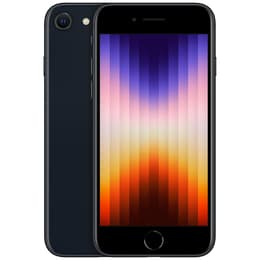
  • Screen Size and Viewing Experience: The larger, edge-to-edge display of the Galaxy S21 Ultra 5G provides an expansive viewing area, enhancing the experience for media consumption, gaming, and productivity. The iPhone SE (2022) offers a compact screen with noticeable bezels, which some users prefer for one-handed operation and a traditional smartphone feel, though it provides a less immersive media experience.

Resolution

1440 x 3200

750 x 1334

Screen type

Dynamic AMOLED 2X

Retina IPS LCD

Audiovisual

The camera systems on these two devices are designed with different philosophies, offering distinct capabilities for photography and videography.

  • Rear Camera System: The Galaxy S21 Ultra 5G boasts a versatile quad-camera setup on its rear, including a 108-megapixel wide-angle lens, a 12-megapixel ultra-wide-angle lens, and two 10-megapixel telephoto lenses offering 3x and 10x optical zoom. This configuration allows for a wide range of photographic styles, from expansive landscapes to detailed distant subjects. The iPhone SE (2022) features a single 12-megapixel wide-angle camera on its rear, which is known for its consistent image quality and computational photography enhancements.
  • Photography Performance: The Galaxy S21 Ultra 5G excels in capturing highly detailed images, especially with its high-resolution main sensor and advanced zoom capabilities, performing well in various lighting conditions. Its software features also enhance image processing. The iPhone SE (2022)'s single camera delivers reliable and natural-looking photos in good lighting, benefiting from its powerful processor for image optimization, though it lacks the versatility of multiple lenses for different focal lengths or advanced low-light modes found in more premium devices.
  • Video Recording and Front Camera: Both phones are capable of high-quality video recording. The Galaxy S21 Ultra 5G can record video at up to 8K resolution at 24 frames per second, and 4K at 30 or 60 frames per second. Its front-facing camera is a 40-megapixel sensor. The iPhone SE (2022) records 4K video at up to 60 frames per second and features a 7-megapixel front camera.
  • Audio Quality: The Galaxy S21 Ultra 5G offers stereo speakers for a more immersive audio experience during media playback. The iPhone SE (2022) also provides stereo sound, contributing to a clear audio output for calls and media.

Main camera

108 megapixels

12 megapixels

Front camera

40 megapixels

7 megapixels

Miscellaneous

Beyond core performance and display, several practical elements differentiate these two smartphones, impacting daily usability and interaction.

  • Connectivity Options: Both devices support 5G cellular connectivity, enabling faster download and upload speeds where available. The Galaxy S21 Ultra 5G supports Wi-Fi 6E, offering enhanced wireless performance with compatible routers, while the iPhone SE (2022) supports Wi-Fi 6. Both also include Bluetooth 5 for wireless accessory connections.
  • Ports and Biometrics: The Galaxy S21 Ultra 5G features a USB-C 3.2 port for charging and data transfer. It incorporates an ultrasonic in-display fingerprint sensor for secure unlocking and authentication. The iPhone SE (2022) uses Apple's proprietary Lightning port and relies on the familiar Touch ID fingerprint sensor integrated into its home button.
  • Dimensions and Handling: The Galaxy S21 Ultra 5G is a larger and heavier device, measuring 165.1 x 75.6 x 8.9 mm and weighing 227 grams, which provides a substantial feel in hand and a larger screen area. The iPhone SE (2022) is significantly more compact and lighter at 138.4 x 67.3 x 7.3 mm and 144 grams, making it ideal for one-handed use and easier pocketability.
  • Additional Features: The Galaxy S21 Ultra 5G is notable for its support of the S-Pen stylus, offering additional productivity and creative input options.

Weight

227 g

144 g

Screen size (in)

6.8

4.7

Network

5G

5G

SIM card

Physical SIM + eSIM

Physical SIM + eSIM

Carrier compatibility

Unlocked

Unlocked

Connector

USB-C

Lightning

The Samsung Galaxy S21 Ultra 5G and the iPhone SE (2022) cater to distinct user needs, as reflected in their design and feature sets. User sentiment for the Galaxy S21 Ultra often praises its expansive, high-quality display, versatile camera system with impressive zoom capabilities, and robust battery life. Common criticisms sometimes point to its large size and weight, which can make one-handed use challenging for some, and its repairability score is noted as being low.

Conversely, the iPhone SE (2022) is frequently lauded for its compact form factor, powerful processor, and the familiarity of its classic design with Touch ID. Users appreciate its long-term software support and consistent performance. However, common concerns include its smaller, lower-resolution display with large bezels, average battery life compared to larger smartphones, and a single camera system that, while capable, lacks the advanced features of multi-lens setups.

Users prioritizing an immersive visual experience, advanced photography tools, and extended battery life for heavy usage may find the Galaxy S21 Ultra 5G better suited to their needs. Its large display and S-Pen compatibility also appeal to those seeking a device for productivity and media consumption. On the other hand, individuals who value a compact, lightweight device for easy one-handed operation, a familiar user interface, and long-term software updates will likely lean towards the iPhone SE (2022). It is a strong choice for those who prefer a traditional smartphone design and robust core performance without needing the latest display or camera innovations.

For those considering either of these devices, exploring quality-assured refurbished options can provide an eco-friendly alternative, extending the lifespan of these capable smartphones.








