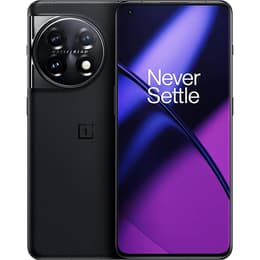
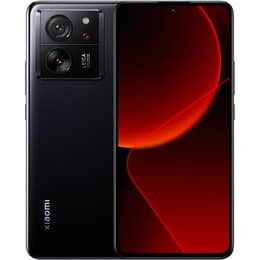


OnePlus 11 Vs Xiaomi 13T

OnePlus 11
OnePlus 11
Starting at

Refurbished price:325.00

Versus €949.00 new

See options
Xiaomi 13T
Xiaomi 13T
Starting at

Refurbished price:183.00

Versus €630.00 new

See options

Ratings

The OnePlus 11 (released in early 2023) and the Xiaomi 13T (launched in late 2023) are both Android smartphones that offer distinct strengths for different user needs. While the OnePlus 11 focuses on delivering a high-performance experience with a premium display, the Xiaomi 13T emphasizes advanced camera capabilities co-engineered with Leica and a notably bright screen. Both devices run on the Android operating system, providing a familiar software environment with their respective custom interfaces.

Scores

Durability

When considering the long-term usability of these devices, both the OnePlus 11 and the Xiaomi 13T offer substantial software support, contributing to their practical lifespan.

  • Software Updates: The OnePlus 11, launched with Android 13, is committed to receiving four major Android operating system updates and five years of security updates. This means it is expected to be supported through Android 17. Similarly, the Xiaomi 13T, also launched with Android 13, benefits from Xiaomi's policy of providing four generations of OS updates and five years of security patches, extending its support to Android 17.
  • Physical Durability: The OnePlus 11 features Corning Gorilla Glass Victus for screen protection and carries an IP64 rating, indicating resistance to dust and splashes. The Xiaomi 13T, on the other hand, is equipped with Corning Gorilla Glass 5 and boasts a more robust IP68 rating, signifying comprehensive dust and water resistance.
  • Repairability: The OnePlus 11 has a repairability score of 6.75 out of 10, suggesting a moderate ease of repair, though it involves numerous screws and flex cables. Information regarding the Xiaomi 13T's repairability indicates that certain components are accessible, but a specific score is not widely available.

Year of Release

2023

2023

OS

Android

Android

Foldable

No

No

Performance

The performance of a smartphone is crucial for daily tasks, and both the OnePlus 11 and Xiaomi 13T offer capable hardware, though with different underlying architectures.

  • Processing Power: The OnePlus 11 is equipped with a high-end processor, enabling it to handle demanding applications, intensive multitasking, and graphic-heavy games with considerable smoothness and responsiveness. The Xiaomi 13T features an upper-midrange processor, which capably manages everyday usage, app loading, and most gaming titles, providing a fluid user experience.
  • Memory and Storage: The OnePlus 11 offers various configurations, including options with up to 16GB of RAM and utilizes UFS 4.0 storage for faster data access in its higher capacities. The Xiaomi 13T comes with up to 12GB of RAM and uses UFS 3.1 storage.
  • Battery and Charging: Both devices house a 5000mAh battery, designed to provide a full day of use for many users. The OnePlus 11 supports very fast wired charging, capable of reaching 50% in approximately 10 minutes and a full charge in about 25 minutes. The Xiaomi 13T also offers fast wired charging, achieving a full charge in around 50 minutes, with a 60% charge possible in about 15 minutes.

Memory (GB)

16 GB

8 GB

Screen quality

The display is a primary interface for smartphone interaction, and both models present high-quality viewing experiences with distinct characteristics.

  • Display Technology and Resolution: The OnePlus 11 features a 6.7-inch LTPO3 Fluid AMOLED display with a high resolution of 1440 x 3216 pixels (QHD+), resulting in a pixel density of 525 pixels per inch. This provides a very sharp and detailed image. The Xiaomi 13T has a 6.67-inch AMOLED display with a resolution of 1220 x 2712 pixels (1.5K), offering a pixel density of 446 ppi.
  • Refresh Rate and Brightness: The OnePlus 11 offers an adaptive refresh rate of 1Hz to 120Hz, which helps in smooth scrolling and power efficiency. The Xiaomi 13T features a 144Hz refresh rate, providing an exceptionally fluid visual experience. For brightness, the Xiaomi 13T stands out with a peak brightness of 2600 nits, making it highly visible even in bright outdoor conditions. Both displays support Dolby Vision and HDR10+ for enhanced color and contrast.
  • Design: The OnePlus 11 incorporates a curved display, contributing to a sleek aesthetic and comfortable grip. The Xiaomi 13T opts for a flat display.

Resolution

1440 x 3216

1220 x 2712

Audiovisual

Both smartphones offer versatile camera systems, each with unique strengths in photography and videography.

  • Rear Camera Systems: The OnePlus 11 features a triple camera setup co-developed with Hasselblad, including a 50MP main sensor with optical image stabilization (OIS), a 48MP ultrawide lens, and a 32MP 2x telephoto lens. It delivers detailed and well-exposed photos in good lighting, with decent low-light performance. The ultrawide camera is noted for its high resolution. The Xiaomi 13T also has a triple camera system, co-engineered with Leica, comprising a 50MP main sensor with OIS, a 50MP 2x telephoto lens, and a 12MP ultrawide lens. Its main camera is praised for capturing vibrant and detailed images, and the 50MP telephoto lens is a strong feature.
  • Video Capabilities: The OnePlus 11 is capable of recording video at up to 8K resolution at 24 frames per second. The Xiaomi 13T records video at up to 4K resolution at 30 frames per second.
  • Front Camera and Audio: For selfies, the OnePlus 11 has a 16MP front camera, while the Xiaomi 13T features a 20MP front camera. Both devices offer stereo speakers, with the OnePlus 11 providing good overall sound quality. The Xiaomi 13T's speakers are loud and clear, though they can be susceptible to muffling depending on how the phone is held.

Miscellaneous

Beyond core performance, several practical features contribute to the overall user experience of these smartphones.

  • Connectivity and Ports: Both the OnePlus 11 and Xiaomi 13T support 5G connectivity and Wi-Fi 6 for fast wireless internet. The OnePlus 11 uses Bluetooth 5.3, while the Xiaomi 13T features Bluetooth 5.4. Both devices utilize a USB-C port for charging and data transfer.
  • Security and Unique Features: Both smartphones incorporate an under-display fingerprint sensor for secure unlocking. The OnePlus 11 includes a physical alert slider, a signature feature for quickly switching sound profiles. The Xiaomi 13T includes an IR blaster, allowing it to function as a universal remote control.
  • Design and Handling: The OnePlus 11 weighs approximately 205 grams and features a glass back. The Xiaomi 13T is slightly lighter, weighing between 193g and 197g, and is available with either a glass or vegan leather back. The OnePlus 11's narrower width can make it easier to hold for some users.

Weight

205 g

193 g

Screen size (in)

6.7

6.67

Network

5G

5G

SIM card

Physical SIM

Dual Physical SIM

Carrier compatibility

Unlocked

Unlocked

The OnePlus 11 and Xiaomi 13T each present a compelling package, catering to different priorities in the smartphone market. The OnePlus 11 is frequently praised for its robust performance, extended battery life, and exceptionally fast charging capabilities, alongside a high-resolution display. Some users have noted its camera's 2x telephoto zoom as less versatile compared to rivals and have expressed mixed feelings about the OxygenOS 13 software experience.

Conversely, the Xiaomi 13T garners positive feedback for its impressive camera system, co-engineered with Leica, its bright display, and its overall value proposition. Criticisms sometimes point to its battery life being average for some heavy users and the MIUI interface being perceived as busy.

Users prioritizing raw processing power, a very high-resolution display, and extremely rapid charging will likely find the OnePlus 11 well-suited to their needs. Those who place a higher emphasis on advanced photography features, a brighter screen for outdoor visibility, and a more robust water and dust resistance rating may lean towards the Xiaomi 13T. Both devices offer a solid Android experience, and for those considering a more sustainable choice, quality-assured refurbished options for both models are available, providing an eco-friendly alternative.


See all articles

Our recent comparisons