

Compare models
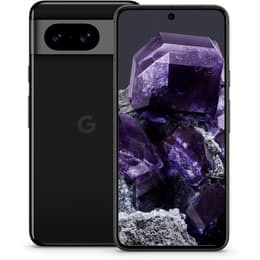
Galaxy Z Flip7 Vs Google Pixel 8
- 1-year minimum warranty
- Free delivery on all orders
- Free 30-day returns
Differences at a glance
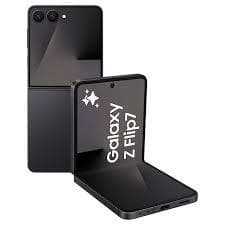
The Samsung Galaxy Z Flip7 (2025) and the Google Pixel 8 (2023) represent two distinct approaches to modern smartphone design, contrasting a foldable clamshell form factor with a traditional candybar body. While both run on the Android operating system, they cater to different physical preferences through their unique structures. Choosing between them involves weighing a flexible, pocket-friendly folding build against a conventional, streamlined device format.
Available Models
Colour
Storage
Scores
Durability
Durability and software support schedules vary between these two models due to their differing release years and hardware designs.
- Software longevity and updates: The Google Pixel 8 benefits from an extended multi-year software support commitment provided by its manufacturer, while the Galaxy Z Flip7 arrives with a modern operating system version designed to support current feature rollouts.
- Physical design and repairability: The Galaxy Z Flip7 features a foldable main screen utilizing specialized ultra-thin glass alongside a hinge mechanism, whereas the Google Pixel 8 relies on a rigid slab construction protected by reinforced flat glass panels.
- Expected lifespan: Traditional rigid smartphones like the Pixel 8 generally experience less mechanical wear over years of daily opening and closing, whereas foldable models require careful handling of the folding display layer.
Year of Release
2025
2023
Performance
Underneath their exteriors, both smartphones handle daily tasks, navigation, and application switching using capable internal configurations supported by sufficient memory allocations.
- Multitasking and memory: The Galaxy Z Flip7 incorporates a larger amount of working memory to facilitate seamless background app switching, while the Google Pixel 8 handles everyday multitasking efficiently with its optimized software environment.
- Battery behavior: The Pixel 8 manages power consumption for typical all-day usage patterns, whereas the Galaxy Z Flip7 balances its split-screen architecture and outer cover display requirements through dynamic power management.
- Storage configurations: Both devices offer standard internal storage tiers starting at baseline capacities suitable for applications, media files, and offline content.
Screen quality
Visual output differs significantly primarily due to the physical layout and screen architecture of each smartphone.
- Display technology and panels: The Galaxy Z Flip7 utilizes a flexible organic light-emitting diode main folding panel paired with a functional outer cover screen, whereas the Google Pixel 8 features a rigid flat organic light-emitting diode display.
- Refresh rate and fluidity: Both models support high refresh rates reaching up to 120Hz, ensuring smooth scrolling through web pages, system menus, and supported applications.
- Outdoor visibility: High peak brightness levels on both screens allow for legible viewing and comfortable interaction under direct sunlight or bright ambient lighting conditions.
Audiovisual
Media capture capabilities and audio output shape the everyday entertainment and photography experience on both handsets.
- Camera hardware: Both devices employ dual rear camera configurations featuring main wide-angle lenses alongside ultra-wide options, supported by computational photography tools.
- Versatility and framing: The foldable design of the Galaxy Z Flip7 enables unique self-recording angles and tabletop placement without a tripod, while the Pixel 8 focuses on straightforward point-and-shoot clarity and automated photo cleanup software.
- Audio reproduction: Integrated stereo speakers on both models deliver clear sound output suitable for hands-free calls, casual video streaming, and media playback.
Miscellaneous
Physical dimensions, connectivity standards, and daily convenience features define how each phone integrates into everyday life.
- Portability and dimensions: The Galaxy Z Flip7 folds down into a compact square shape that slips easily into small pockets, whereas the Google Pixel 8 maintains a traditional slender profile with a fixed length.
- Security and biometrics: Both handsets provide rapid unlocking mechanisms through facial recognition technology and integrated fingerprint sensors.
- Connectivity: Modern wireless standards including fifth-generation cellular compatibility, advanced Wi-Fi protocols, and near-field communication are fully supported across both devices.
Screen size (in)
6.9
6.2
Network
5G
5G
SIM card
Physical SIM + eSIM
Physical SIM + eSIM
Carrier compatibility
Unlocked
Unlocked
What the community thinks
Users evaluating the Google Pixel 8 frequently praise its clean software interface, reliable everyday camera performance, and comfortable one-handed ergonomics in a traditional phone body. Common discussions note that its battery capacity requires routine daily charging for heavy users, and the rigid form factor lacks the pocket-folding novelty of clamshell devices. On the other hand, owners of the Galaxy Z Flip7 highlight the convenience of the compact folded size and the utility of the outer screen for checking notifications quickly. Some users point out that the crease on the folding screen remains visible under certain lighting conditions, and the mechanical hinge requires mindful handling over time.
Users prioritizing a compact, pocket-friendly footprint that folds in half may prefer the Galaxy Z Flip7, while users prioritizing a straightforward, rigid slab design with streamlined software interaction will lean toward the Google Pixel 8. For consumers exploring sustainable options, choosing a quality-assured refurbished option through platforms like Back Market offers an eco-friendly alternative that extends device lifecycles without compromising on performance. Ultimately, the decision rests on whether a flexible folding structure or a conventional candybar layout best matches your daily routine.