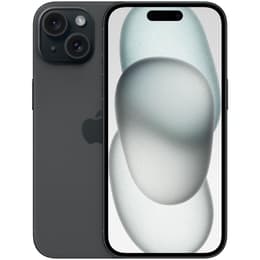

Galaxy Z Flip6 Vs iPhone 15

Galaxy Z Flip6
Galaxy Z Flip6
Starting at

Refurbished price:415.00

Versus €1,199.99 new

See options
iPhone 15
iPhone 15
Starting at

Refurbished price:394.00

Versus €879.00 new

See options

Ratings

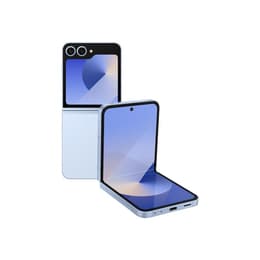
The Samsung Galaxy Z Flip6, released in July 2024, and the Apple iPhone 15, launched in September 2023, represent distinct approaches to modern smartphone design and functionality. While the iPhone 15 offers a traditional slate form factor, the Galaxy Z Flip6 distinguishes itself with a unique foldable clamshell design. Both devices operate on different ecosystems, with the Z Flip6 running Android and the iPhone 15 powered by iOS, each bringing its own set of features and user experiences.

Scores

Durability

When considering the long-term usability of a smartphone, factors like software support and physical resilience are key. The Galaxy Z Flip6 and iPhone 15 offer different profiles in these areas.

  • Release Timeline: The iPhone 15, released in September 2023, precedes the Galaxy Z Flip6, which became available in July 2024. This difference in launch dates means the Z Flip6 benefits from a slightly newer hardware generation and potentially a longer period of cutting-edge relevance.
  • Software Longevity: Samsung has committed to providing 7 generations of Android OS updates and 7 years of security updates for the Galaxy Z Flip6, offering extensive software support. The iPhone 15 launched with iOS 17 and is compatible with later versions, typically receiving 5-6 years of major iOS updates.
  • Physical Durability: The iPhone 15 features a Ceramic Shield front and a color-infused glass back, along with an IP68 rating for dust and water resistance, allowing submersion up to 6 meters for 30 minutes. The Galaxy Z Flip6, with its foldable design, uses Corning Gorilla Glass Victus 2 on its cover screen and back panel, and Ultra-Thin Glass (UTG) for its main foldable display. It carries an IP48 rating, indicating dust and water resistance, and features an improved hinge design.

Year of Release

2024

2023

Compatible with latest Update

Yes

Yes

OS

Android

iOS

Foldable

Yes

No

Performance

Both the Galaxy Z Flip6 and iPhone 15 are equipped with powerful internal components designed to handle demanding applications and multitasking, though their architectures differ.

  • Processing Power: The Galaxy Z Flip6 utilizes a current-generation processor, which contributes to smooth operation across various applications and efficient handling of complex tasks. The iPhone 15 is powered by a previous-generation chip, which still delivers robust performance for everyday use, gaming, and creative applications.
  • Multitasking and Storage: The Galaxy Z Flip6 typically comes with 12 GB of RAM, providing ample capacity for extensive multitasking and keeping numerous apps open simultaneously without performance degradation. It offers storage options of 256 GB or 512 GB. The iPhone 15 features 6 GB of RAM, which is optimized within the iOS ecosystem to manage applications effectively, and is available with 128 GB, 256 GB, or 512 GB of internal storage.
  • Battery Behavior: The Galaxy Z Flip6 is equipped with a 4000 mAh battery, designed to support its dual-screen functionality and provide a full day of typical use. The iPhone 15 has a 3349 mAh battery, which Apple states can provide up to 20 hours of video playback, indicating efficient power management for its hardware and software.

Memory (GB)

12 GB

6 GB

Screen quality

The display experience on these two devices is a primary differentiator, with the Galaxy Z Flip6 offering a unique foldable form factor and the iPhone 15 providing a high-quality traditional screen.

  • Display Technology and Size: The Galaxy Z Flip6 features a 6.7-inch foldable Dynamic AMOLED 2X main display, which can fold in half, and a 3.4-inch Super AMOLED cover display for quick interactions. The iPhone 15 has a 6.1-inch Super Retina XDR OLED display, offering a consistent viewing area.
  • Resolution and Clarity: The Z Flip6's main display has a resolution of 1080 x 2640 pixels, resulting in approximately 426 pixels per inch (ppi), ensuring sharp visuals. Its cover screen has a resolution of 720 x 748 pixels. The iPhone 15 offers a resolution of 2556 x 1179 pixels, with a pixel density of about 460 ppi, providing clear and detailed images.
  • Brightness and Smoothness: The Galaxy Z Flip6's main display boasts a 120Hz variable refresh rate for fluid scrolling and animations, and can reach a peak brightness of 2600 nits, making it highly visible outdoors. The iPhone 15 features a 60Hz refresh rate but offers impressive brightness levels, with a typical brightness of 1000 nits, peak HDR brightness of 1600 nits, and peak outdoor brightness of 2000 nits.

Resolution

1080 x 2640

1179 x 2556

Screen type

Foldable Dynamic LTPO AMOLED 2X

Super Retina XDR OLED

Audiovisual

Both smartphones offer capable camera systems, but they cater to slightly different photographic needs and user experiences.

  • Main Camera System: The Galaxy Z Flip6 features a dual-camera setup with a 50 MP wide-angle main sensor (f/1.8, with optical image stabilization and dual pixel autofocus) and a 12 MP ultra-wide-angle lens (f/2.2 with a 123° field of view). The iPhone 15 also has a dual-camera system, including a 48 MP main camera (f/1.6, with sensor-shift optical image stabilization and 2x telephoto capabilities enabled by its quad-pixel sensor) and a 12 MP ultra-wide lens (f/2.4 with a 120° field of view).
  • Photography Performance: The Z Flip6's upgraded 50 MP main sensor captures detailed images, performing well in bright conditions, and offers features like FlexCam for unique shooting angles. The iPhone 15's 48 MP main camera also excels at capturing high-resolution photos, with improved low-light performance and advanced computational photography features like Photonic Engine and Smart HDR 5.
  • Video and Selfies: Both devices support 4K video recording at various frame rates. The iPhone 15 offers 4K Dolby Vision video recording and Cinematic mode for advanced video capabilities. For selfies, the Z Flip6 has a 10 MP front camera, but its foldable design allows users to utilize the higher-quality main cameras for selfies via the cover screen. The iPhone 15 features a 12 MP front-facing camera with autofocus.

Main camera

50 megapixels

48 megapixels

Front camera

10 megapixels

12 megapixels

Miscellaneous

Beyond core specifications, several practical elements contribute to the overall user experience of these devices.

  • Connectivity and Ports: Both the Galaxy Z Flip6 and iPhone 15 support 5G connectivity and Bluetooth 5.3. The Z Flip6 features Wi-Fi 6E, offering faster wireless speeds, while the iPhone 15 uses Wi-Fi 6. A notable change for the iPhone 15 is the adoption of a USB-C port, replacing the proprietary Lightning connector, though it operates at USB 2.0 speeds. The Galaxy Z Flip6 also uses a USB-C port.
  • Sensors and Biometrics: The iPhone 15 relies on Face ID for secure facial recognition. The Galaxy Z Flip6 incorporates a fingerprint sensor for biometric authentication. Both devices include a standard suite of sensors like accelerometers, gyroscopes, and compasses.
  • Design and Handling: The Galaxy Z Flip6 weighs 187 grams and, when folded, becomes a compact square, making it highly portable. The iPhone 15 weighs 171 grams and has a traditional slate form factor, with dimensions of 147.6 x 71.6 x 7.8 mm. The Z Flip6's build materials include an aluminum frame and Gorilla Glass Victus 2, while the iPhone 15 features an aluminum design with a Ceramic Shield front.

Weight

187 g

171 g

Screen size (in)

6.7

6.1

Network

5G

5G

SIM card

Physical SIM + eSIM

eSIM

Carrier compatibility

Unlocked

Unlocked

The choice between the Samsung Galaxy Z Flip6 and the iPhone 15 largely depends on individual priorities and preferred user experience. Users often praise the Galaxy Z Flip6 for its innovative foldable design, which offers a compact form factor when closed and a larger screen when unfolded. Its extensive software support commitment and enhanced camera system are also frequently highlighted as strong points. Some users, however, note that the crease on the main display, while improved, is still present, and the cover screen's refresh rate is lower than the main display.

The iPhone 15 is generally lauded for its consistent performance, the reliability of the iOS ecosystem, and its robust camera capabilities, particularly its computational photography features. The adoption of USB-C is also a welcome change for many. Criticisms sometimes focus on the 60Hz refresh rate of its display, which some users find less fluid compared to higher refresh rate screens on other devices.

Users prioritizing a unique, compact design with extensive customization options and a long software support window may find the Galaxy Z Flip6 well-suited to their needs. Its FlexCam features and AI integrations also appeal to those who enjoy creative photography and smart functionalities. Conversely, users who value a traditional, highly polished smartphone experience with a strong emphasis on consistent performance, a powerful camera for everyday use, and a familiar operating system will likely lean towards the iPhone 15. Both devices offer compelling features, and considering quality-assured refurbished options can provide an eco-friendly alternative for either model.

See all articles

Our recent comparisons