

Galaxy Z Flip5 Vs Google Pixel Fold

Galaxy Z Flip5
Galaxy Z Flip5
Starting at

Refurbished price:357.00

Versus €1,340.00 new

See options
Google Pixel Fold
Google Pixel Fold
Starting at

Refurbished price:454.00

Versus €1,750.29 new

See options

Ratings

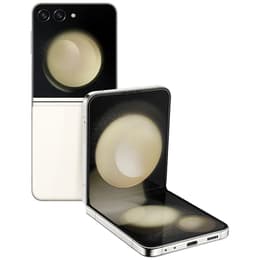
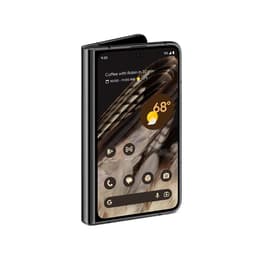
The Samsung Galaxy Z Flip5 and the Google Pixel Fold, both released in 2023, represent distinct approaches to the foldable smartphone market. The Galaxy Z Flip5 is a clamshell-style device that folds vertically, emphasizing portability and a compact form factor when closed. In contrast, the Google Pixel Fold adopts a book-style design, unfolding horizontally to offer a larger, tablet-like internal display. While both run on the Android operating system, they offer different user experiences tailored to their unique designs and software philosophies.

Scores

Durability

When considering the long-term usability of these devices, their release timelines and software support policies are key factors. Both devices were released in 2023, making them relatively current in the rapidly evolving smartphone landscape.

  • Software Support: The Samsung Galaxy Z Flip5 is expected to receive four major Android OS updates and five years of security updates from its release. This means it will likely receive updates until Android 17 and security patches until mid-2028. The Google Pixel Fold, on the other hand, is also guaranteed five years of OS and security updates from its launch, extending its support until at least June 2028.
  • Repairability and Build: Both devices feature IPX8 water resistance, indicating protection against submersion in water, but neither is officially rated for dust resistance, which is a common consideration for foldable phones. The Galaxy Z Flip5 utilizes Armor Aluminum for its frame and Gorilla Glass Victus 2 for its cover screen and back, while the Pixel Fold also uses Gorilla Glass Victus on its cover screen and back. The Pixel Fold's hinge is noted for its robust design, allowing it to be propped open at various angles.
  • Practical Lifespan: Given their respective software support timelines, both devices are designed to remain functional and secure for several years. Users can expect a practical lifespan of at least 4-5 years for core functionality and security, with the Pixel Fold potentially offering a slightly longer OS update period depending on Google's update schedule.

Year of Release

2023

2023

Compatible with latest Update

Yes

Yes

OS

Android

Android

Foldable

Yes

Yes

Performance

The performance of a smartphone is crucial for daily tasks, from app usage to multitasking and gaming. Both the Galaxy Z Flip5 and the Google Pixel Fold are equipped with capable processors designed to handle demanding applications.

  • Processing Power: The Galaxy Z Flip5 features a current-generation processor that provides smooth performance for everyday use, quick app loading, and efficient multitasking. The Pixel Fold is powered by Google's Tensor G2 chip, which also delivers responsive performance for daily tasks and handles multitasking effectively, especially with its larger internal display.
  • Multitasking and RAM: The Galaxy Z Flip5 comes with 8GB of RAM, which is sufficient for most users to switch between applications without significant slowdowns. The Pixel Fold offers 12GB of RAM, providing additional headroom for heavy multitasking and running multiple applications simultaneously on its expansive internal screen.
  • Battery Behavior: The Galaxy Z Flip5 has a 3700 mAh battery, which generally provides a full day of use for moderate users, though heavy usage may require a midday top-up. The Pixel Fold is equipped with a larger 4821 mAh battery, and while it's designed to last a full day, real-world usage reports vary, with some users experiencing similar battery longevity to other flagship devices.

Memory (GB)

8 GB

12 GB

Screen quality

The display is a primary interaction point for any smartphone, and for foldables, both the external and internal screens contribute significantly to the user experience.

  • Display Technology and Clarity: The Galaxy Z Flip5 features a 6.7-inch foldable Dynamic AMOLED 2X main display with a resolution of 1080 x 2640 pixels, offering vibrant colors and deep blacks. Its external cover screen is a 3.4-inch Super AMOLED display with a resolution of 720 x 748 pixels, providing a more usable interface when folded. The Pixel Fold boasts a 7.6-inch internal OLED display with a resolution of 2208 x 1840 pixels, and a 5.8-inch external OLED display with a resolution of 1080 x 2092 pixels, both delivering clear and colorful visuals.
  • Refresh Rate and Smoothness: Both the main display of the Z Flip5 and both displays of the Pixel Fold offer an adaptive refresh rate of up to 120Hz, contributing to smooth scrolling and a fluid user interface.
  • Brightness and Viewing Experience: The Galaxy Z Flip5's main screen can reach a peak brightness of 1750 nits, ensuring good visibility even in bright outdoor conditions. The Pixel Fold's external display can reach up to 1550 nits peak brightness, and its internal display up to 1450 nits, providing ample brightness for various environments. The Pixel Fold's wider external screen is often noted for being more comfortable for typing and general phone use compared to narrower foldable designs.

Resolution

1080 x 2640

1840 x 2208

Screen type

Foldable Dynamic AMOLED 2X

Foldable OLED

Audiovisual

Camera capabilities are a significant consideration for many users, and both the Galaxy Z Flip5 and the Google Pixel Fold offer distinct photographic experiences.

  • Rear Camera Systems: The Galaxy Z Flip5 features a dual-camera setup on the rear, consisting of a 12MP wide-angle lens and a 12MP ultrawide lens. While it produces good images in various conditions, it lacks a telephoto lens for optical zoom. The Pixel Fold offers a more versatile triple-camera system, including a 48MP main wide-angle lens, a 10.8MP ultrawide lens, and a 10.8MP telephoto lens with 5x optical zoom.
  • Photography Performance: The Galaxy Z Flip5's cameras perform well in good lighting and offer decent low-light capabilities, though they may not match the performance of dedicated flagship camera phones. The Pixel Fold benefits from Google's computational photography, consistently producing balanced and detailed images across its lenses, with its telephoto lens being a notable advantage.
  • Video Recording and Unique Features: Both phones can record high-quality video. The Z Flip5's foldable design allows for unique shooting angles and hands-free photography using its Flex Mode and the cover screen as a viewfinder. The Pixel Fold also leverages its foldable form factor for creative photography, including a tabletop mode and dual-screen preview for subjects.
  • Front Cameras: The Galaxy Z Flip5 has a 10MP front-facing camera on its main screen. The Pixel Fold has an 8MP inner camera and a 9.5MP camera on its cover screen.

Main camera

12 megapixels

48 megapixels

Front camera

10 megapixels

8 megapixels

Miscellaneous

Beyond core features, several practical elements contribute to the overall user experience and differentiate these two foldable devices.

  • Connectivity and Ports: Both devices support 5G connectivity and modern Wi-Fi standards (Wi-Fi 6E for Z Flip5, Wi-Fi 6 for Pixel Fold). The Galaxy Z Flip5 uses a USB-C 2.0 port, while the Pixel Fold features a faster USB-C 3.2 port. Neither device includes a traditional 3.5mm headphone jack.
  • Biometric Security: Both the Galaxy Z Flip5 and the Google Pixel Fold incorporate a side-mounted fingerprint sensor for secure and convenient unlocking.
  • Design and Handling: The Galaxy Z Flip5 is a more compact and lighter device when folded, weighing 187g, making it highly pocketable. Its dimensions when folded are 85.1 x 71.9 x 15.1mm. The Pixel Fold is heavier at 283g and has a wider, more traditional smartphone feel on its external display when folded (139.7 x 79.5 x 12.1mm), unfolding into a broader tablet-like experience (158.7 x 139.7 x 5.8mm). The Pixel Fold's hinge allows it to fold completely flat, a design improvement noted by users.
  • Build Materials: The Z Flip5 uses Armor Aluminum and Gorilla Glass Victus 2. The Pixel Fold features Gorilla Glass Victus on its cover screen and back, with a polished stainless steel frame.

Weight

187 g

283 g

Screen size (in)

6.7 /3.4

7.6

Network

5G

5G

SIM card

Physical SIM + eSIM

Physical SIM + eSIM

Carrier compatibility

Unlocked

Unlocked

The Samsung Galaxy Z Flip5 and the Google Pixel Fold cater to different preferences within the foldable smartphone segment. Users often praise the Z Flip5 for its compact, pocketable design when folded, making it a stylish and convenient option for those who prioritize portability. Its larger cover screen on this generation is also a frequently highlighted improvement, offering more functionality without needing to open the device.

Conversely, the Google Pixel Fold is often lauded for its wider external display, which provides a more conventional smartphone experience when closed, and its expansive internal screen, which is well-suited for multitasking and media consumption. Its camera system, particularly the inclusion of a telephoto lens and Google's image processing, receives positive remarks for consistent quality.

Common criticisms for the Z Flip5 sometimes revolve around its battery life, which, while improved, may still require careful management for heavy users. The Pixel Fold, despite its larger battery, has also seen mixed user feedback regarding real-world battery longevity, and its weight and thickness when folded are sometimes noted.

For users prioritizing a highly compact and fashionable device that easily fits into smaller pockets, the Galaxy Z Flip5 is a compelling choice. Its clamshell design and enhanced cover screen offer a unique blend of style and quick utility. Those who seek a device that transforms into a small tablet for productivity, media, and a more versatile camera system, with a wider external display for comfortable single-handed use, may find the Google Pixel Fold better suited to their needs. Both devices represent significant advancements in foldable technology, and choosing between them depends on whether a compact, vertical fold or a larger, book-style horizontal fold aligns better with individual usage patterns. Exploring quality-assured refurbished options for either model can provide an eco-friendly alternative for acquiring these innovative devices.


See all articles

Our recent comparisons